Retsina
In its own language: ρετσίνα
Greek white or rosé wine flavored with pine resin
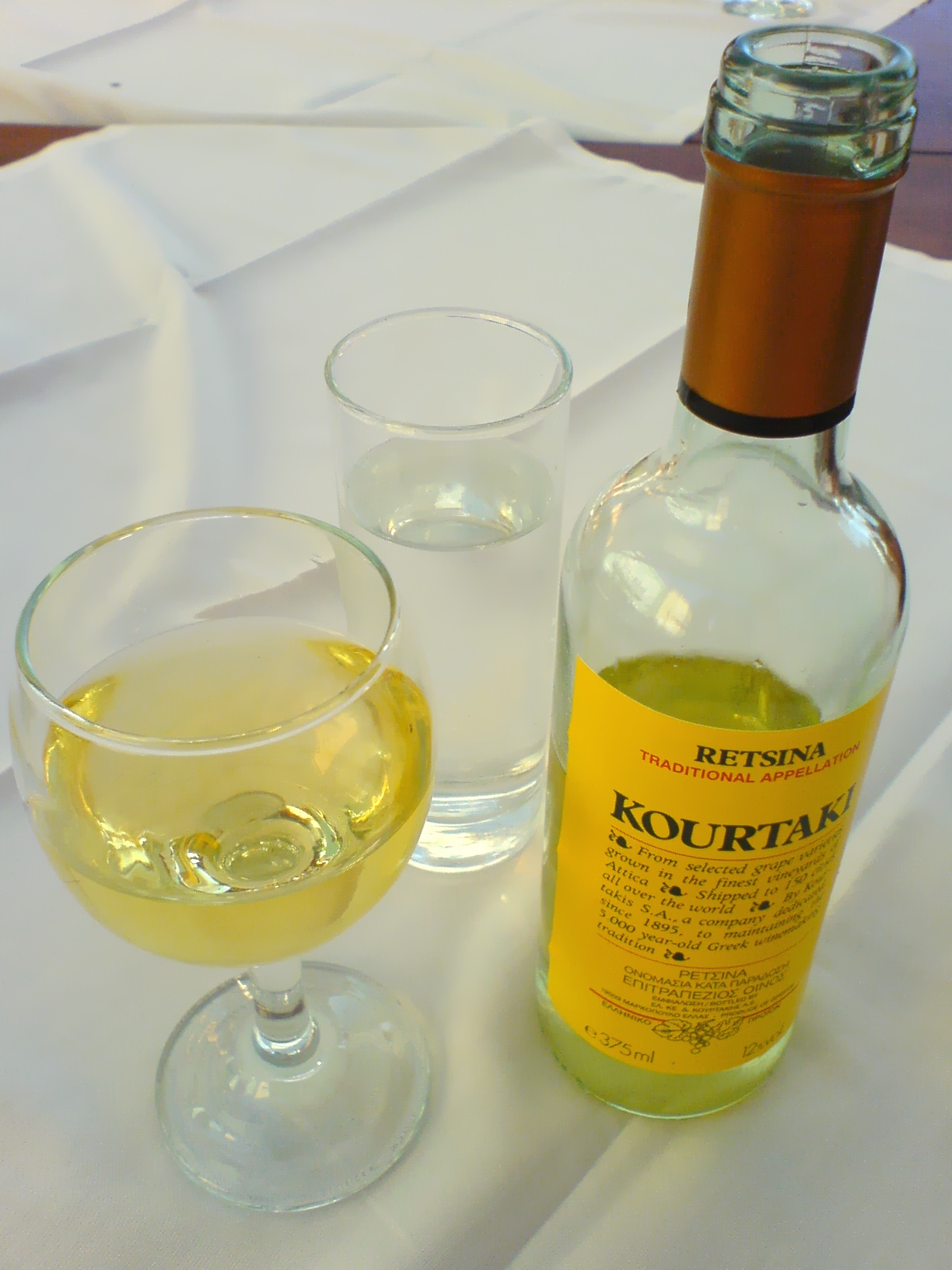
Retsina is a Greek wine, usually white or rosé, that is flavored with pine resin. Its distinct taste comes from adding pieces of Aleppo pine resin during fermentation, a practice dating back over 2,000 years. Retsina is produced across Greece and is protected as a traditional appellation in the EU.
- Retsina is flavored with Aleppo pine resin during fermentation
- It has been made in Greece for over 2,000 years
- The EU protects 'retsina' as a traditional Greek wine
- Attica, Boeotia, and Euboea are major production regions
What is Retsina?
Retsina is a wine from Greece, most often white but sometimes rosé, and rarely red. Its main feature is the addition of pine resin, which gives it a distinctive aroma and flavor. The wine is usually made from Savatiano grapes, though Assyrtiko, Rhoditis, and Athiri are also used in different regions. The resin, from the Aleppo pine, is added during fermentation, resulting in a wine with a subtle resinous note. Modern retsina is less pungent than older versions, with a lighter, fresher taste that pairs well with strong-flavored Greek foods.
Where does Retsina come from?
The tradition of making retsina began in ancient Greece, where pine resin was used to seal wine vessels and prevent spoilage before glass bottles existed. This practice not only protected the wine but also gave it a unique flavor. Even after barrels replaced amphorae in the Roman era, the taste of resin remained popular in the eastern Mediterranean. Retsina has been mentioned by Roman writers and travelers through the centuries, sometimes praised and sometimes disliked for its strong aroma.
How is Retsina made?
To make retsina, winemakers ferment grape must with small pieces of Aleppo pine resin. The resin floats on the surface, releasing its oils into the wine. After fermentation, the resin and any solids are removed, leaving a clarified wine with a resin-infused character. Today, far less resin is used than in the past, and modern winemaking techniques help maintain freshness without overpowering the wine with pine flavor.

How and when is Retsina eaten?
Retsina is most often served chilled. It is commonly enjoyed with Greek meze, which are small plates like pastırma (cured meat) or skordalia (garlic dip). The wine’s resinous taste complements strong, savory dishes, making it a popular choice in tavernas and at everyday meals. It is not tied to any particular festival or religious occasion.
Kinds of Retsina
While retsina is made throughout Greece, regions like Attica, Boeotia, and Euboea are known for their production. The main grape varies by area; for example, Rhodes uses Athiri. In Cyprus, some southern areas also make retsina under the protected designation. Outside Greece, similar wines may be called 'resinated wine' but cannot use the name 'retsina'.
What Retsina means
Retsina is recognized by the European Union as a protected traditional wine of Greece and parts of Cyprus. It is a symbol of Greek heritage and daily life, with a history stretching back millennia. The wine is often associated with local cuisine and social gatherings, and its unique taste continues to spark curiosity and debate among visitors and locals alike.
Questions people ask about Retsina
What is retsina made of?
Retsina is made from grapes, most often the Savatiano variety, with small pieces of Aleppo pine resin added during fermentation. Other grapes like Assyrtiko, Rhoditis, and Athiri may also be used depending on the region.
Where does retsina come from?
Retsina comes from Greece, where it has been produced for over 2,000 years. It is made throughout the country, with major production in regions like Attica, Boeotia, and Euboea.
Why does retsina taste like pine?
The pine flavor in retsina comes from adding Aleppo pine resin to the wine during fermentation. This tradition began as a way to seal wine vessels and prevent spoilage, but the taste became popular and is now a defining feature.
Is retsina always white?
Retsina is usually white, but it can also be rosé and, very rarely, red. The color depends on the grape varieties and winemaking choices.
Is retsina a protected name?
Yes, 'retsina' is a protected designation of origin in the European Union for Greek and some Cypriot wines. Similar wines made elsewhere must use the term 'resinated wine' instead.
Good reading and sources
The facts on this page come from the Wikipedia article "Retsina", written by its contributors and used under the CC BY-SA 4.0 licence, and from its Wikidata record (CC0). Thali rewrote the text in its own words, with AI assistance, and compares every page with the article to make sure no passage is copied. It may be reused under the same CC BY-SA 4.0 licence with a link back.
It may contain mistakes, and it is not dietary or allergy advice: recipes differ from cook to cook. If something is wrong, tell us. Last refreshed 2026-10-03.
More from Greece
All the food of Greece WineVegan
🇬🇪 Georgia and 5 moreAlcoholic drink made by fermenting grape juice in many styles and colors
Drink
WineVegan
🇬🇪 Georgia and 5 moreAlcoholic drink made by fermenting grape juice in many styles and colors
Drink
 CappuccinoVegetarian
🇮🇹 Italy and 5 moreEspresso with steamed milk and a thick layer of milk foam, served in a small cup
Drink, Breakfast
CappuccinoVegetarian
🇮🇹 Italy and 5 moreEspresso with steamed milk and a thick layer of milk foam, served in a small cup
Drink, Breakfast
 Turkish coffeeVeganTürk kahvesi
🇹🇷 Turkey and 5 moreUnfiltered coffee brewed in a small pot and served with its fine grounds
Drink, Snacks
Turkish coffeeVeganTürk kahvesi
🇹🇷 Turkey and 5 moreUnfiltered coffee brewed in a small pot and served with its fine grounds
Drink, Snacks
 OuzoVeganούζο
🇬🇷 Greece and 1 moreGreek anise-flavored spirit, often served with water and meze
Drink, Snacks
OuzoVeganούζο
🇬🇷 Greece and 1 moreGreek anise-flavored spirit, often served with water and meze
Drink, Snacks
Its cousins elsewhere
All drinks RakıVegan
🇹🇷 TurkeyTurkish spirit distilled from grapes and aniseed, served with water and meze
Drink, Dinner, Supper
RakıVegan
🇹🇷 TurkeyTurkish spirit distilled from grapes and aniseed, served with water and meze
Drink, Dinner, Supper
 TeaVegan茶
🇨🇳 China and 5 moreA drink made by soaking tea leaves in hot or cold water
Drink
TeaVegan茶
🇨🇳 China and 5 moreA drink made by soaking tea leaves in hot or cold water
Drink
 CoffeeVegan
🇾🇪 Yemen and 5 moreA dark, bitter drink made by brewing roasted coffee beans
Drink, Breakfast, Snacks
CoffeeVegan
🇾🇪 Yemen and 5 moreA dark, bitter drink made by brewing roasted coffee beans
Drink, Breakfast, Snacks
 Ice cream
🇺🇸 United States and 5 moreA frozen dessert made from sweetened, flavoured milk or cream
Sweet or dessert, Snacks
Ice cream
🇺🇸 United States and 5 moreA frozen dessert made from sweetened, flavoured milk or cream
Sweet or dessert, Snacks