
Pão de queijo
Cheese-filled rolls made with cassava flour, a breakfast and snack food from Brazil
Pão de queijo is a small, baked cheese roll from Brazil, especially the state of Minas Gerais. Made with cassava flour and cheese, it is chewy inside and crisp outside. Eaten for breakfast or as a snack, it is sold at bakeries, street stands, and supermarkets across Brazil.
- Made with cassava flour and cheese, not wheat
- Originated in Minas Gerais, Brazil
- Naturally gluten-free and chewy inside
- Sold at bakeries, street stands, and supermarkets
- Similar breads found across South America
What is Pão de queijo?
Pão de queijo are small, round rolls with a crisp shell and a chewy, elastic center. The dough is made from cassava flour (a starch from the cassava root), cheese, eggs, milk, oil, salt, and water. The cheese used can be Minas, Canastra, mozzarella, or parmesan, giving a mild to sharp flavor. The rolls are about the size of a golf ball and are golden when baked. Their texture is unique—stretchy inside, with a slight crunch outside.
Where does Pão de queijo come from?
Pão de queijo comes from Minas Gerais in Brazil. Its roots go back to the early 1700s, when local cooks, lacking wheat, made bread from cassava starch, a tuber shown to them by indigenous Tupiniquins. Cheese was added to the dough in the late 19th century, creating the version known today. The snack is now a symbol of Minas Gerais and is enjoyed throughout Brazil.
How is Pão de queijo made?
To make pão de queijo, cassava flour is mixed with cheese, eggs, milk, oil or butter, salt, and water. The dough is shaped into small balls, usually 3–5 centimeters across. Some versions use both sweet and sour cassava flour, and a few recipes add potato. The dough may be briefly boiled before baking in some methods. The rolls are baked until puffed and golden, with air pockets inside.


How and when is Pão de queijo eaten?
Pão de queijo is eaten for breakfast or as a snack in Brazil. It is sold at bakeries, snack bars, and by street vendors who keep them warm in insulated containers. The rolls are also available frozen in supermarkets for baking at home. They are eaten plain, sometimes with coffee, and can be stuffed with fillings like requeijão (a creamy cheese), goiabada (guava paste), or doce de leite (milk caramel).
Kinds of Pão de queijo
Across South America, similar cheese breads exist, such as chipa in Paraguay and cuñapé in Bolivia. The main differences are in the flour and cheese used. In Brazil, pão de queijo is sometimes made with different cheeses or stuffed with sweet or savory fillings. In Japan, a version is made with rice flour and compared to mochi. Packaged mixes and frozen versions are common in Brazil and abroad.
What Pão de queijo means
Pão de queijo is a beloved food in Brazil, especially in Minas Gerais, where it is a daily staple. Its popularity has spread to other countries, partly because it is naturally gluten-free. The snack is found at gatherings, in homes, and on the street. It is a symbol of regional pride and is often associated with hospitality and comfort.
Questions people ask about Pão de queijo
What is pão de queijo made of?
It is made from cassava flour, cheese (such as Minas, Canastra, mozzarella, or parmesan), eggs, milk, oil or butter, salt, and water.
Where does pão de queijo come from?
Pão de queijo comes from Minas Gerais, a state in Brazil. It is now popular throughout the country.
Is pão de queijo gluten-free?
Yes, because it uses cassava flour instead of wheat, pão de queijo contains no gluten.
When is pão de queijo usually eaten?
It is commonly eaten for breakfast or as a snack in Brazil, often with coffee.
Are there different versions of pão de queijo?
Yes, there are versions with different cheeses or fillings, and similar breads exist in other South American countries.
Good reading and sources
- Pão de queijo on WikipediaEncyclopedia
- More photos on Wikimedia CommonsPhotos
- Wikidata recordOpen data
The facts on this page come from the Wikipedia article "Pão de queijo", written by its contributors and used under the CC BY-SA 4.0 licence, and from its Wikidata record (CC0). Thali rewrote the text in its own words, with AI assistance, and compares every page with the article to make sure no passage is copied. It may be reused under the same CC BY-SA 4.0 licence with a link back.
It may contain mistakes, and it is not dietary or allergy advice: recipes differ from cook to cook. If something is wrong, tell us. Last refreshed 2026-10-03.
More from Brazil
All the food of Brazil BroaVegan
🇵🇹 Portugal and 4 moreRustic bread made with cornmeal, rye or wheat, found in Portugal and Brazil
Bread
BroaVegan
🇵🇹 Portugal and 4 moreRustic bread made with cornmeal, rye or wheat, found in Portugal and Brazil
Bread
 CoffeeVegan
🇾🇪 Yemen and 5 moreA dark, bitter drink made by brewing roasted coffee beans
Drink, Breakfast, Snacks
CoffeeVegan
🇾🇪 Yemen and 5 moreA dark, bitter drink made by brewing roasted coffee beans
Drink, Breakfast, Snacks
 PestoVegetarian
🇮🇹 Italy and 2 moreA basil, pine nut and cheese paste from Genoa, used to dress pasta
Sauce, pickle or ferment
PestoVegetarian
🇮🇹 Italy and 2 moreA basil, pine nut and cheese paste from Genoa, used to dress pasta
Sauce, pickle or ferment
 MateVegan
🇵🇾 Paraguay and 3 moreHot infusion of yerba mate leaves, drunk with a metal straw from a gourd
Drink
MateVegan
🇵🇾 Paraguay and 3 moreHot infusion of yerba mate leaves, drunk with a metal straw from a gourd
Drink
Its cousins elsewhere
All breads Gözleme
🇹🇷 TurkeyTurkish flatbread turnover filled with meat, cheese, or vegetables
Main dish, Breakfast, Lunch
Gözleme
🇹🇷 TurkeyTurkish flatbread turnover filled with meat, cheese, or vegetables
Main dish, Breakfast, Lunch
 BriocheVegetarianune brioche
🇫🇷 FranceFrench bread made with eggs and butter, often shaped in rounds or loaves
Bread, Breakfast, Snacks
BriocheVegetarianune brioche
🇫🇷 FranceFrench bread made with eggs and butter, often shaped in rounds or loaves
Bread, Breakfast, Snacks
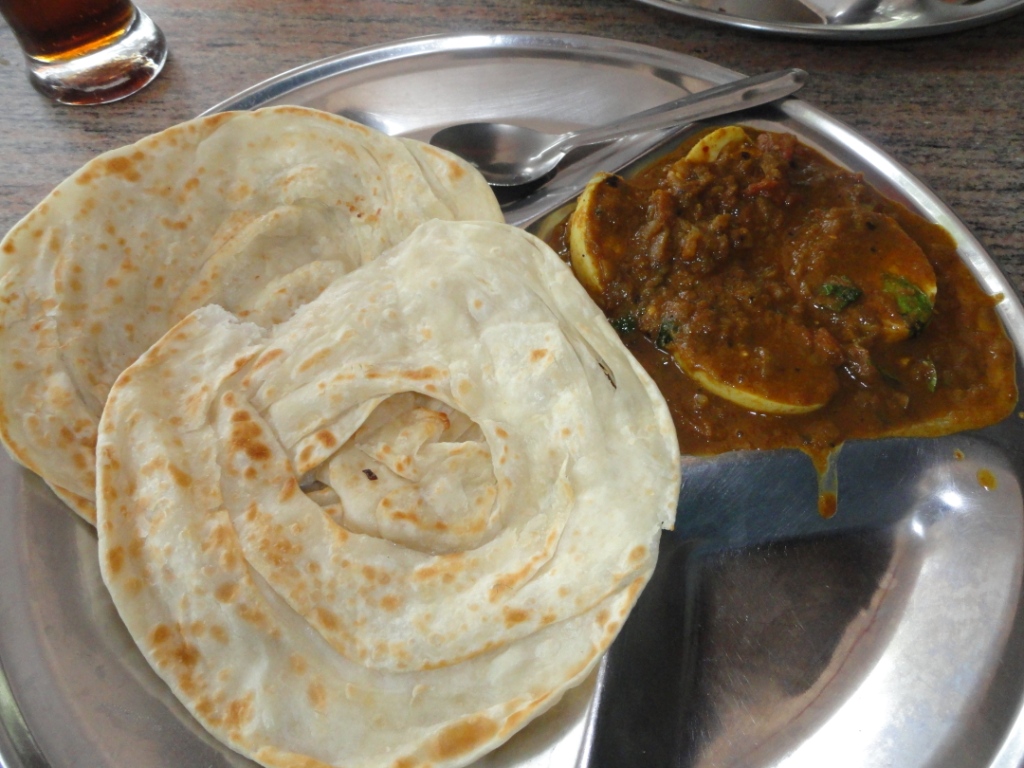 Parotta
🇮🇳 India and 5 moreLayered flatbread from South India, soft and flakey, made with refined flour
Bread, Breakfast, Lunch
Parotta
🇮🇳 India and 5 moreLayered flatbread from South India, soft and flakey, made with refined flour
Bread, Breakfast, Lunch
 ChapatiVeganचपाती
🇮🇳 India and 4 moreUnleavened flatbread cooked on a griddle and served hot with meals
Bread, Breakfast, Lunch
ChapatiVeganचपाती
🇮🇳 India and 4 moreUnleavened flatbread cooked on a griddle and served hot with meals
Bread, Breakfast, Lunch