
Parmigiana
Eggplant slices fried, layered with cheese and tomato sauce, then baked
Parmigiana is an Italian dish of fried eggplant layered with mozzarella and tomato sauce, then baked. It is claimed by several southern Italian regions, including Sicily, Campania, Calabria, and Apulia. The dish is made with eggplant, tomato sauce, mozzarella, Parmesan, olive oil, and basil, and is served as a side or starter, often at room temperature.
- Eggplant slices are fried, then layered with cheese and tomato sauce
- Several southern Italian regions claim to have invented it
- Known as eggplant parmesan in the US and Canada
- Chicken and veal versions are popular outside Italy
- Served warm or at room temperature, often as a side or starter
What is Parmigiana?
Parmigiana is a baked Italian dish where slices of eggplant are first fried, then arranged in layers with mozzarella cheese and tomato sauce. Parmesan cheese and fresh basil are also added between the layers. The dish is finished in the oven, which melds the flavors and softens the eggplant. It is usually served warm or at room temperature. The eggplant becomes tender, the cheese melts, and the tomato sauce gives a bright, savory taste. Olive oil, onion, peppercorn, and salt are used to season the dish.
Where does Parmigiana come from?
Parmigiana's beginnings are claimed by several southern Italian regions, including Sicily, Campania, Calabria, and Apulia. Some believe the name refers to Parma, because of Parmesan cheese, but others trace it to Sicilian words for a wine bottle cover or for louvered shutters, which resemble the layered eggplant slices. A recipe for a similar baked eggplant dish appears in an 18th-century Neapolitan cookbook, but the modern version with tomato sauce and cheese developed later in Naples, as tomatoes became common in Italian cooking.
How is Parmigiana made?
To make parmigiana, eggplant is sliced and fried in olive oil. The fried slices are layered in a baking dish with tomato sauce, mozzarella, Parmesan, and basil. Some versions add eggs between the layers or use fresh tomato and basil in summer, and ragù in winter. The assembled dish is baked until the cheese is melted and the flavors combine. In some regions, the eggplant is not breaded before frying, making for a lighter dish.

How and when is Parmigiana eaten?
Parmigiana is served at lunch or dinner, often as a starter or side dish in Italy. It is typically eaten warm or at room temperature. In Naples, it may be made with other vegetables like zucchini or artichoke. Outside Italy, especially in the United States and Australia, it is often a main course and can be served with pasta, salad, or chips. The dish is part of everyday meals and is not tied to a particular festival or religious occasion.
Kinds of Parmigiana
In Italy, parmigiana can be made with zucchini, fennel, or artichokes instead of eggplant. Some versions use eggs between layers or add cocoa to the sauce. A 'white parmigiana' without tomato sauce is made in parts of Campania. In the United States, chicken or veal replaces eggplant, and the dish is called chicken or veal parmigiana. In Australia, it is known as parma or parmi and may include ham or bacon. In South America, similar dishes use beef or chicken and are topped with ham or a fried egg.
What Parmigiana means
Parmigiana is a staple of southern Italian home cooking and is widely recognized abroad. Its origins are debated among several Italian regions, each with its own version and pride in the dish. In countries like the United States, Australia, and Brazil, local adaptations have become popular, often using meat instead of eggplant. The dish is a symbol of Italian culinary tradition and is commonly found in Italian restaurants worldwide.
Questions people ask about Parmigiana
What is parmigiana made of?
Parmigiana is made of fried eggplant slices layered with tomato sauce, mozzarella, Parmesan cheese, and basil, then baked. Olive oil, onion, peppercorn, and salt are also used for flavor.
Where does parmigiana come from?
Parmigiana is from southern Italy, with Sicily, Campania, Calabria, and Apulia all claiming its origin. The dish developed as tomatoes became common in Italian cooking.
Is parmigiana vegetarian?
Yes, the traditional Italian version uses only vegetables, cheese, and tomato sauce, making it vegetarian. However, some international versions use meat such as chicken or veal.
How is parmigiana served?
In Italy, it is usually served warm or at room temperature, often as a starter or side dish. Outside Italy, it is often a main course and may be served with pasta, salad, or chips.
Are there different versions of parmigiana?
Yes, in Italy it can be made with other vegetables like zucchini or artichoke. In the US, Australia, and South America, versions with chicken, veal, or beef are common, sometimes with extra toppings like ham or a fried egg.
Good reading and sources
The facts on this page come from the Wikipedia article "Parmigiana", written by its contributors and used under the CC BY-SA 4.0 licence, and from its Wikidata record (CC0). Thali rewrote the text in its own words, with AI assistance, and compares every page with the article to make sure no passage is copied. It may be reused under the same CC BY-SA 4.0 licence with a link back.
It may contain mistakes, and it is not dietary or allergy advice: recipes differ from cook to cook. If something is wrong, tell us. Last refreshed 2026-10-03.
More from Italy
All the food of Italy Pizza
🇮🇹 Italy and 4 moreFlatbread topped with tomato, cheese and baked at high heat
Main dish, Lunch, Dinner
Pizza
🇮🇹 Italy and 4 moreFlatbread topped with tomato, cheese and baked at high heat
Main dish, Lunch, Dinner
 Pasta
🇮🇹 Italy and 1 moreUnleavened dough shaped and cooked, a staple of Italian cuisine
Main dish, Lunch, Dinner
Pasta
🇮🇹 Italy and 1 moreUnleavened dough shaped and cooked, a staple of Italian cuisine
Main dish, Lunch, Dinner
 SpaghettiVegan
🇮🇹 Italy and 2 moreLong, thin pasta strands made from durum wheat and water
Noodle or pasta dish, Lunch, Dinner
SpaghettiVegan
🇮🇹 Italy and 2 moreLong, thin pasta strands made from durum wheat and water
Noodle or pasta dish, Lunch, Dinner
 Lasagnalasagne
🇮🇹 ItalyBaked layers of pasta sheets, sauce, cheese and fillings from Italy
Main dish, Lunch, Dinner
Lasagnalasagne
🇮🇹 ItalyBaked layers of pasta sheets, sauce, cheese and fillings from Italy
Main dish, Lunch, Dinner
Its cousins elsewhere
All main dishes Kashk bademjanVegetarianکشک بادمجان
🇮🇷 IranEggplant and kashk dip from Iran, often served with bread
Main dish, Lunch, Dinner
Kashk bademjanVegetarianکشک بادمجان
🇮🇷 IranEggplant and kashk dip from Iran, often served with bread
Main dish, Lunch, Dinner
 Rocoto rellenoMeat
🇵🇪 PeruPeruvian stuffed rocoto peppers baked with meat and cheese
Main dish, Lunch, Dinner
Rocoto rellenoMeat
🇵🇪 PeruPeruvian stuffed rocoto peppers baked with meat and cheese
Main dish, Lunch, Dinner
 Khoresh bademjanخورش بادمجان
🇮🇷 IranPersian stew of eggplant, tomato, lamb, and tart fruit, served with rice
Stew or curry, Lunch, Dinner
Khoresh bademjanخورش بادمجان
🇮🇷 IranPersian stew of eggplant, tomato, lamb, and tart fruit, served with rice
Stew or curry, Lunch, Dinner
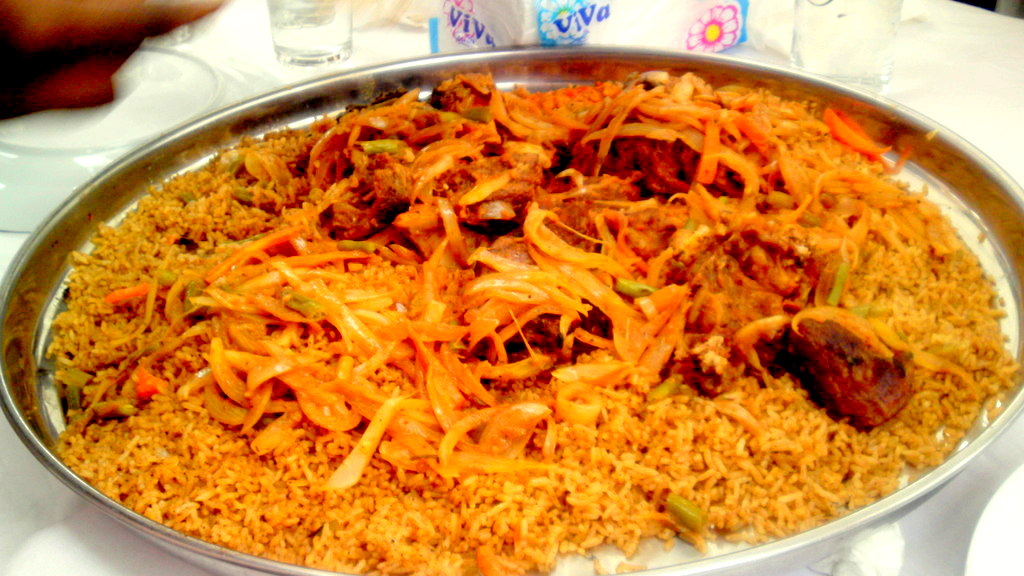 Riz grasMeat
🇧🇫 Burkina Faso and 4 moreWest African rice cooked with meat and vegetables, served hot
Main dish, Lunch, Dinner
Riz grasMeat
🇧🇫 Burkina Faso and 4 moreWest African rice cooked with meat and vegetables, served hot
Main dish, Lunch, Dinner