
Paximathia
In its own language: παξιμάδια
Greek hard bread made from wheat, barley or chickpea flour, often twice-baked
Paximathia is a hard bread from Greece, made with whole wheat, barley or chickpea flour. Traditionally twice-baked, it keeps well and is often eaten for breakfast with cheese or marmalade. Paximathia is common in Greek bakeries and sometimes served in salads after being softened.
- Made with wheat, barley, or chickpea flour
- Twice-baked for long storage
- Eaten with cheese, marmalade, or in salads
- Staple food in Crete
- Similar to biscotti or rusk
What is Paximathia?
Paximathia is a hard, dry bread from Greece, similar to rusk or biscotti. It is made with whole wheat, barley, or chickpea flour, and sometimes includes eggs, vegetable oil, and spices like cinnamon, clove, and orange zest. The bread is typically twice-baked, resulting in a firm texture that keeps well. Paximathia can be eaten plain, with cheese or marmalade, or softened in water and olive oil. Its taste is mild and slightly nutty, with a hint of spice if flavored.
Where does Paximathia come from?
Paximathia has roots in Greek history, with its name possibly linked to Paxamus, a Greek author from the 1st century. The bread was a staple for Greek farmers, Byzantine soldiers, and priests, valued for its long shelf life. Traditionally, it was baked every ten to fifteen days, sliced, and dried in outdoor ovens. Crete is especially known for its use of paximathia, where it formed a basic part of the local diet.
How is Paximathia made?
To make paximathia, dough is prepared using whole wheat, barley, or chickpea flour, sometimes with eggs, oil, and spices. The bread is first baked, then cut into thick slices or wedges. These are returned to the oven to dry out, often overnight using residual heat, which helps preserve the bread without making it overly brittle. This process creates a hard, dry loaf that can be stored for long periods.

How and when is Paximathia eaten?
Paximathia is often served at breakfast, paired with marmalade or cheese. Greek farmers traditionally softened it with water and olive oil before eating, sometimes adding cheese and olives. It can also be broken into pieces and added to salads after being dampened. In bakeries, it is sold as a snack or breakfast item, and Greek specialty stores in the United States also carry it.
Kinds of Paximathia
There are several regional types of paximathia. In Crete, the bread forms the base for dakos, a meze dish. The Cretan variety called Koulouri is ring-shaped, dried, and served with olive oil, oregano, and grated tomato. Another version, eptazymo, is made with chickpea flour. These variations reflect local tastes and ingredients.
What Paximathia means
Paximathia is a part of daily life in Greece and has historical ties to rural and military communities. Its long shelf life made it practical for farmers and soldiers. Today, it remains a common sight in Greek bakeries and is sometimes used in traditional dishes like dakos. The bread’s enduring presence highlights its role in Greek food culture.
Questions people ask about Paximathia
What is paximathia made of?
Paximathia is made from whole wheat, barley, or chickpea flour. Other ingredients can include eggs, vegetable oil, cinnamon, clove, and orange zest.
Where does paximathia come from?
Paximathia is a traditional hard bread from Greece, especially associated with Crete and rural communities.
How is paximathia eaten?
It can be eaten plain, with cheese or marmalade, or softened with water and olive oil. Sometimes it is added to salads after being dampened.
What does paximathia taste like?
The bread has a mild, slightly nutty flavor from the grains, and may have hints of spice if cinnamon or clove is used.
How is paximathia made?
The bread is baked, sliced, and then dried in the oven, often overnight, to create a hard, long-lasting loaf.
Good reading and sources
The facts on this page come from the Wikipedia article "Paximathia", written by its contributors and used under the CC BY-SA 4.0 licence, and from its Wikidata record (CC0). Thali rewrote the text in its own words, with AI assistance, and compares every page with the article to make sure no passage is copied. It may be reused under the same CC BY-SA 4.0 licence with a link back.
It may contain mistakes, and it is not dietary or allergy advice: recipes differ from cook to cook. If something is wrong, tell us. Last refreshed 2026-10-03.
More from Greece
All the food of Greece PitaVegan
🇪🇬 Egypt and 5 moreRound, leavened flatbread baked from wheat flour, common across the Middle East and Mediterranean
Bread
PitaVegan
🇪🇬 Egypt and 5 moreRound, leavened flatbread baked from wheat flour, common across the Middle East and Mediterranean
Bread
 SimitVegan
🇹🇷 Turkey and 5 moreRing-shaped bread with a sesame seed crust, sold by street vendors
Bread, Breakfast, Snacks
SimitVegan
🇹🇷 Turkey and 5 moreRing-shaped bread with a sesame seed crust, sold by street vendors
Bread, Breakfast, Snacks
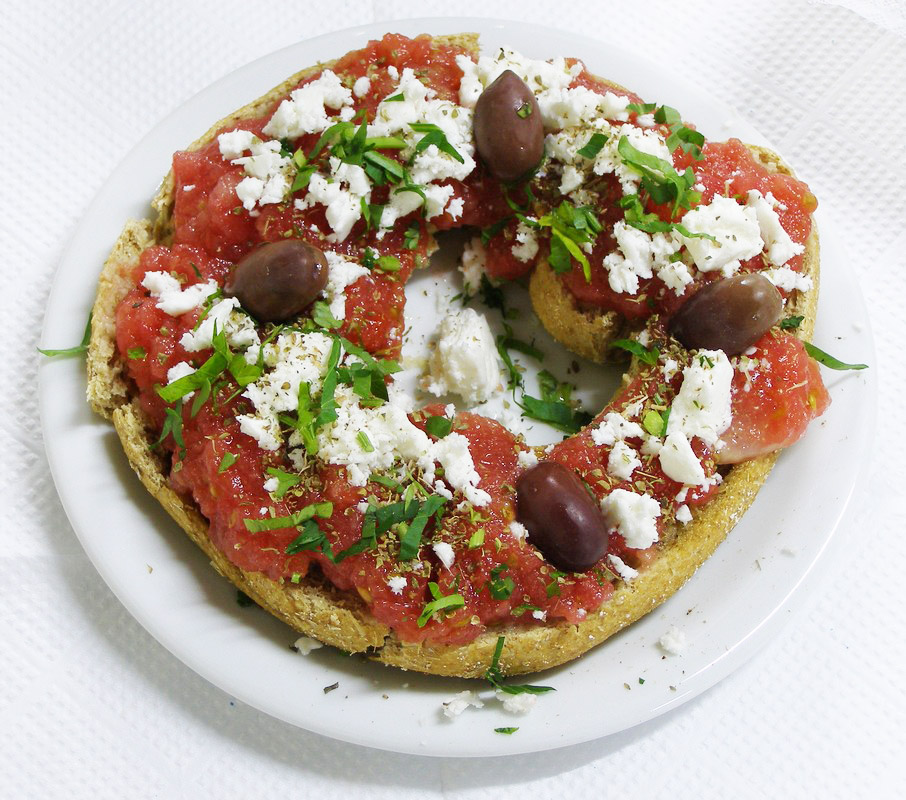 DakosVegetarianντάκος
🇬🇷 GreeceCretan salad of barley rusk topped with tomato, cheese, and herbs
Salad or side, Lunch, Dinner
DakosVegetarianντάκος
🇬🇷 GreeceCretan salad of barley rusk topped with tomato, cheese, and herbs
Salad or side, Lunch, Dinner
 VasilopitaΒασιλόπιτα
🇬🇷 Greece and 1 moreGreek New Year's bread or cake with a hidden coin for good luck
Bread
VasilopitaΒασιλόπιτα
🇬🇷 Greece and 1 moreGreek New Year's bread or cake with a hidden coin for good luck
Bread
Its cousins elsewhere
All breads Pan de muertoVegetarian
🇲🇽 Mexico and 1 moreSweet, decorated bread made for Mexico’s Day of the Dead
Sweet or dessert, Snacks, Tea time
Pan de muertoVegetarian
🇲🇽 Mexico and 1 moreSweet, decorated bread made for Mexico’s Day of the Dead
Sweet or dessert, Snacks, Tea time
 ChapatiVeganचपाती
🇮🇳 India and 4 moreUnleavened flatbread cooked on a griddle and served hot with meals
Bread, Breakfast, Lunch
ChapatiVeganचपाती
🇮🇳 India and 4 moreUnleavened flatbread cooked on a griddle and served hot with meals
Bread, Breakfast, Lunch
 Fry jackVegetarian
🇧🇿 BelizeDeep-fried breakfast dough from Belize, served plain or with sweet or savoury toppings
Bread, Breakfast
KhachapuriVegetarianხაჭაპური
🇬🇪 Georgia and 4 moreLeavened bread filled with cheese, sometimes egg, from Georgia
Bread, Breakfast, Lunch
Fry jackVegetarian
🇧🇿 BelizeDeep-fried breakfast dough from Belize, served plain or with sweet or savoury toppings
Bread, Breakfast
KhachapuriVegetarianხაჭაპური
🇬🇪 Georgia and 4 moreLeavened bread filled with cheese, sometimes egg, from Georgia
Bread, Breakfast, Lunch