
Pique macho
A Bolivian platter of beef, sausage, fries, vegetables and spicy sauces
Pique macho is a hearty Bolivian dish from Cochabamba, made with beef, sausage, fried potatoes, onions, peppers, tomatoes, and spicy sauces like mustard, mayonnaise, and ketchup. Served in large portions, it is often shared and sometimes topped with a boiled egg. Regional and vegetarian versions exist across Bolivia.
- Created in Cochabamba in the 1970s by a married couple
- Traditionally served very spicy, with locoto or paprika
- Large portions are meant for sharing or a solo challenge
- Vegetarian and regional versions are now common
- Topped with sauces like mustard, mayonnaise, and ketchup
What is Pique macho?
Pique macho is a generous platter from Bolivia, built around strips of beef and sausage layered over thick-cut fried potatoes. Red onions, green peppers, and tomatoes add freshness and crunch. The dish is finished with spicy locoto peppers and a mix of sauces—mustard, mayonnaise, and ketchup. Sometimes a boiled egg crowns the heap. The result is colourful, hearty, and often fiery, with the sauces soaking into the fries and meat. It is usually served in a large portion, meant for sharing.
Where does Pique macho come from?
Pique macho was created in the mid-1970s in Cochabamba by Honorato Quiñones Andia and Evangelina Rojas Vargas, who moved from Torotoro and opened a restaurant after their marriage. According to a popular story, the dish was improvised late one night for a group of hungry, inebriated airline workers, using whatever ingredients were left. The owner challenged them to finish the spicy platter, saying only a 'macho' could do it. The dish quickly gained fame, spreading to other Bolivian cities and becoming a regional icon. In 2004, the creators were honoured for their contribution to Cochabamba’s food culture.
How is Pique macho made?
To make pique macho, beef is marinated with garlic, cumin, and soy sauce, then cooked with sliced sausage. Potatoes are peeled, cut into thick fries or wedges, and fried until crisp and golden. The meat and vegetables—onions, green peppers, tomatoes, and sometimes locoto peppers—are sautéed together. Everything is layered over the fries, and the dish is finished with a drizzle of mustard, mayonnaise, and ketchup. A boiled egg may be added on top. The components are mixed just before serving to blend the flavours.

How and when is Pique macho eaten?
Pique macho is usually eaten for lunch or dinner, often as a shared meal among friends or family. The large portion size encourages group eating, though some try to finish it alone as a challenge. It is a common sight in Bolivian restaurants and street stalls, especially in Cochabamba, La Paz, and Santa Cruz. The dish is typically served hot, with extra sauces on the side. In some regions, it comes with local cheese or spicy ají or llajua sauce. It is not tied to any particular festival or religious event, but is a popular everyday meal.
Kinds of Pique macho
Across Bolivia, pique macho has many local twists. In La Paz, it may be served with highland cheese and llajua sauce. Some versions use yuca fries instead of potatoes. Vegetarian adaptations replace meat with mushrooms, seitan, or tofu, keeping the layered style. Outside Bolivia, especially in Bolivian communities in the United States, milder peppers or chicken are sometimes used. Despite these changes, the core idea of meat, fries, vegetables, and spicy sauces remains.
What Pique macho means
Pique macho is a symbol of Cochabamba’s food culture and is widely recognized across Bolivia. Its origin story, tied to a late-night challenge, adds to its reputation as a dish for the bold. The Cochabamba Chamber of Restaurant and Related Fields awarded its creators for their cultural contribution. The dish is also popular among Bolivian diaspora communities, and has even been mentioned in American popular culture. It is a point of local pride and a staple at gatherings.
Questions people ask about Pique macho
What is pique macho made of?
Pique macho is made from beef, sausage, fried potatoes, onions, green peppers, tomatoes, spicy peppers, and is topped with sauces like mustard, mayonnaise, and ketchup. Sometimes a boiled egg is added.
Where does pique macho come from?
Pique macho comes from Cochabamba, Bolivia. It was created in the mid-1970s by Honorato Quiñones Andia and Evangelina Rojas Vargas, and has since become popular throughout Bolivia.
Is pique macho always spicy?
Traditionally, pique macho is served spicy, often with locoto peppers or paprika. However, some regional and international versions use milder peppers to suit local tastes.
Can pique macho be made vegetarian?
Yes, vegetarian versions exist, especially in urban areas. These use mushrooms, seitan, or tofu instead of beef and sausage, but keep the fries, vegetables, and sauces.
How is pique macho usually served?
Pique macho is served in large portions, often for sharing, and is usually eaten hot for lunch or dinner. It is layered on a platter with sauces and sometimes a boiled egg on top.
Good reading and sources
The facts on this page come from the Wikipedia article "Pique macho", written by its contributors and used under the CC BY-SA 4.0 licence, and from its Wikidata record (CC0). Thali rewrote the text in its own words, with AI assistance, and compares every page with the article to make sure no passage is copied. It may be reused under the same CC BY-SA 4.0 licence with a link back.
It may contain mistakes, and it is not dietary or allergy advice: recipes differ from cook to cook. If something is wrong, tell us. Last refreshed 2026-10-03.
More from Bolivia
All the food of Bolivia MolleteVegetarian
🇲🇽 Mexico and 6 moreOpen-faced Mexican sandwich with refried beans and melted cheese
Bread, Breakfast, Snacks
MolleteVegetarian
🇲🇽 Mexico and 6 moreOpen-faced Mexican sandwich with refried beans and melted cheese
Bread, Breakfast, Snacks
 Huatia
🇵🇪 Peru and 2 moreAndean food cooked in a traditional earth oven of heated stones
Main dish
Huatia
🇵🇪 Peru and 2 moreAndean food cooked in a traditional earth oven of heated stones
Main dish
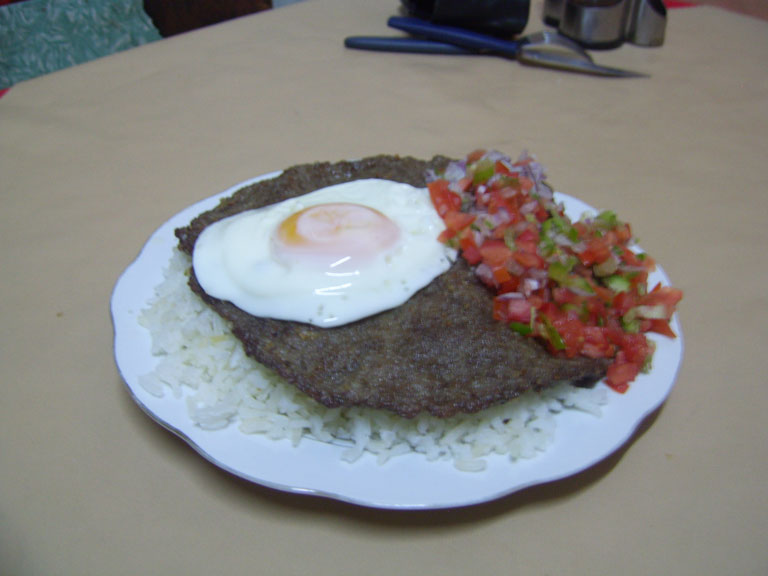 SilpanchoMeatSillp'anchu
🇧🇴 BoliviaLayered Bolivian meal with rice, potatoes, breaded meat, and fried eggs
Main dish, Lunch, Dinner
SilpanchoMeatSillp'anchu
🇧🇴 BoliviaLayered Bolivian meal with rice, potatoes, breaded meat, and fried eggs
Main dish, Lunch, Dinner
 Arepa
🇨🇴 Colombia and 5 moreCornmeal flatbread from Colombia and Venezuela, often split and filled
Bread, Breakfast, Lunch
Arepa
🇨🇴 Colombia and 5 moreCornmeal flatbread from Colombia and Venezuela, often split and filled
Bread, Breakfast, Lunch
Its cousins elsewhere
All main dishes HamburgerMeat
🇺🇸 United States and 1 moreA hot ground meat patty in a sliced bun, often with salad and sauces
Main dish, Lunch, Dinner
HamburgerMeat
🇺🇸 United States and 1 moreA hot ground meat patty in a sliced bun, often with salad and sauces
Main dish, Lunch, Dinner
 Hot dogMeat
🇺🇸 United States and 2 moreA sausage in a sliced bun, topped with condiments and eaten hot
Street food, Lunch, Dinner
Hot dogMeat
🇺🇸 United States and 2 moreA sausage in a sliced bun, topped with condiments and eaten hot
Street food, Lunch, Dinner
 CheeseburgerMeat
🇺🇸 United StatesA hamburger topped with melted cheese, often with lettuce, tomato and condiments
Main dish, Lunch, Dinner
Bosnian potMeatBosanski lonac
🇧🇦 Bosnia and HerzegovinaA hearty Bosnian stew of chunky meat and vegetables, layered and slow-cooked
Stew or curry, Lunch, Dinner
CheeseburgerMeat
🇺🇸 United StatesA hamburger topped with melted cheese, often with lettuce, tomato and condiments
Main dish, Lunch, Dinner
Bosnian potMeatBosanski lonac
🇧🇦 Bosnia and HerzegovinaA hearty Bosnian stew of chunky meat and vegetables, layered and slow-cooked
Stew or curry, Lunch, Dinner