Bosnian pot
In its own language: Bosanski lonac
A hearty Bosnian stew of chunky meat and vegetables, layered and slow-cooked
Bosnian pot, or Bosanski lonac, is a traditional stew from Bosnia and Herzegovina. It is made by layering large pieces of meat—often beef and lamb—with vegetables such as cabbage, potatoes, tomatoes, and carrots in a deep pot. The dish is slow-cooked, and recipes vary by region and household.
- A national dish of Bosnia and Herzegovina
- Made by layering large chunks of meat and vegetables
- Traditionally cooked in ceramic pots over a fire
- Recipes vary widely by region and household
What is Bosnian pot?
Bosnian pot is a robust stew from Bosnia and Herzegovina, known locally as Bosanski lonac. It features large chunks of meat—commonly beef and lamb or mutton—layered with vegetables like cabbage, potatoes, tomatoes, and carrots. Parsley, garlic, and whole peppercorns add flavor. The ingredients are cut into big pieces and arranged in alternating layers inside a deep pot, then gently cooked with a little water. The result is a filling, savory dish with tender meat and vegetables, each keeping its shape and taste.
Where does Bosnian pot come from?
Bosnian pot has been part of Bosnian cooking for centuries, served by both rich and poor. Wealthier families would add more meat and costly ingredients, while others used whatever was on hand. The dish is considered a national specialty of Bosnia and Herzegovina. Traditionally, it was cooked in ceramic pots placed in fireplaces or even pits dug in the ground. Over time, as open hearths became less common, people began making it on kitchen stoves in regular pots.
How is Bosnian pot made?
To make Bosnian pot, cooks cut meat and vegetables into large, chunky pieces. They layer these alternately in a deep pot, starting and ending with either meat or vegetables. A small amount of water is poured in to help the ingredients cook gently. The pot is then covered and left to simmer slowly, allowing the flavors to blend while keeping the pieces whole. Originally, this was done in ceramic pots over a fire or in a pit, but now most people use a stovetop.
How and when is Bosnian pot eaten?
Bosnian pot is usually served for lunch or dinner as a main course. It is a dish meant to be shared, often brought to the table in the pot it was cooked in. The stew is hearty enough to be eaten on its own, but it can also be enjoyed with bread. Its flexibility makes it suitable for everyday meals, and the recipe is often adapted to what is available in the kitchen.
Kinds of Bosnian pot
There is no single recipe for Bosnian pot; it changes from one household or region to another. Some cooks use only beef or lamb, while others mix different meats. The choice of vegetables can also vary, depending on what is in season or at hand. The dish’s adaptability is part of its tradition, with each cook adding their own touch.
What Bosnian pot means
Bosnian pot is seen as a symbol of Bosnian home cooking and hospitality. Its history as a dish for both rich and poor speaks to its role in daily life. It is widely recognized as a national dish of Bosnia and Herzegovina, reflecting the region’s culinary heritage and resourcefulness.
Questions people ask about Bosnian pot
What is Bosnian pot made of?
Bosnian pot is made from large pieces of meat, usually beef and lamb or mutton, layered with vegetables such as cabbage, potatoes, tomatoes, and carrots. Parsley, garlic, and whole peppercorns are also commonly used.
Where does Bosnian pot come from?
Bosnian pot, or Bosanski lonac, comes from Bosnia and Herzegovina. It is a traditional dish that has been part of the region’s cooking for centuries.
How is Bosnian pot cooked?
The ingredients are cut into large pieces and layered in a deep pot, with a little water added. The pot is then covered and the stew is simmered slowly, traditionally in a ceramic pot over a fire, but now often on a kitchen stove.
Is Bosnian pot always made the same way?
No, recipes for Bosnian pot vary greatly by region and household. The types of meat and vegetables used can change depending on personal preference and what is available.
When is Bosnian pot usually eaten?
Bosnian pot is typically served as a main dish for lunch or dinner. It is an everyday food in Bosnia and Herzegovina.
Good reading and sources
The facts on this page come from the Wikipedia article "Bosnian pot", written by its contributors and used under the CC BY-SA 4.0 licence, and from its Wikidata record (CC0). Thali rewrote the text in its own words, with AI assistance, and compares every page with the article to make sure no passage is copied. It may be reused under the same CC BY-SA 4.0 licence with a link back.
It may contain mistakes, and it is not dietary or allergy advice: recipes differ from cook to cook. If something is wrong, tell us. Last refreshed 2026-10-03.
More from Bosnia and Herzegovina
All the food of Bosnia and Herzegovina ĆevapiMeatћевапи
🇧🇦 Bosnia and Herzegovina and 5 moreGrilled minced meat rolls served with flatbread and onions in Southeast Europe
Main dish, Lunch, Dinner
ĆevapiMeatћевапи
🇧🇦 Bosnia and Herzegovina and 5 moreGrilled minced meat rolls served with flatbread and onions in Southeast Europe
Main dish, Lunch, Dinner
 PljeskavicaMeatпљескавица
🇷🇸 Serbia and 5 moreGrilled Balkan patty of spiced minced meats, served hot with sides or in flatbread
Main dish, Lunch, Dinner
PljeskavicaMeatпљескавица
🇷🇸 Serbia and 5 moreGrilled Balkan patty of spiced minced meats, served hot with sides or in flatbread
Main dish, Lunch, Dinner
 KačamakVegetarian
🇹🇷 Turkey and 5 moreCornmeal porridge from the Balkans, often enriched with cheese or potatoes
Main dish
KačamakVegetarian
🇹🇷 Turkey and 5 moreCornmeal porridge from the Balkans, often enriched with cheese or potatoes
Main dish
 ÇılbırVegetarian
🇹🇷 Turkey and 4 morePoached eggs served over garlicky yogurt with spiced melted butter
Main dish
ÇılbırVegetarian
🇹🇷 Turkey and 4 morePoached eggs served over garlicky yogurt with spiced melted butter
Main dish
Its cousins elsewhere
All stews and curries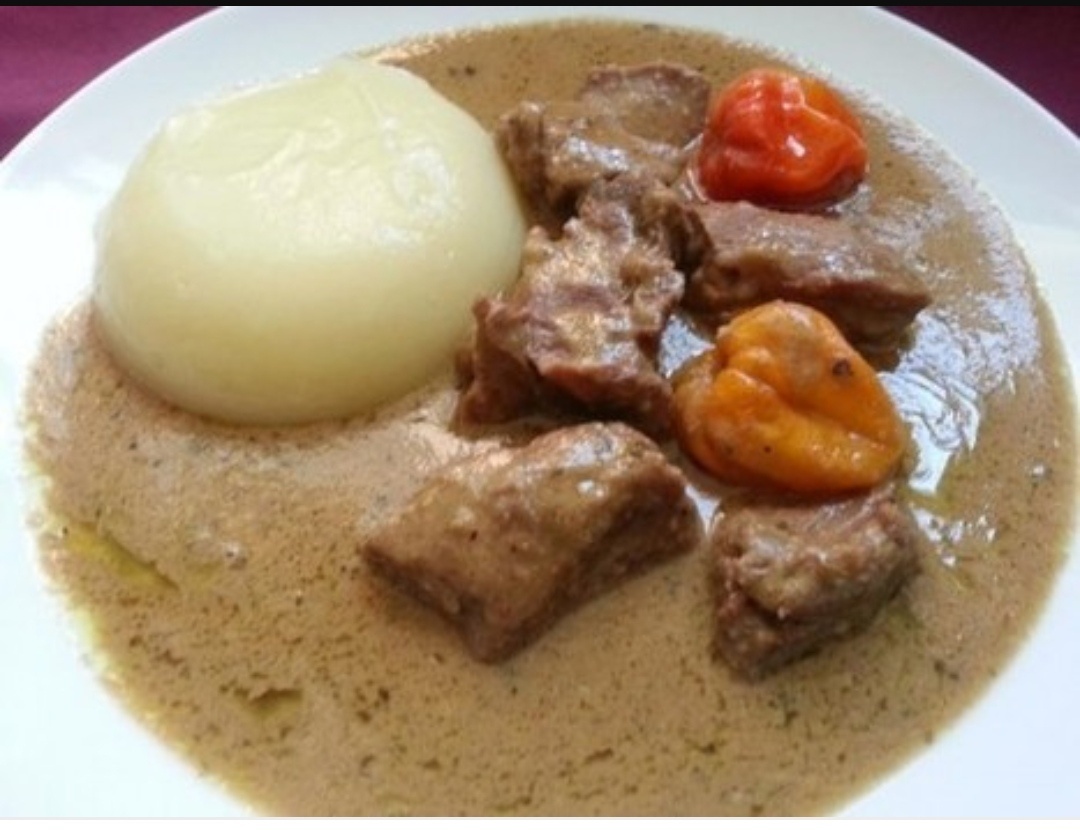 Peanut stew
🇸🇳 Senegal and 5 moreA rich West African stew of meat and vegetables in a spiced peanut sauce
Stew or curry, Lunch, Dinner
Peanut stew
🇸🇳 Senegal and 5 moreA rich West African stew of meat and vegetables in a spiced peanut sauce
Stew or curry, Lunch, Dinner
 ChakhchoukhaMeatشخشوخة
🇩🇿 AlgeriaAlgerian flatbread pieces in a spiced tomato and meat stew
Main dish, Lunch, Dinner
ChakhchoukhaMeatشخشوخة
🇩🇿 AlgeriaAlgerian flatbread pieces in a spiced tomato and meat stew
Main dish, Lunch, Dinner
 Türlü
🇹🇷 Turkey and 4 moreA baked stew of mixed vegetables, sometimes with meat, from Turkey and the Balkans
Main dish, Lunch, Dinner
Türlü
🇹🇷 Turkey and 4 moreA baked stew of mixed vegetables, sometimes with meat, from Turkey and the Balkans
Main dish, Lunch, Dinner
 Kala bhunaMeat
🇧🇩 BangladeshA dark, richly spiced beef curry from Chittagong, Bangladesh
Main dish, Lunch, Dinner
Kala bhunaMeat
🇧🇩 BangladeshA dark, richly spiced beef curry from Chittagong, Bangladesh
Main dish, Lunch, Dinner