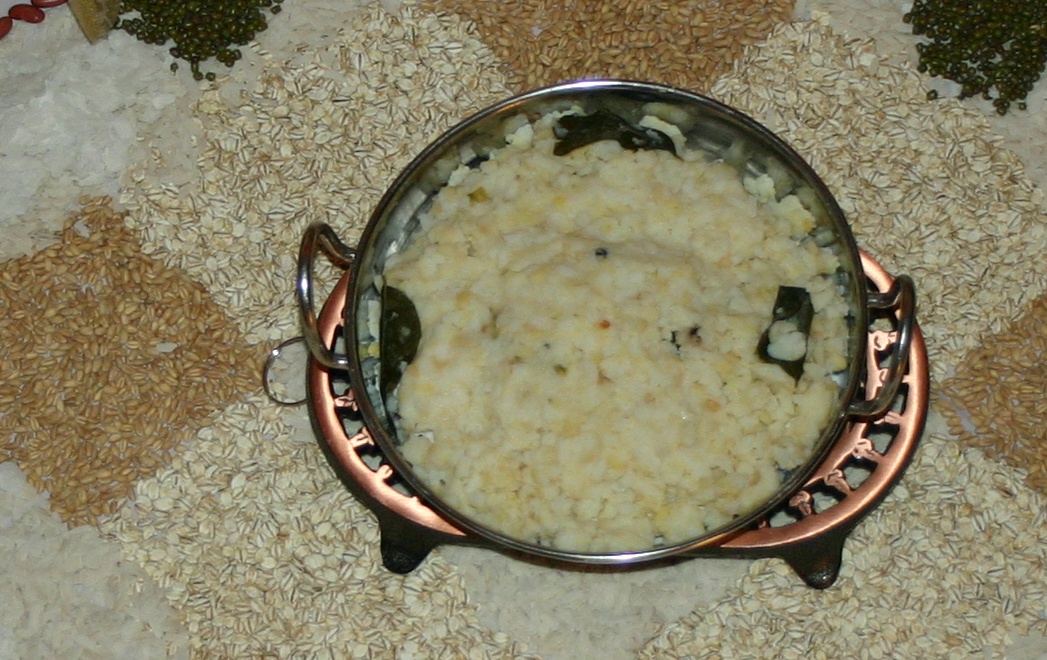
Pongal
Rice cooked in milk, central to the Tamil harvest festival
Pongal is a South Indian dish of rice boiled in milk, especially celebrated by Tamil people in India and Sri Lanka. It is closely tied to the Pongal harvest festival, when newly harvested rice is cooked and offered to Hindu deities. There are both savoury and sweet versions, using ingredients like lentils, jaggery, ghee, and spices.
- Pongal is the main dish of the Tamil harvest festival
- Made by boiling rice in milk, sometimes with lentils or jaggery
- Venn pongal is savoury; sakkarai pongal is sweet
- Offered to Hindu deities during the festival
- Common in South India and Sri Lanka
What is Pongal?
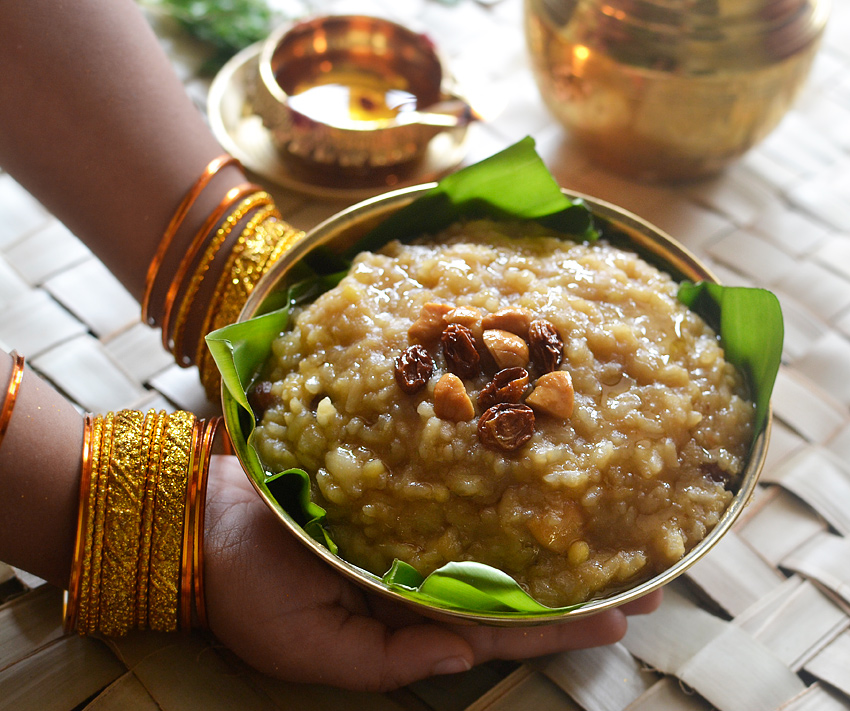
Pongal is a dish where rice is boiled with milk, sometimes with lentils or sweeteners. It is a staple for Tamil people, especially during the harvest season. The dish can be savoury or sweet. The savoury version often includes lentils, black pepper, ginger, cumin, curry leaves, and ghee, making it rich and aromatic. The sweet version uses jaggery, cardamom, cashews, raisins, nutmeg, and ghee, giving it a fragrant, dessert-like quality. Both are creamy and filling.
Where does Pongal come from?
Pongal comes from South India, particularly among Tamil communities, and is also found in Sri Lanka. The name means 'to boil over' in Tamil, reflecting both the cooking process and the festival's symbolism of abundance. The dish is a central part of the Pongal festival, a major harvest celebration. Traditionally, freshly harvested rice is cooked in milk and offered to Hindu deities as a sign of gratitude for the harvest.
How is Pongal made?
To make pongal, rice is boiled in milk, sometimes with lentils or vegetables. For savoury pongal, spices like black pepper, ginger, cumin, and curry leaves are added, along with ghee and cashews. The sweet version uses jaggery, cardamom, raisins, and nutmeg. The mixture is simmered until it thickens to a soft, porridge-like consistency. The dish is often cooked in a traditional pot, especially during the festival.


How and when is Pongal eaten?
Pongal is eaten during the Pongal festival, but also as an everyday meal, especially for breakfast. The savoury version is commonly served with coconut chutney and sometimes coffee. The sweet version is often offered to deities before being eaten as prasadam, a food blessed in worship. Families and communities gather to cook and share pongal, especially during the festival.
Kinds of Pongal
There are several types of pongal. Venn pongal is savoury, made with rice and lentils, and seasoned with spices and ghee. Sakkarai pongal is sweet, with jaggery, nuts, and dried fruit. Kozhi pongal includes chicken, while Sanyasi pongal is a vegetarian version with assorted vegetables. Each variation reflects local tastes and available ingredients.
What Pongal means
Pongal is deeply tied to Tamil culture and the harvest festival of the same name. Cooking pongal is a ritual act, symbolizing prosperity and gratitude. During the festival, people gather to cook the dish outdoors, letting it boil over as a sign of abundance. The act of offering pongal to deities and sharing it with others is central to the celebration.
When Pongal is on the table
Questions people ask about Pongal
What is pongal made of?
Pongal is made by boiling rice in milk. The savoury version includes lentils, ghee, and spices, while the sweet version uses jaggery, nuts, and dried fruit.
Where does pongal come from?
Pongal comes from South India, especially among Tamil people, and is also part of Sri Lankan Tamil cuisine.
When is pongal eaten?
Pongal is especially eaten during the Pongal harvest festival, but it is also a common breakfast or lunch dish in South India.
Are there different types of pongal?
Yes, there are savoury (venn pongal), sweet (sakkarai pongal), chicken (kozhi pongal), and vegetable (sanyasi pongal) versions.
Is pongal a religious food?
Yes, pongal is offered to Hindu deities during the Pongal festival and is eaten as prasadam, a food blessed in worship.
Good reading and sources
- Pongal (dish) on WikipediaEncyclopedia
- More photos on Wikimedia CommonsPhotos
- Wikidata recordOpen data
The facts on this page come from the Wikipedia article "Pongal (dish)", written by its contributors and used under the CC BY-SA 4.0 licence, and from its Wikidata record (CC0). Thali rewrote the text in its own words, with AI assistance, and compares every page with the article to make sure no passage is copied. It may be reused under the same CC BY-SA 4.0 licence with a link back.
It may contain mistakes, and it is not dietary or allergy advice: recipes differ from cook to cook. If something is wrong, tell us. Last refreshed 2026-10-03.
More from India
All the food of India Ice cream
🇺🇸 United States and 5 moreA frozen dessert made from sweetened, flavoured milk or cream
Sweet or dessert, Snacks
Ice cream
🇺🇸 United States and 5 moreA frozen dessert made from sweetened, flavoured milk or cream
Sweet or dessert, Snacks
 Kebabكَبَاب
🇹🇷 Turkey and 5 moreGrilled or roasted meat, often on skewers, found across the Middle East and beyond
Main dish, Lunch, Dinner
Halvaحَلَاوَة
🇮🇷 Iran and 5 moreDense sweet made from seeds, grains, or vegetables, found across Asia, Africa, and Europe
Sweet or dessert, Snacks, Tea time
Kebabكَبَاب
🇹🇷 Turkey and 5 moreGrilled or roasted meat, often on skewers, found across the Middle East and beyond
Main dish, Lunch, Dinner
Halvaحَلَاوَة
🇮🇷 Iran and 5 moreDense sweet made from seeds, grains, or vegetables, found across Asia, Africa, and Europe
Sweet or dessert, Snacks, Tea time
 Candy
🇺🇸 United States and 5 moreSmall sweet treats made mainly from sugar or sweeteners
Sweet or dessert, Snacks
Candy
🇺🇸 United States and 5 moreSmall sweet treats made mainly from sugar or sweeteners
Sweet or dessert, Snacks
Its cousins elsewhere
All main dishes HilbetVeganሕልበት
🇪🇷 Eritrea and 1 moreCreamy vegan dip of fava beans, lentils and spices from Eritrea and Ethiopia
Main dish, Lunch, Dinner
HilbetVeganሕልበት
🇪🇷 Eritrea and 1 moreCreamy vegan dip of fava beans, lentils and spices from Eritrea and Ethiopia
Main dish, Lunch, Dinner
 JuaneMeat
🇵🇪 PeruRice, meat, and egg wrapped in leaves and boiled, from the Peruvian Amazon
Main dish
JuaneMeat
🇵🇪 PeruRice, meat, and egg wrapped in leaves and boiled, from the Peruvian Amazon
Main dish
 Cabbage roll
🇺🇦 Ukraine and 5 moreCooked cabbage leaves wrapped around seasoned fillings, simmered or baked
Main dish, Lunch, Dinner
Cabbage roll
🇺🇦 Ukraine and 5 moreCooked cabbage leaves wrapped around seasoned fillings, simmered or baked
Main dish, Lunch, Dinner