
Qifqi
Herbed rice balls from Gjirokastër, shaped and fried in a special pan
Qifqi are small rice balls from Gjirokastër in southern Albania, made by mixing cooked rice with eggs and dried mint, then frying them in a pan with round molds. This dish is a hallmark of the local cuisine and is usually served warm, often as a starter, side, or light meal, sometimes with cheese or yogurt.
- Qifqi is a specialty of Gjirokastër in southern Albania
- Made by frying rice mixed with eggs and dried mint
- Shaped using a pan with round molds called qifqi tigan
- Often served warm with cheese or yogurt
What is Qifqi?
Qifqi are bite-sized rice balls, round in shape, with a crisp outer layer and a soft, herby center. The main ingredients are rice, eggs, and dried mint, which give the dish a fresh and aromatic flavor. The mixture is formed into balls using a pan with several round wells, then fried until golden. Qifqi are typically served warm, and their texture is both tender and slightly crunchy from frying.
Where does Qifqi come from?
Qifqi comes from Gjirokastër, a city in southern Albania, and is closely tied to the region’s food traditions. Locals say it was once made for new mothers, believed to help with milk production. Another story links its creation to using up leftover rice from large celebrations, such as weddings, by turning it into a new dish. Over time, qifqi became a signature food of Gjirokastër, with its basic recipe staying much the same.
How is Qifqi made?
To prepare qifqi, rice is first cooked with butter and either chicken stock or water until all the liquid is absorbed. Once cooled, the rice is combined with eggs, dried mint, salt, and black pepper, making a soft mixture. This is spooned into the wells of a special pan designed for qifqi, which shapes the mixture into balls. Each ball is fried, turned to brown on all sides, and served warm.
How and when is Qifqi eaten?
Qifqi is usually enjoyed as a starter, a side, or a light meal. It is often served at home, especially during family gatherings or local food events. People in Gjirokastër may eat it with white cheese, yogurt, or dhallë, a drink made from yogurt. The dish is part of everyday meals rather than tied to specific holidays or rituals.
Kinds of Qifqi
While the core ingredients of rice, eggs, and dried mint are standard, families may have their own small changes to the recipe. Some might use different herbs or adjust the amount of seasoning. The use of a traditional pan is common, but the number of wells can vary. Despite these small differences, the overall method and taste remain similar throughout the region.
What Qifqi means
Qifqi is a point of pride in Gjirokastër and is seen as a symbol of the city’s culinary identity. It is featured at local gatherings and food festivals, where it represents the area’s traditions. The dish’s connection to home cooking and its practical use of leftovers highlight its role in everyday life in southern Albania.
Questions people ask about Qifqi
What is qifqi made of?
Qifqi is made from cooked rice, eggs, dried mint, salt, black pepper, and butter. The mixture is shaped into balls and fried in olive oil using a special pan.
Where does qifqi come from?
Qifqi is a traditional dish from Gjirokastër, a city in southern Albania. It is a well-known part of the local cuisine.
How is qifqi cooked?
Rice is cooked with butter and stock or water, then mixed with eggs and herbs. The mixture is placed in a special pan with round molds and fried until golden.
When is qifqi usually eaten?
Qifqi is eaten as a starter, side, or light meal, often at lunch or dinner. It is common at family gatherings and local food events.
What do people serve with qifqi?
It is often served with white cheese, yogurt, or dhallë, a yogurt-based drink.
Good reading and sources
The facts on this page come from the Wikipedia article "Qifqi", written by its contributors and used under the CC BY-SA 4.0 licence, and from its Wikidata record (CC0). Thali rewrote the text in its own words, with AI assistance, and compares every page with the article to make sure no passage is copied. It may be reused under the same CC BY-SA 4.0 licence with a link back.
It may contain mistakes, and it is not dietary or allergy advice: recipes differ from cook to cook. If something is wrong, tell us. Last refreshed 2026-10-03.
More from Albania
All the food of Albania Börek
🇹🇷 Turkey and 5 moreFlaky pastry filled with cheese, meat or vegetables, baked or fried
Pie or savoury pastry, Breakfast, Lunch
Börek
🇹🇷 Turkey and 5 moreFlaky pastry filled with cheese, meat or vegetables, baked or fried
Pie or savoury pastry, Breakfast, Lunch
 Imam BayıldıVeganİmam bayıldı
🇹🇷 Turkey and 5 moreAubergine stuffed with onion, garlic and tomato, simmered in olive oil
Main dish, Lunch, Dinner
Imam BayıldıVeganİmam bayıldı
🇹🇷 Turkey and 5 moreAubergine stuffed with onion, garlic and tomato, simmered in olive oil
Main dish, Lunch, Dinner
 AshureVeganAşure
🇹🇷 Turkey and 3 moreSweet porridge of grains, dried fruits and nuts shared for festivals and remembrance
Sweet or dessert
AshureVeganAşure
🇹🇷 Turkey and 3 moreSweet porridge of grains, dried fruits and nuts shared for festivals and remembrance
Sweet or dessert
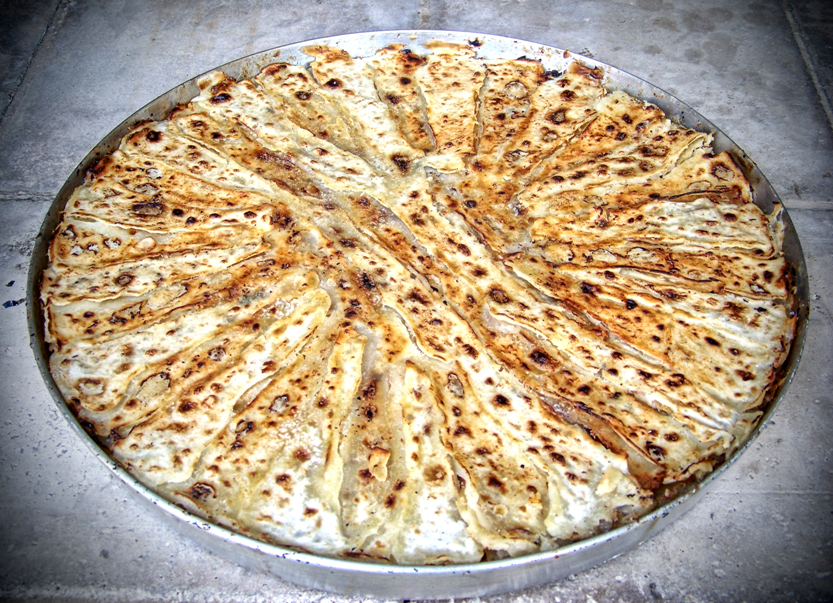 FliaVegetarianfli
🇦🇱 Albania and 1 moreLayered Albanian dish baked in the shape of the sun
Main dish, Lunch, Dinner
FliaVegetarianfli
🇦🇱 Albania and 1 moreLayered Albanian dish baked in the shape of the sun
Main dish, Lunch, Dinner
Its cousins elsewhere
All main dishes Pelmeniпельмени
🇷🇺 RussiaRussian dumplings filled with seasoned meat and wrapped in thin dough
Dumpling, Lunch, Dinner
Pelmeniпельмени
🇷🇺 RussiaRussian dumplings filled with seasoned meat and wrapped in thin dough
Dumpling, Lunch, Dinner
 Menemen
🇹🇷 TurkeyEggs gently cooked with tomatoes, peppers, and spices, often served for breakfast in Turkey
Main dish, Breakfast, Lunch
Menemen
🇹🇷 TurkeyEggs gently cooked with tomatoes, peppers, and spices, often served for breakfast in Turkey
Main dish, Breakfast, Lunch
 KedgereeFish or seafood
🇮🇳 India and 1 moreRice and smoked fish with eggs, herbs and mild spices
Main dish, Breakfast, Lunch
KedgereeFish or seafood
🇮🇳 India and 1 moreRice and smoked fish with eggs, herbs and mild spices
Main dish, Breakfast, Lunch
 SaleegMeatسليق
🇸🇦 Saudi ArabiaRice cooked with broth and milk, topped with roasted meat from western Saudi Arabia
Main dish, Lunch, Dinner
SaleegMeatسليق
🇸🇦 Saudi ArabiaRice cooked with broth and milk, topped with roasted meat from western Saudi Arabia
Main dish, Lunch, Dinner