
Kedgeree
Rice and smoked fish with eggs, herbs and mild spices
Kedgeree is a dish of flaked fish, usually smoked haddock, mixed with boiled rice, hard-boiled eggs, parsley, curry powder, lemon juice, and butter or cream. It began as a rice and lentil dish in India and became a popular breakfast in Britain, especially in Victorian times. Kedgeree can be served hot or cold.
- Traditionally made with smoked haddock, rice, eggs, and parsley
- Can be served hot or cold
- Originated from Indian khichari, a rice and lentil dish
- Popularized in Britain as a Victorian breakfast
- Sometimes includes sultanas for sweetness
What is Kedgeree?
Kedgeree is a mix of flaked fish, most often smoked haddock, and boiled rice. Hard-boiled eggs are sliced or chopped and stirred in, along with chopped parsley and a mild curry powder. Lemon juice adds a fresh note, and the dish is finished with butter or cream for richness. Sometimes sultanas, which are a type of raisin, are included. The result is a pale yellow dish, speckled with green herbs and pieces of egg, with a gentle aroma of smoke and spice.
Where does Kedgeree come from?
Kedgeree traces its roots to India, where rice and lentil dishes called khichari or khichdi have been eaten for centuries. These Indian dishes use a blend of spices and sometimes include fish, especially in coastal areas. The version with fish and eggs was enjoyed by the Mughal emperor Aurangzeb. British colonials brought the idea back from India, and it became a breakfast dish in the United Kingdom in the 18th and 19th centuries. Early recipes appear in Scottish cookbooks, and it became popular in Victorian England.
How is Kedgeree made?
To make kedgeree, rice is boiled until tender. Smoked haddock is poached and then flaked into pieces. Hard-boiled eggs are peeled and chopped. The rice, fish, and eggs are gently mixed together with chopped parsley and a mild curry powder. Lemon juice, salt, and either butter or cream are stirred in to finish the dish. Some versions add sultanas for a touch of sweetness. Kedgeree can be served either hot or cold.
How and when is Kedgeree eaten?
Kedgeree is most often eaten for breakfast or brunch, but it can also be served at lunch. In Britain, it became a familiar morning dish in both upper-class and working-class homes. It is sometimes eaten cold, especially when made with leftovers. Kedgeree is usually served on its own, but it may be accompanied by extra lemon wedges or toast. In Scotland, kippers (smoked herring) may be used instead of haddock.
Kinds of Kedgeree
While smoked haddock is traditional, other fish like tuna or salmon are sometimes used, though these are less common. In Scotland, kippers are a popular substitute. The Indian dish khichari, which inspired kedgeree, is made with rice and lentils or beans and a unique blend of spices. Some British recipes include sultanas for sweetness. The basic method remains the same, but the choice of fish and the addition of ingredients like sultanas or cream can vary.
What Kedgeree means
Kedgeree became a symbol of the blending of Indian and British food traditions. It was a staple of Victorian breakfasts and was even served at the White House during Franklin D. Roosevelt’s presidency. In Britain, it moved from the tables of the wealthy to become a practical meal for families and institutions, thanks to its use of leftovers and affordable smoked fish. It remains a reminder of colonial history and changing tastes.
Questions people ask about Kedgeree
What is kedgeree made of?
Kedgeree is made of boiled rice, flaked smoked haddock, hard-boiled eggs, parsley, curry powder, lemon juice, and butter or cream. Some versions also include sultanas.
Where does kedgeree come from?
Kedgeree has its roots in India, inspired by the rice and lentil dish khichari. It was adapted in Britain, where it became a popular breakfast dish.
Is kedgeree always made with smoked haddock?
Smoked haddock is traditional, but other fish like tuna, salmon, or kippers may be used, especially in Scotland. However, these are not the classic choice.
When is kedgeree usually eaten?
Kedgeree is most often eaten for breakfast or brunch, but it can also be served at lunch. It is sometimes eaten cold as well as hot.
Does kedgeree contain meat or is it vegetarian?
Kedgeree is a fish dish and contains smoked fish and eggs, so it is not vegetarian. The Indian khichari, which inspired it, is usually vegetarian.
Good reading and sources
The facts on this page come from the Wikipedia article "Kedgeree", written by its contributors and used under the CC BY-SA 4.0 licence, and from its Wikidata record (CC0). Thali rewrote the text in its own words, with AI assistance, and compares every page with the article to make sure no passage is copied. It may be reused under the same CC BY-SA 4.0 licence with a link back.
It may contain mistakes, and it is not dietary or allergy advice: recipes differ from cook to cook. If something is wrong, tell us. Last refreshed 2026-10-03.
More from India
All the food of India Kebabكَبَاب
🇹🇷 Turkey and 5 moreGrilled or roasted meat, often on skewers, found across the Middle East and beyond
Main dish, Lunch, Dinner
Kebabكَبَاب
🇹🇷 Turkey and 5 moreGrilled or roasted meat, often on skewers, found across the Middle East and beyond
Main dish, Lunch, Dinner
 Biryani
🇮🇳 India and 5 moreRice and spiced meat or vegetables layered and cooked together
Main dish, Lunch, Dinner
Biryani
🇮🇳 India and 5 moreRice and spiced meat or vegetables layered and cooked together
Main dish, Lunch, Dinner
 French toast
🇫🇷 France and 5 moreBread soaked in egg and milk, pan-fried and served sweet or savoury
Main dish, Breakfast, Snacks
French toast
🇫🇷 France and 5 moreBread soaked in egg and milk, pan-fried and served sweet or savoury
Main dish, Breakfast, Snacks
 Fish and chipsFish or seafood
🇬🇧 United Kingdom and 8 moreBattered fried fish served hot with thick-cut chips
Main dish, Lunch, Dinner
Fish and chipsFish or seafood
🇬🇧 United Kingdom and 8 moreBattered fried fish served hot with thick-cut chips
Main dish, Lunch, Dinner
Its cousins elsewhere
All main dishes QifqiVegetarian
🇦🇱 AlbaniaHerbed rice balls from Gjirokastër, shaped and fried in a special pan
Main dish, Lunch, Dinner
QifqiVegetarian
🇦🇱 AlbaniaHerbed rice balls from Gjirokastër, shaped and fried in a special pan
Main dish, Lunch, Dinner
 Tavë KosiMeat
🇦🇱 Albania and 4 moreAlbanian casserole of lamb, rice and tangy yogurt baked until golden
Main dish, Lunch, Dinner
Tavë KosiMeat
🇦🇱 Albania and 4 moreAlbanian casserole of lamb, rice and tangy yogurt baked until golden
Main dish, Lunch, Dinner
 Crêpe
🇫🇷 FranceThin French pancakes, served sweet or savoury with a range of fillings
Main dish, Breakfast, Lunch
Crêpe
🇫🇷 FranceThin French pancakes, served sweet or savoury with a range of fillings
Main dish, Breakfast, Lunch
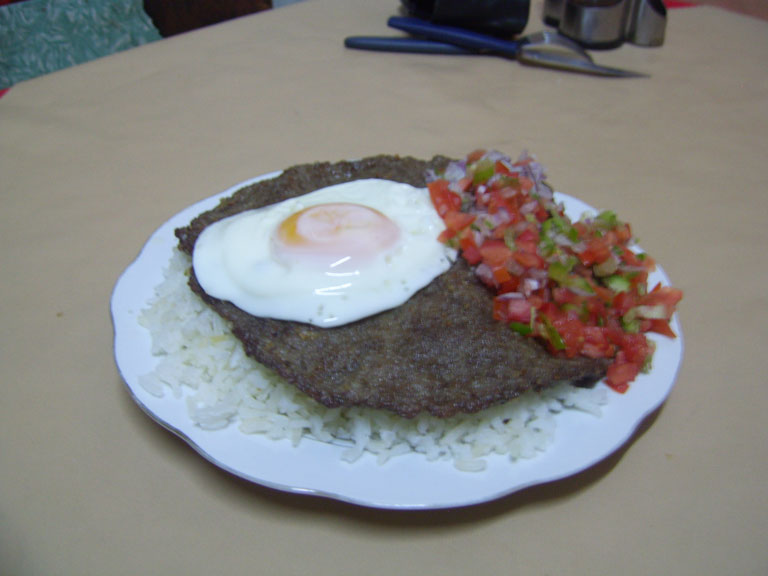 SilpanchoMeatSillp'anchu
🇧🇴 BoliviaLayered Bolivian meal with rice, potatoes, breaded meat, and fried eggs
Main dish, Lunch, Dinner
SilpanchoMeatSillp'anchu
🇧🇴 BoliviaLayered Bolivian meal with rice, potatoes, breaded meat, and fried eggs
Main dish, Lunch, Dinner