Flia
In its own language: fli
Layered Albanian dish baked in the shape of the sun
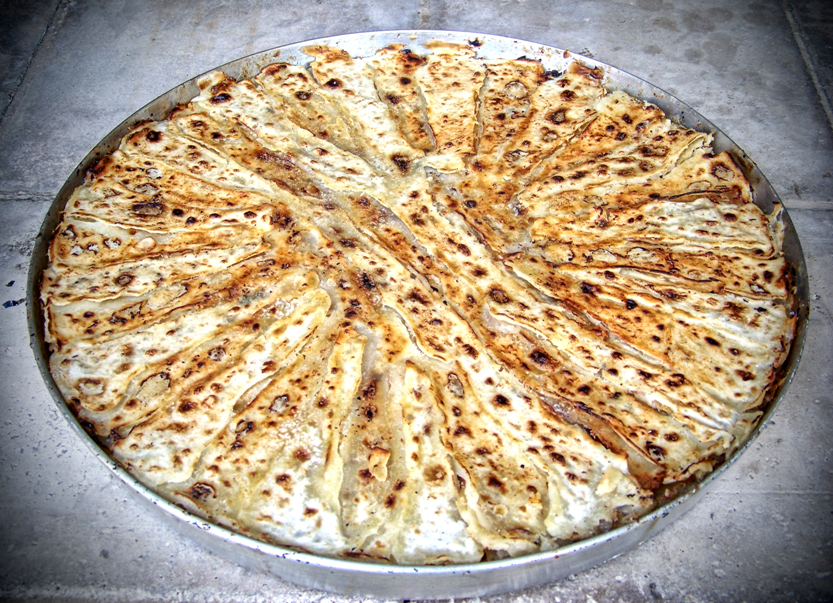
Flia is a traditional Albanian main dish from northern Albania and Kosovo, made of thin layers of batter brushed with cream or dairy and baked in a sun-like pattern. It uses simple ingredients like flour, water, and salt, and is often served with sour cream, butter, or white cheese. Flia is eaten at family gatherings, especially during spring festivals.
- Made of many thin layers of batter brushed with cream or dairy
- Traditionally baked in a sun-like pattern
- Served with sour cream, butter, or white cheese
- Central to the Verëza spring festival and Flia Day
- Prepared for family gatherings in Albania and Kosovo
What is Flia?
Flia is a savory Albanian dish made by layering thin, pancake-like batter with cream or dairy between each layer. The batter is a simple mix of flour, water, and salt, sometimes enriched with eggs and yogurt. Once baked, the dish is cut into sunbeam shapes, reflecting its traditional presentation. It is usually served hot, often with sour cream, butter, or white cheese. The texture is soft and slightly chewy, with a rich dairy flavor.
Where does Flia come from?
Flia comes from northern Albania and is also a part of Kosovo's food traditions. Its name means 'sacrifice,' and it has roots in ancient customs, possibly linked to offerings for the Sun-god during the spring equinox. The dish is closely tied to the Verëza festival, and its sun-shaped form reflects this symbolism. Flia has long been a centerpiece for family gatherings and festive occasions in Albanian communities.
How is Flia made?
To make flia, a batter of flour, water, and salt is prepared, sometimes with yogurt, eggs, or oil added. The batter is poured in thin layers onto a baking surface, traditionally under a saq, a domed metal lid used for baking over embers. Each layer is brushed with butter or cream before adding the next. The process is repeated until several layers are formed, then the whole is baked until golden. Flia can also be baked in a modern oven.

How and when is Flia eaten?
Flia is usually eaten hot, cut into wedges or strips that resemble sunbeams. It is a main dish for lunch or dinner, often shared among family and friends. Common accompaniments include sour cream, butter, white cheese, or pickled cucumber. In Kosovo, it is a traditional Sunday meal, while in Albania, it is especially popular during spring festivals. Flia is a dish for gatherings, meant to be enjoyed together.
Kinds of Flia
Some versions of flia use kaymak, a rich dairy cream, as the filling between layers. Toppings and sides can vary, with some families serving it with pickled vegetables like turshia. While the traditional method uses a saq for baking, ovens are now also used, allowing more than one flia to be baked at a time. The basic batter and layering technique remain the same across regions.
What Flia means
Flia holds a special place in Albanian culture, symbolizing hospitality and togetherness. March 17 is celebrated as Flia Day, especially during the Verëza festival, when families invite relatives and friends to prepare and eat flia together. Its sun-shaped design connects it to ancient traditions of honoring the Sun-god. In Kosovo, the custom of eating flia on Sundays continues as a weekly ritual.
Questions people ask about Flia
What is flia made of?
Flia is made from a batter of flour, water, and salt, sometimes with yogurt, eggs, oil, and butter. The layers are brushed with cream or dairy before baking.
Where does flia come from?
Flia is a traditional dish from northern Albania and is also part of the cuisine of Kosovo. It is especially associated with Albanian communities.
How is flia traditionally cooked?
Flia is traditionally baked under a saq, a domed metal lid placed over embers. Each layer of batter is brushed with butter or cream before adding the next. It can also be baked in an oven.
When is flia usually eaten?
Flia is eaten during lunch or dinner, often at family gatherings or festivals. In Kosovo, it is commonly served on Sundays, and in Albania, it is central to the Verëza spring festival.
What does flia taste like?
Flia is savory, with a soft and slightly chewy texture. The flavor is rich from the dairy used between the layers, and it is often served with sour cream, butter, or cheese.
Good reading and sources
The facts on this page come from the Wikipedia article "Flia", written by its contributors and used under the CC BY-SA 4.0 licence, and from its Wikidata record (CC0). Thali rewrote the text in its own words, with AI assistance, and compares every page with the article to make sure no passage is copied. It may be reused under the same CC BY-SA 4.0 licence with a link back.
It may contain mistakes, and it is not dietary or allergy advice: recipes differ from cook to cook. If something is wrong, tell us. Last refreshed 2026-10-03.
More from Albania
All the food of Albania QifqiVegetarian
🇦🇱 AlbaniaHerbed rice balls from Gjirokastër, shaped and fried in a special pan
Main dish, Lunch, Dinner
QifqiVegetarian
🇦🇱 AlbaniaHerbed rice balls from Gjirokastër, shaped and fried in a special pan
Main dish, Lunch, Dinner
 Börek
🇹🇷 Turkey and 5 moreFlaky pastry filled with cheese, meat or vegetables, baked or fried
Pie or savoury pastry, Breakfast, Lunch
Börek
🇹🇷 Turkey and 5 moreFlaky pastry filled with cheese, meat or vegetables, baked or fried
Pie or savoury pastry, Breakfast, Lunch
 Imam BayıldıVeganİmam bayıldı
🇹🇷 Turkey and 5 moreAubergine stuffed with onion, garlic and tomato, simmered in olive oil
Main dish, Lunch, Dinner
Imam BayıldıVeganİmam bayıldı
🇹🇷 Turkey and 5 moreAubergine stuffed with onion, garlic and tomato, simmered in olive oil
Main dish, Lunch, Dinner
 AshureVeganAşure
🇹🇷 Turkey and 3 moreSweet porridge of grains, dried fruits and nuts shared for festivals and remembrance
Sweet or dessert
AshureVeganAşure
🇹🇷 Turkey and 3 moreSweet porridge of grains, dried fruits and nuts shared for festivals and remembrance
Sweet or dessert
Its cousins elsewhere
All main dishes Gözleme
🇹🇷 TurkeyTurkish flatbread turnover filled with meat, cheese, or vegetables
Main dish, Breakfast, Lunch
Gözleme
🇹🇷 TurkeyTurkish flatbread turnover filled with meat, cheese, or vegetables
Main dish, Breakfast, Lunch
 Pelmeniпельмени
🇷🇺 RussiaRussian dumplings filled with seasoned meat and wrapped in thin dough
Dumpling, Lunch, Dinner
Pelmeniпельмени
🇷🇺 RussiaRussian dumplings filled with seasoned meat and wrapped in thin dough
Dumpling, Lunch, Dinner
 Pancake
🇺🇸 United States and 5 moreFlat cakes made from batter, cooked on a griddle or pan and served sweet or savoury
Main dish, Breakfast, Snacks
Pancake
🇺🇸 United States and 5 moreFlat cakes made from batter, cooked on a griddle or pan and served sweet or savoury
Main dish, Breakfast, Snacks
 Roti
🇮🇳 India and 5 moreUnleavened flatbread made from whole-wheat flour, common across South Asia and beyond
Bread, Breakfast, Lunch
Roti
🇮🇳 India and 5 moreUnleavened flatbread made from whole-wheat flour, common across South Asia and beyond
Bread, Breakfast, Lunch