
Sangria
In its own language: sangría
Red wine mixed with fruit and served cold, from Spain and Portugal
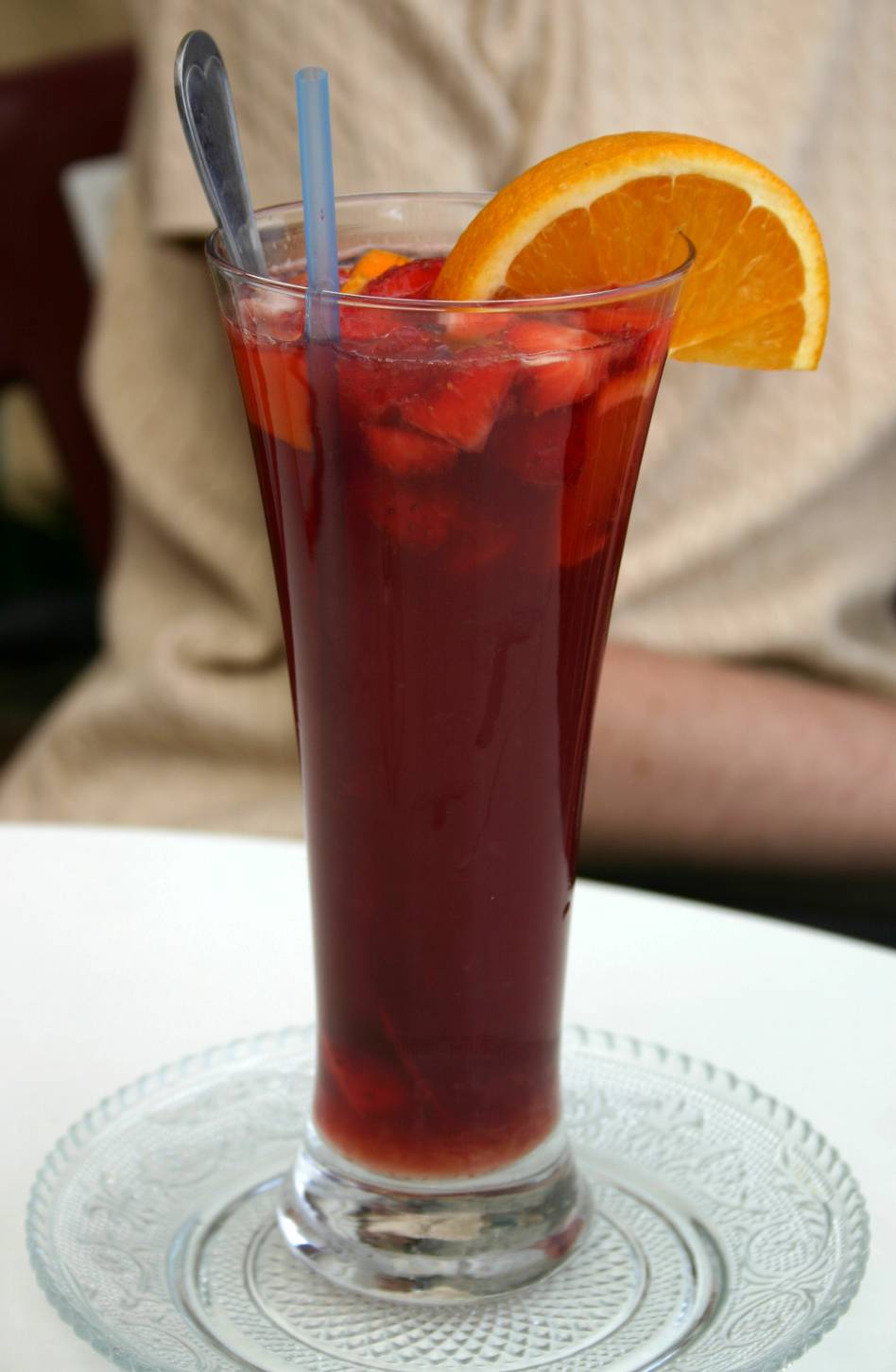
Sangria is a chilled punch from Spain and Portugal, made by combining red wine with chopped fruit and sweeteners. Sometimes spirits or soft drinks are added. Served cold, it is popular at gatherings, bars, and festivals, especially in summer.
- Sangria is a punch made with wine, fruit, and sweetener
- Only Spain and Portugal can sell their product as 'sangria' in the EU
- The drink is served cold, often in a pitcher
- Sangria can include spirits or soft drinks
- Sangria blanca uses white wine instead of red
What is Sangria?
Sangria is a punch that starts with red wine, to which pieces of fruit are added—these might include oranges, apples, peaches, or berries. The mix is sweetened with sugar and sometimes orange juice, and it may be topped up with a soft drink or a splash of spirits. The drink is served cold, often in a pitcher, and has a deep color from the wine and fruit. Its taste is fruity, sweet, and refreshing, with the wine's flavor softened by the fruit and sugar.
Where does Sangria come from?
The name 'sangria' comes from the Spanish and Portuguese word for 'bloodletting', likely referring to its rich color. Its roots trace back to the Middle Ages in the Kingdom of León, where a similar drink called Leonese lemonade was made from wine, citrus, sugar, and spices. Over time, sangria evolved as a punch in Spain and Portugal. A related drink, sangaree, was known in the Caribbean and colonial America. Sangria gained new popularity in the United States in the mid-20th century.
How is Sangria made?
To prepare sangria, red wine is poured over chopped fruit in a large container. Sugar and sometimes orange juice are stirred in to sweeten the mix. Some recipes add a splash of brandy, liqueur, or sparkling water. The mixture is left to chill so the flavors blend. It is served cold, often with ice, and poured from a pitcher into glasses. Variations may use white wine or sparkling wine instead of red.


How and when is Sangria eaten?
Sangria is usually enjoyed in social settings, such as at parties, bars, restaurants, or outdoor gatherings. It is especially common at festivals and during warm weather. The drink is poured into glasses from a shared pitcher, and sometimes pieces of fruit are eaten from the glass. While it is popular with visitors to Spain and Portugal, locals may drink it less often than tourists.
Kinds of Sangria
Many regions in Spain have their own versions of sangria, using local fruits or wines. Sangria blanca uses white wine instead of red, and sangria de cava is made with Spanish sparkling wine. There is also a non-alcoholic version for children, where fruit and soft drinks are mixed to imitate the look and flavor of sangria. Each area may choose different fruits or add spirits to adjust the taste.
What Sangria means
Sangria is closely linked to Spanish and Portuguese hospitality and is a common sight at celebrations and festivals. It is often served in bars and at outdoor events, especially in the summer. European law now protects the name 'sangria', so only drinks made in Spain and Portugal can use it on labels within the EU. This legal status highlights its cultural importance in these countries.
Questions people ask about Sangria
What is sangria made of?
Sangria is made by mixing red wine with chopped fruit such as oranges or apples, sweetened with sugar, and sometimes combined with orange juice, spirits, or a soft drink.
Where does sangria come from?
Sangria comes from Spain and Portugal, with historical roots in the Kingdom of León and a tradition of wine-based punches in the region.
Is sangria always made with red wine?
Red wine is traditional, but there are versions like sangria blanca, which uses white wine, and sangria de cava, which uses sparkling wine.
When is sangria usually served?
Sangria is commonly served at festivals, parties, and in bars or restaurants, especially during warm weather or at social gatherings.
Can sangria be non-alcoholic?
Yes, there are versions for children where fruit and soft drinks replace the wine, often for birthday parties.
Good reading and sources
The facts on this page come from the Wikipedia article "Sangria", written by its contributors and used under the CC BY-SA 4.0 licence, and from its Wikidata record (CC0). Thali rewrote the text in its own words, with AI assistance, and compares every page with the article to make sure no passage is copied. It may be reused under the same CC BY-SA 4.0 licence with a link back.
It may contain mistakes, and it is not dietary or allergy advice: recipes differ from cook to cook. If something is wrong, tell us. Last refreshed 2026-10-03.
More from Spain
All the food of Spain Hot chocolate
🇲🇽 Mexico and 5 moreA warm drink made from chocolate or cocoa, milk or water, and sugar
Drink, Breakfast, Snacks
Hot chocolate
🇲🇽 Mexico and 5 moreA warm drink made from chocolate or cocoa, milk or water, and sugar
Drink, Breakfast, Snacks
 JeropigaVegan
🇵🇹 Portugal and 1 morePortuguese sweet fortified drink made by adding aguardente to grape must
Drink
JeropigaVegan
🇵🇹 Portugal and 1 morePortuguese sweet fortified drink made by adding aguardente to grape must
Drink
 SherryVeganJerez
🇪🇸 SpainFortified wine from southern Spain, made mainly from Palomino grapes
Drink
SherryVeganJerez
🇪🇸 SpainFortified wine from southern Spain, made mainly from Palomino grapes
Drink
 HorchataVegan
🇪🇸 Spain and 5 moreSweet plant-based drink made from rice, tiger nuts or seeds
Drink, Snacks
HorchataVegan
🇪🇸 Spain and 5 moreSweet plant-based drink made from rice, tiger nuts or seeds
Drink, Snacks
Its cousins elsewhere
All drinks BhangVeganभांग
🇮🇳 IndiaCannabis leaf paste used in drinks and sweets, central to Indian spring festivals
Drink, Snacks
BhangVeganभांग
🇮🇳 IndiaCannabis leaf paste used in drinks and sweets, central to Indian spring festivals
Drink, Snacks
 SharbatVeganشربت
🇮🇷 Iran and 5 moreSweet fruit or flower drink, served chilled or as a syrup
Drink, Snacks
'OtaiVegan
🇹🇴 Tonga and 1 moreA chilled fruit and coconut drink from Tonga and Samoa
Drink
SharbatVeganشربت
🇮🇷 Iran and 5 moreSweet fruit or flower drink, served chilled or as a syrup
Drink, Snacks
'OtaiVegan
🇹🇴 Tonga and 1 moreA chilled fruit and coconut drink from Tonga and Samoa
Drink
 Aguas frescasVegan
🇲🇽 Mexico and 5 moreLight drinks of fruit, seeds or flowers blended with water and sugar
Drink, Snacks
Aguas frescasVegan
🇲🇽 Mexico and 5 moreLight drinks of fruit, seeds or flowers blended with water and sugar
Drink, Snacks