
Sashimi
In its own language: 刺身
Thin slices of raw fish or meat, served with soy sauce and condiments
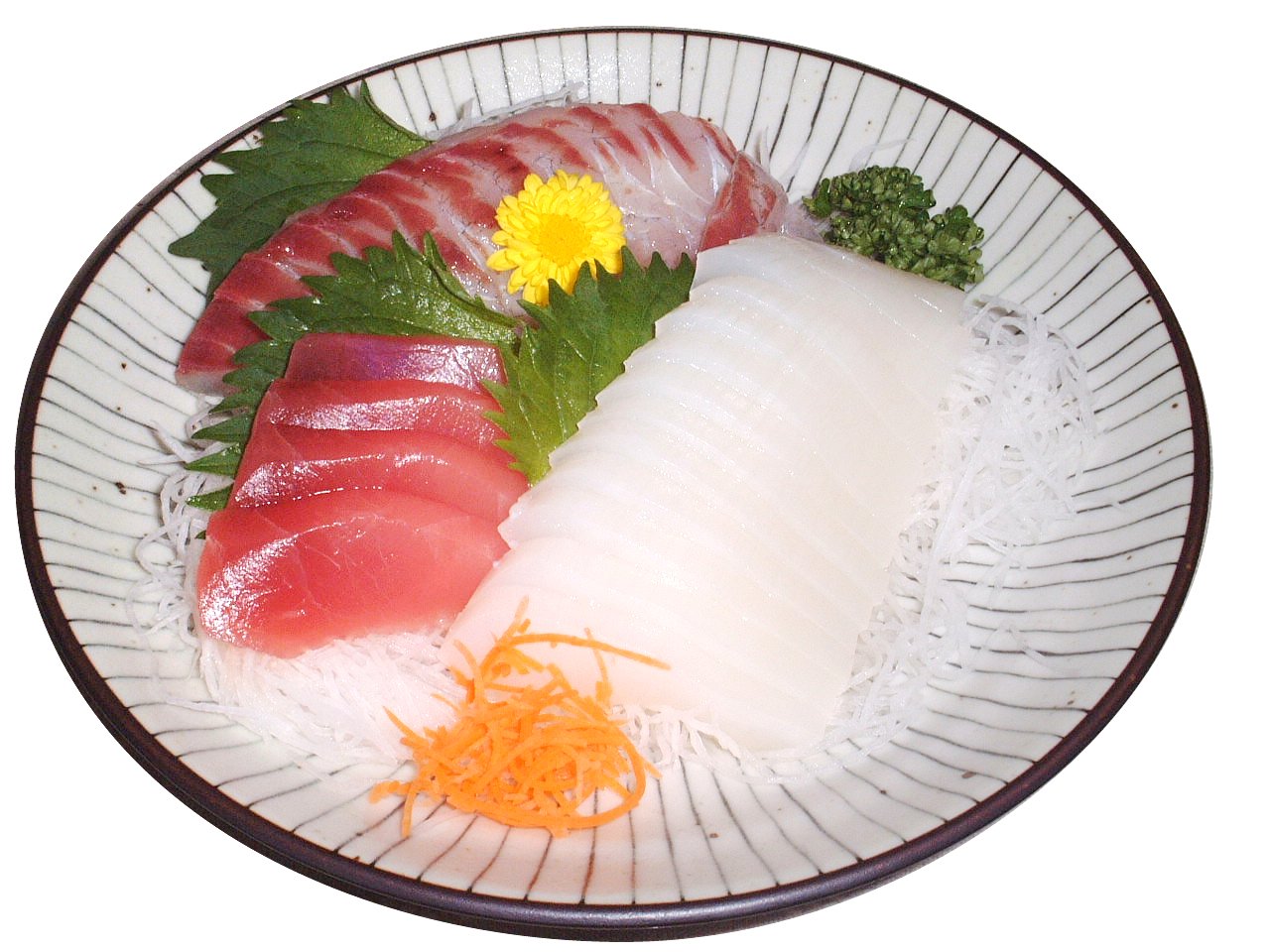
Sashimi is a Japanese dish of fresh raw fish or meat, sliced thinly and served with soy sauce and garnishes like shredded daikon radish or shiso leaves. It is considered a delicacy and often appears at the start of formal meals in Japan. Sashimi highlights the freshness and natural flavor of its main ingredient, and can include seafood, meats, or even vegetables.
- Sashimi is always served without rice, unlike sushi.
- Common garnishes include shredded daikon radish and shiso leaves.
- Popular sashimi fish are tuna, salmon, squid, and mackerel.
- Some sashimi, like octopus, may be lightly cooked.
- Vegetarian sashimi can use yuba, avocado, or konnyaku.
What is Sashimi?
Sashimi is a dish from Japan made of raw fish or other meats, sliced into thin pieces. The slices are usually served on a bed of shredded daikon radish or with shiso leaves, which are both used as garnish and called tsuma. The main ingredient is most often seafood such as tuna, salmon, squid, or octopus, but beef, horse, and even vegetables like avocado or bamboo shoots can be used. Sashimi is served with soy sauce and often accompanied by wasabi, ginger, or other condiments. The focus is on the freshness and clean flavor of the main ingredient.
Where does Sashimi come from?
The term sashimi dates back to Japan’s Muromachi period (1336–1573) and means 'pierced body.' It may refer to the traditional method of quickly killing fish by piercing the brain to keep the flesh fresh. Sashimi is distinct from sushi, which always includes vinegared rice, while sashimi is simply sliced raw food served alone. Early records from the 15th century describe slicing raw flesh and mixing it with vinegar and seasonings. The dish is considered a highlight of Japanese formal dining.
How is Sashimi made?
To make sashimi, chefs select very fresh fish or meat and slice it into thin pieces using different cutting styles. The hira-zukuri cut is a standard domino-shaped slice, while usu-zukuri is a very thin diagonal cut for firmer fish. Other styles include kaku-zukuri (small cubes) and ito-zukuri (fine strips). The slices are arranged over garnishes like shredded daikon or shiso leaves. Sashimi is served with soy sauce for dipping, and often with wasabi, ginger, or ponzu sauce for meat. Some ingredients, like octopus, may be lightly cooked.



How and when is Sashimi eaten?
Sashimi is usually served at the start of a formal Japanese meal, but can also be a main course with rice and miso soup on the side. It is eaten with chopsticks, dipping each slice into soy sauce, sometimes mixed with wasabi or ginger. The garnishes, such as daikon and shiso, can be eaten as palate cleansers. Sashimi is valued for its clean taste and delicate texture, and is enjoyed both in restaurants and at home.
Kinds of Sashimi
While seafood is the most common base, sashimi can also be made from beef, horse, chicken, or vegetables. Some regions serve pork or goat sashimi, especially in Okinawa. Vegetarian sashimi includes yuba (tofu skin), avocado, and konnyaku. Some types, like tataki, are lightly seared on the outside. The choice of garnish and condiments can also vary, with some versions using vinegar-miso or ponzu sauce.
What Sashimi means
Sashimi is seen as a mark of skill for Japanese chefs and is central to formal dining. It is often eaten before other dishes to appreciate its subtle flavors. The dish is also tied to concerns about food safety, as eating raw fish or meat can carry risks. Special handling and freezing methods are used to reduce parasites. Sashimi is a symbol of Japanese culinary tradition and precision.
Questions people ask about Sashimi
What is sashimi made of?
Sashimi is made of thinly sliced raw fish or meat, such as tuna, salmon, squid, or beef. It can also include vegetables like avocado or yuba (tofu skin).
Where does sashimi come from?
Sashimi comes from Japan and has been part of Japanese cuisine since at least the Muromachi period (1336–1573).
How is sashimi served?
Sashimi is served as thin slices on a garnish like shredded daikon radish or shiso leaves, with soy sauce and condiments such as wasabi or ginger.
Is sashimi the same as sushi?
No, sashimi is just sliced raw fish or meat served without rice, while sushi always includes vinegared rice and may have raw or cooked toppings.
Is sashimi safe to eat?
Sashimi is safe when made from very fresh fish or meat and handled properly, but eating raw food always carries some risk of bacteria or parasites.
Good reading and sources
The facts on this page come from the Wikipedia article "Sashimi", written by its contributors and used under the CC BY-SA 4.0 licence, and from its Wikidata record (CC0). Thali rewrote the text in its own words, with AI assistance, and compares every page with the article to make sure no passage is copied. It may be reused under the same CC BY-SA 4.0 licence with a link back.
It may contain mistakes, and it is not dietary or allergy advice: recipes differ from cook to cook. If something is wrong, tell us. Last refreshed 2026-10-03.
More from Japan
All the food of Japan Pizza
🇮🇹 Italy and 4 moreFlatbread topped with tomato, cheese and baked at high heat
Main dish, Lunch, Dinner
Pizza
🇮🇹 Italy and 4 moreFlatbread topped with tomato, cheese and baked at high heat
Main dish, Lunch, Dinner
 Sushi寿司
🇯🇵 JapanVinegared rice paired with seafood, vegetables or other toppings
Main dish, Lunch, Dinner
TofuVegan豆腐
🇨🇳 China and 5 moreSoft white blocks made by curdling soy milk and pressing the curds
Main dish
Sushi寿司
🇯🇵 JapanVinegared rice paired with seafood, vegetables or other toppings
Main dish, Lunch, Dinner
TofuVegan豆腐
🇨🇳 China and 5 moreSoft white blocks made by curdling soy milk and pressing the curds
Main dish
 KabochaVeganカボチャ
🇯🇵 Japan and 5 moreA sweet, dense winter squash with edible skin, used in Japanese and Asian cooking
Main dish, Lunch, Dinner
KabochaVeganカボチャ
🇯🇵 Japan and 5 moreA sweet, dense winter squash with edible skin, used in Japanese and Asian cooking
Main dish, Lunch, Dinner
Its cousins elsewhere
All main dishes Pâté
🇫🇷 France and 5 moreA smooth or coarse spread made from minced meat, liver, or vegetables
Sauce, pickle or ferment
Pâté
🇫🇷 France and 5 moreA smooth or coarse spread made from minced meat, liver, or vegetables
Sauce, pickle or ferment
 Tajineطاجين
🇲🇦 Morocco and 4 moreNorth African stew slow-cooked in a cone-lidded clay pot
Main dish, Lunch, Dinner
Tajineطاجين
🇲🇦 Morocco and 4 moreNorth African stew slow-cooked in a cone-lidded clay pot
Main dish, Lunch, Dinner
 Quenelle
🇫🇷 FranceSoft dumplings of creamed fish or meat, shaped and poached
Dumpling, Lunch, Dinner
Quenelle
🇫🇷 FranceSoft dumplings of creamed fish or meat, shaped and poached
Dumpling, Lunch, Dinner
 CachupaKatxupa
🇨🇻 Cape Verde and 1 moreSlow-cooked Cape Verdean stew of corn, beans, and fish or meat
Stew or curry, Breakfast, Lunch
CachupaKatxupa
🇨🇻 Cape Verde and 1 moreSlow-cooked Cape Verdean stew of corn, beans, and fish or meat
Stew or curry, Breakfast, Lunch