
Quenelle
Soft dumplings of creamed fish or meat, shaped and poached
Quenelle is a French dumpling made from a smooth mixture of fish or meat, often blended with breadcrumbs and egg, shaped into ovals and poached. It is especially known in Lyon and Nantua, where pike quenelles are served with rich sauces. Once a garnish in fine dining, it is now enjoyed as a main dish.
- Classic quenelles are made with pike in Lyon and Nantua
- The mixture is shaped into ovals and poached
- Often served with crayfish or cream sauce
- The word comes from the German for dumpling
What is Quenelle?
A quenelle is a soft, oval-shaped dumpling made from a finely blended mixture of fish or meat, often with breadcrumbs, flour, and egg to bind it. The mixture is worked until smooth, shaped into ovals, and gently poached. Quenelles are light and tender, with a delicate texture. Pike is a classic choice for the filling, especially in Lyon and Nantua, but other meats or fish can be used. The finished quenelles are usually served with a rich sauce, such as a creamy or crayfish-based sauce.
Where does Quenelle come from?
The word 'quenelle' comes from the German 'Knödel', meaning dumpling, and has been used in French since at least 1750. Pike quenelles are especially linked to Lyon and Nantua in France. The dish was created as a way to use pike, a fish with many small bones, by turning its flesh into a smooth paste. Chef Bontemps is credited with inventing the pike quenelle to solve the problem of pike’s difficult bones. Over time, quenelles became a feature of French haute cuisine and then a main dish in their own right.
How is Quenelle made?
To make quenelles, a thick white sauce called panade is first prepared. Fish or meat is combined with the panade and passed through a fine sieve to create a smooth forcemeat. Eggs are added to bind the mixture. The forcemeat is shaped into ovals using spoons or hands, then poached in simmering water until set. The quenelles are often finished with a sauce, such as sauce Nantua (made with crayfish) or a creamy mousseline sauce, and may be briefly browned under a grill.


How and when is Quenelle eaten?
Quenelles are typically eaten hot as a main course at lunch or dinner. In Lyon and Nantua, pike quenelles are a local specialty, often served with sauce Nantua or a cream-based sauce. They may be accompanied by vegetables or bread. Once used as a garnish in elaborate meals, quenelles are now enjoyed as a dish on their own, especially in regions where freshwater fish like pike are common.
Kinds of Quenelle
While pike quenelles are the most famous, other versions use different fish or meats, such as veal or chicken. The basic method remains the same, but the filling changes according to local tastes or available ingredients. Some modern recipes use butter or cream to enrich the mixture. The quenelle shape has also inspired cooks to present ice cream, mashed potatoes, or butter in the same oval form.
What Quenelle means
Quenelles are a hallmark of Lyonnaise and Nantua cooking, reflecting the regions’ use of freshwater fish and rich sauces. The dish has moved from being a decorative element in haute cuisine to a beloved main course. Its invention is tied to local ingenuity in making use of challenging ingredients like pike. Quenelles are seen as a symbol of regional French culinary tradition.
Questions people ask about Quenelle
What is a quenelle made of?
A quenelle is made from a smooth mixture of fish or meat, often with breadcrumbs, flour, and egg to bind it. Pike is a classic filling, especially in Lyon and Nantua.
Where does the quenelle come from?
Quenelle comes from France, with Lyon and Nantua especially known for their pike quenelles. The word itself is related to the German word for dumpling.
How are quenelles cooked?
Quenelles are shaped into ovals from a smooth forcemeat, then poached in simmering water. They are usually served hot with a sauce, and sometimes browned under a grill.
What do quenelles taste like?
Quenelles have a light, tender texture and a delicate flavor that depends on the filling, such as fish or meat. They are often served with rich sauces that add more taste.
Are there different types of quenelles?
Yes, while pike quenelles are most famous, other versions use different fish or meats. The shape and method are the same, but the filling can vary.
Good reading and sources
The facts on this page come from the Wikipedia article "Quenelle", written by its contributors and used under the CC BY-SA 4.0 licence, and from its Wikidata record (CC0). Thali rewrote the text in its own words, with AI assistance, and compares every page with the article to make sure no passage is copied. It may be reused under the same CC BY-SA 4.0 licence with a link back.
It may contain mistakes, and it is not dietary or allergy advice: recipes differ from cook to cook. If something is wrong, tell us. Last refreshed 2026-10-03.
More from France
All the food of France RatatouilleVegan
🇫🇷 FranceA Provençal stew of summer vegetables cooked in olive oil
Main dish, Lunch, Dinner
RatatouilleVegan
🇫🇷 FranceA Provençal stew of summer vegetables cooked in olive oil
Main dish, Lunch, Dinner
 French toast
🇫🇷 France and 5 moreBread soaked in egg and milk, pan-fried and served sweet or savoury
Main dish, Breakfast, Snacks
Blood sausageMeat
🇫🇷 France and 5 moreA sausage made with animal blood, fillers and spices, cooked or dried until firm
Main dish, Lunch, Dinner
French toast
🇫🇷 France and 5 moreBread soaked in egg and milk, pan-fried and served sweet or savoury
Main dish, Breakfast, Snacks
Blood sausageMeat
🇫🇷 France and 5 moreA sausage made with animal blood, fillers and spices, cooked or dried until firm
Main dish, Lunch, Dinner
 Pancake
🇺🇸 United States and 5 moreFlat cakes made from batter, cooked on a griddle or pan and served sweet or savoury
Main dish, Breakfast, Snacks
Pancake
🇺🇸 United States and 5 moreFlat cakes made from batter, cooked on a griddle or pan and served sweet or savoury
Main dish, Breakfast, Snacks
Its cousins elsewhere
All dumplings Dumpling
🇨🇳 China and 5 morePieces of dough, plain or filled, cooked by boiling, steaming or frying
Main dish, Breakfast, Lunch
Dumpling
🇨🇳 China and 5 morePieces of dough, plain or filled, cooked by boiling, steaming or frying
Main dish, Breakfast, Lunch
 Pelmeniпельмени
🇷🇺 RussiaRussian dumplings filled with seasoned meat and wrapped in thin dough
Dumpling, Lunch, Dinner
Pelmeniпельмени
🇷🇺 RussiaRussian dumplings filled with seasoned meat and wrapped in thin dough
Dumpling, Lunch, Dinner
 Momo
🇳🇵 Nepal and 3 moreSteamed dumplings filled with meat or vegetables, served with spicy sauces
Dumpling, Lunch, Dinner
Momo
🇳🇵 Nepal and 3 moreSteamed dumplings filled with meat or vegetables, served with spicy sauces
Dumpling, Lunch, Dinner
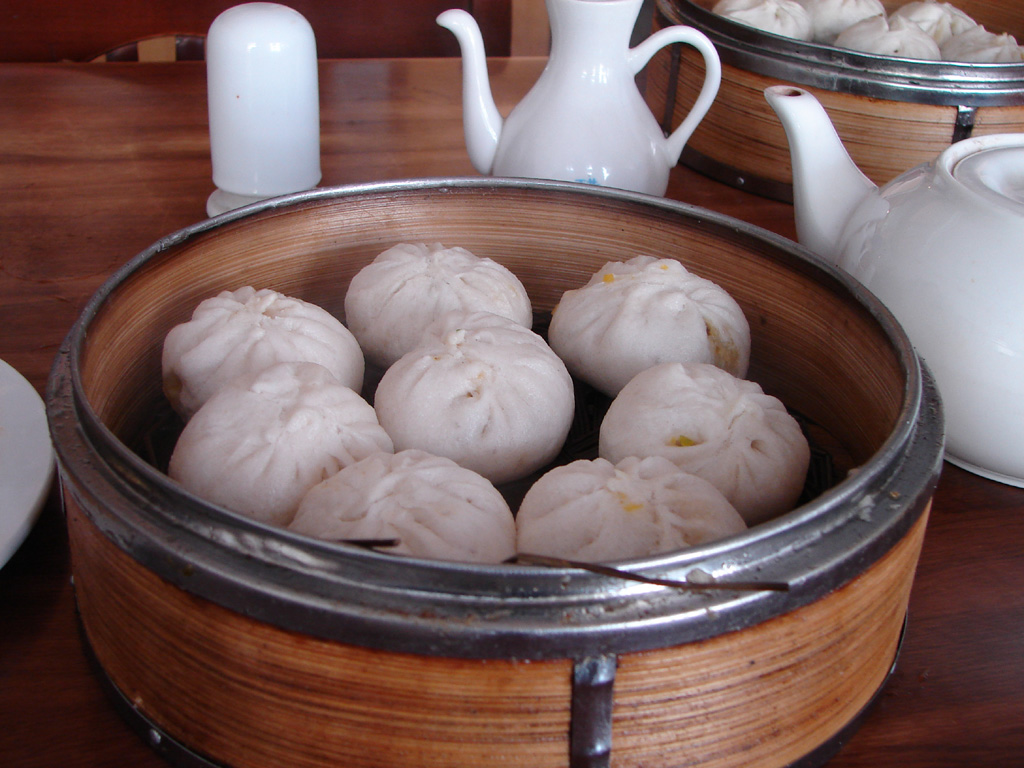 Baozi包子
🇨🇳 China and 5 moreSteamed wheat buns filled with meat or vegetables, common across China and beyond
Main dish, Breakfast, Snacks
Baozi包子
🇨🇳 China and 5 moreSteamed wheat buns filled with meat or vegetables, common across China and beyond
Main dish, Breakfast, Snacks