
Spanish omelette
In its own language: tortilla de patatas
Egg and potato omelette, often served as a tapa in Spain
Spanish omelette, or tortilla de patatas, is a thick omelette from Spain made mainly with eggs and potatoes, and sometimes onions. It is a staple of Spanish cuisine, often served at room temperature as a tapa or appetizer. The dish can be enjoyed warm or cold and is popular across Spain.
- Main ingredients are eggs, potatoes, and often onions
- Served as a tapa, snack, or main meal across Spain
- Can be eaten warm, at room temperature, or cold
- Día de la Tortilla celebrates the dish before Lent
- Debate exists over including onions in the recipe
What is Spanish omelette?
A Spanish omelette is a thick, round egg and potato dish, sometimes with onions. The potatoes are sliced or diced, gently cooked in olive oil until soft, then mixed with beaten eggs. The mixture is cooked slowly in a pan until set, then flipped to cook both sides. The result is a firm, golden omelette, usually cut into wedges or small squares. It can be eaten warm, at room temperature, or cold. The taste is mild and comforting, with the potatoes giving a soft texture and the eggs binding everything together.
Where does Spanish omelette come from?
The earliest written mention of the Spanish omelette dates to 1817 in Navarre, where it was described as a way to stretch a few eggs to feed several people by adding potatoes and sometimes breadcrumbs. Legends link its invention to the Carlist Wars in the 1830s, with one story crediting General Tomás de Zumalacárregui for creating it to feed his troops. Another tale suggests Spanish prisoners brought a similar dish from Portugal in the 17th century. Its true origins remain uncertain, but it became popular across Spain in the 19th century.
How is Spanish omelette made?
To make a Spanish omelette, potatoes are peeled and sliced or diced, then gently cooked in olive oil until soft but not browned. Onions may be added and cooked together with the potatoes. Once tender, the mixture is drained and combined with beaten eggs and salt. The mixture is poured back into the pan and cooked slowly until the bottom is set. The omelette is then flipped, often using a plate, to cook the other side until firm and golden. It is typically served in wedges or as small pieces for tapas.


How and when is Spanish omelette eaten?
Spanish omelette is eaten throughout the day in Spain, as a main meal, a snack, or as part of tapas. It is commonly served at room temperature, making it popular for picnics and gatherings. In bars, it is often cut into small pieces and served as a tapa, sometimes skewered with a toothpick. During festivals like Día de la Tortilla, people gather outdoors to share omelettes and other foods. It can be enjoyed alone or with bread.
Kinds of Spanish omelette
The biggest debate about Spanish omelette is whether to include onions. Some regions and cooks insist on adding them, while others prefer the simpler version without. In Galicia, local potatoes like Kennebec are prized for their texture, and some versions include Galician chorizo. The Betanzos region is known for a version made only with potatoes, eggs, oil, and salt. Across Spain, each area and household may have its own preferred method and ingredients.
What Spanish omelette means
Spanish omelette is a symbol of Spanish home cooking and is found in nearly every bar and household. It is a staple at social gatherings and picnics, and features in festivals like Día de la Tortilla, especially on Jueves lardero, the Thursday before Lent. The dish sparks strong opinions, especially about the use of onions. Some towns, like Betanzos, host annual omelette competitions with strict rules. Its popularity has made it an ambassador of Spanish cuisine worldwide.
Questions people ask about Spanish omelette
What is a Spanish omelette made of?
It is made mainly from eggs and potatoes, with onions often added. Olive oil and salt are also used. The potatoes are cooked until soft, mixed with eggs, and then cooked into a thick omelette.
Where does Spanish omelette come from?
Spanish omelette, or tortilla de patatas, comes from Spain. Its origins are traced to the early 19th century in Navarre, though legends suggest it may be older.
Is Spanish omelette always made with onions?
No, the inclusion of onions is a matter of personal or regional preference. Some people insist on adding onions, while others prefer it without.
When is Spanish omelette usually eaten?
It is eaten at any time of day in Spain, including lunch, dinner, or as a snack. It is also served as a tapa in bars and during festivals like Día de la Tortilla.
How is Spanish omelette served?
It can be served warm, at room temperature, or cold. It is often cut into wedges or small pieces and eaten alone or with bread.
Good reading and sources
- How to make a perfect Spanish omeletteThe Guardian, Article
- Spanish TortillaThe New York Times, Recipe
- Spanish omelette on WikipediaEncyclopedia
- More photos on Wikimedia CommonsPhotos
- Wikidata recordOpen data
The facts on this page come from the Wikipedia article "Spanish omelette", written by its contributors and used under the CC BY-SA 4.0 licence, and from its Wikidata record (CC0). Thali rewrote the text in its own words, with AI assistance, and compares every page with the article to make sure no passage is copied. It may be reused under the same CC BY-SA 4.0 licence with a link back.
It may contain mistakes, and it is not dietary or allergy advice: recipes differ from cook to cook. If something is wrong, tell us. Last refreshed 2026-10-03.
More from Spain
All the food of Spain Paella
🇪🇸 Spain and 1 moreRice cooked with meat, seafood or vegetables in a wide shallow pan from Valencia
Main dish, Lunch
Paella
🇪🇸 Spain and 1 moreRice cooked with meat, seafood or vegetables in a wide shallow pan from Valencia
Main dish, Lunch
 Oxtail stewMeat
🇮🇹 Italy and 4 moreStew made with oxtail, found in many world cuisines
Stew or curry, Lunch, Dinner
Oxtail stewMeat
🇮🇹 Italy and 4 moreStew made with oxtail, found in many world cuisines
Stew or curry, Lunch, Dinner
 MolleteVegetarian
🇲🇽 Mexico and 6 moreOpen-faced Mexican sandwich with refried beans and melted cheese
Bread, Breakfast, Snacks
MolleteVegetarian
🇲🇽 Mexico and 6 moreOpen-faced Mexican sandwich with refried beans and melted cheese
Bread, Breakfast, Snacks
 TocinoMeat
🇵🇭 Philippines and 5 moreCured or fried pork enjoyed in Spain, the Philippines, and the Caribbean
Main dish, Breakfast, Lunch
TocinoMeat
🇵🇭 Philippines and 5 moreCured or fried pork enjoyed in Spain, the Philippines, and the Caribbean
Main dish, Breakfast, Lunch
Its cousins elsewhere
All main dishes Menemen
🇹🇷 TurkeyEggs gently cooked with tomatoes, peppers, and spices, often served for breakfast in Turkey
Main dish, Breakfast, Lunch
Menemen
🇹🇷 TurkeyEggs gently cooked with tomatoes, peppers, and spices, often served for breakfast in Turkey
Main dish, Breakfast, Lunch
 Pelmeniпельмени
🇷🇺 RussiaRussian dumplings filled with seasoned meat and wrapped in thin dough
Dumpling, Lunch, Dinner
Pelmeniпельмени
🇷🇺 RussiaRussian dumplings filled with seasoned meat and wrapped in thin dough
Dumpling, Lunch, Dinner
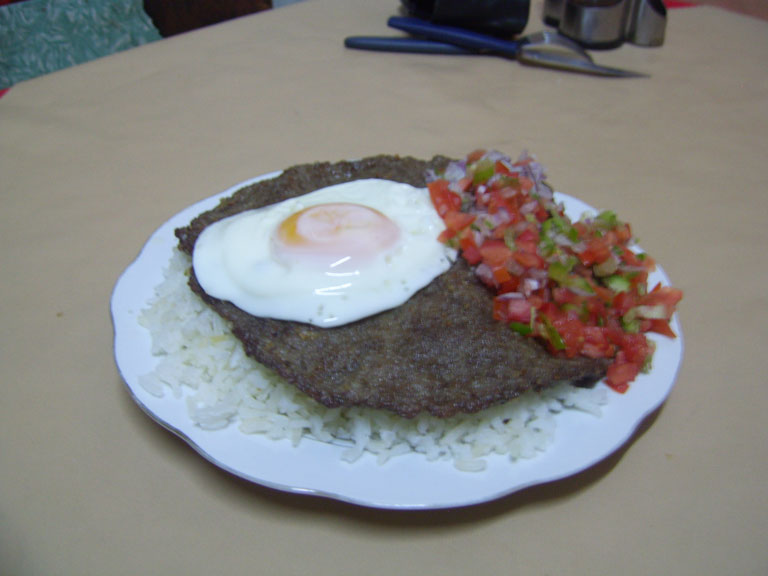 SilpanchoMeatSillp'anchu
🇧🇴 BoliviaLayered Bolivian meal with rice, potatoes, breaded meat, and fried eggs
Main dish, Lunch, Dinner
SilpanchoMeatSillp'anchu
🇧🇴 BoliviaLayered Bolivian meal with rice, potatoes, breaded meat, and fried eggs
Main dish, Lunch, Dinner
 Kabab Bargکباب برگ
🇮🇷 IranPersian skewered meat marinated and grilled over open fire
Main dish, Lunch, Dinner
Kabab Bargکباب برگ
🇮🇷 IranPersian skewered meat marinated and grilled over open fire
Main dish, Lunch, Dinner