
Teppanyaki
In its own language: 鉄板焼き
Japanese dishes cooked on a flat iron griddle, often prepared in front of diners
Teppanyaki is a Japanese style of cooking where food is grilled on a flat iron plate, called a teppan. Originating after World War II, it features ingredients like beef, seafood, and vegetables, and is often prepared by chefs in front of guests. In Japan, teppanyaki includes dishes such as steak, okonomiyaki, and yakisoba, while in the United States, it is known for its theatrical presentation.
- Teppanyaki means 'grilled on an iron plate' in Japanese
- Chefs often cook food in front of diners on a flat griddle
- Common ingredients include beef, seafood, and vegetables
- In the US, teppanyaki is often called hibachi
- Misono in Japan claims to have started teppanyaki in 1945
What is Teppanyaki?
Teppanyaki is a style of Japanese cooking where food is grilled on a flat, propane-heated iron plate called a teppan. Common ingredients include beef, shrimp, scallops, lobster, chicken, and a variety of vegetables. In Japan, it also covers dishes like okonomiyaki (a savory pancake with cabbage and meat or seafood) and yakisoba (fried noodles). The food is usually cooked in front of diners, making the meal both a culinary and visual experience. The taste and texture depend on the ingredients, with meats seared quickly and vegetables cooked until just tender.
Where does Teppanyaki come from?
Teppanyaki began in Japan after World War II. The restaurant chain Misono claims to have introduced the concept in 1945, using the teppan to cook Western-influenced dishes. While initially less popular with Japanese customers, the style attracted foreign visitors, who enjoyed both the food and the chef's performance. Over time, the entertainment aspect became a key feature, especially for tourists. In the United States, teppanyaki became widely known through the Benihana chain, which opened in New York City in 1964 and emphasized showmanship.
How is Teppanyaki made?
To prepare teppanyaki, chefs heat a flat iron griddle and use oils such as soybean or vegetable oil. Ingredients like beef, seafood, chicken, and vegetables are cut into bite-sized pieces and cooked directly on the teppan. In Japan, noodles or savory pancakes may also be made this way. The chef often cooks several items at once, using spatulas to flip and move the food. The process is usually done at the table, allowing diners to watch the preparation.



How and when is Teppanyaki eaten?
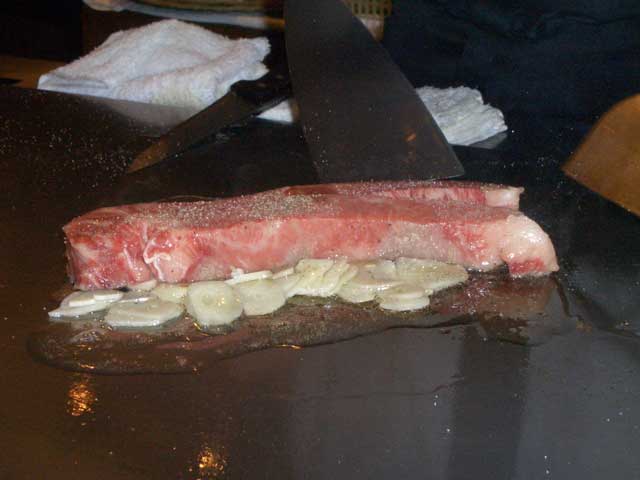
Teppanyaki is typically eaten at lunch or dinner, often in a restaurant setting where guests sit around the griddle. In Japan, it may be served with side dishes such as fried rice, bean sprouts, or garlic slices. Some places offer dipping sauces, though in Japan, soy sauce is the standard. The meal is both social and interactive, with the chef engaging diners through cooking techniques and sometimes theatrical tricks.
Kinds of Teppanyaki
In Japan, teppanyaki includes a range of dishes, from steak to okonomiyaki and yakisoba. Some restaurants specialize in premium beef like Kobe or Wagyu. In the United States, teppanyaki is often called hibachi and is known for the chef's performance, such as juggling utensils or creating flaming onion volcanoes. The American version may include ingredients and side dishes not commonly found in Japan, such as zucchini.
What Teppanyaki means
Teppanyaki has become a symbol of interactive dining, especially in tourist areas. In Japan, it is a way to enjoy high-quality meat and seafood, while in the United States, it is associated with entertainment and group dining. The chef's performance is a major draw, with tricks and showmanship being central to the experience. Teppanyaki restaurants are popular for celebrations and social gatherings.
Questions people ask about Teppanyaki
What is teppanyaki made of?
Teppanyaki uses ingredients like beef, shrimp, scallops, lobster, chicken, and assorted vegetables. In Japan, it can also include noodles or savory pancakes cooked on the griddle.
Where did teppanyaki originate?
Teppanyaki originated in Japan after World War II, with the restaurant chain Misono claiming to have introduced it in 1945.
How is teppanyaki cooked?
Food is grilled on a flat iron plate called a teppan, usually heated with propane. Chefs cook the ingredients in front of diners, often using oils like soybean oil.
Is teppanyaki the same as hibachi?
In the United States, teppanyaki is often called hibachi, but in Japan, hibachi refers to a different type of grill. Teppanyaki uses a flat griddle, while hibachi uses an open grate.
What dishes are included in teppanyaki?
In Japan, teppanyaki covers dishes like steak, shrimp, okonomiyaki (savory pancake), yakisoba (fried noodles), and monjayaki.
Good reading and sources
The facts on this page come from the Wikipedia article "Teppanyaki", written by its contributors and used under the CC BY-SA 4.0 licence, and from its Wikidata record (CC0). Thali rewrote the text in its own words, with AI assistance, and compares every page with the article to make sure no passage is copied. It may be reused under the same CC BY-SA 4.0 licence with a link back.
It may contain mistakes, and it is not dietary or allergy advice: recipes differ from cook to cook. If something is wrong, tell us. Last refreshed 2026-10-03.
More from Japan
All the food of Japan Pizza
🇮🇹 Italy and 4 moreFlatbread topped with tomato, cheese and baked at high heat
Main dish, Lunch, Dinner
Pizza
🇮🇹 Italy and 4 moreFlatbread topped with tomato, cheese and baked at high heat
Main dish, Lunch, Dinner
 Sushi寿司
🇯🇵 JapanVinegared rice paired with seafood, vegetables or other toppings
Main dish, Lunch, Dinner
TofuVegan豆腐
🇨🇳 China and 5 moreSoft white blocks made by curdling soy milk and pressing the curds
Main dish
Sushi寿司
🇯🇵 JapanVinegared rice paired with seafood, vegetables or other toppings
Main dish, Lunch, Dinner
TofuVegan豆腐
🇨🇳 China and 5 moreSoft white blocks made by curdling soy milk and pressing the curds
Main dish
 Sashimi刺身
🇯🇵 JapanThin slices of raw fish or meat, served with soy sauce and condiments
Main dish, Lunch, Dinner
Sashimi刺身
🇯🇵 JapanThin slices of raw fish or meat, served with soy sauce and condiments
Main dish, Lunch, Dinner
Its cousins elsewhere
All main dishes Tamaletamal
🇲🇽 Mexico and 5 moreCorn dough filled and steamed in a leaf wrapper, with many regional fillings
Main dish, Breakfast, Lunch
Tamaletamal
🇲🇽 Mexico and 5 moreCorn dough filled and steamed in a leaf wrapper, with many regional fillings
Main dish, Breakfast, Lunch
 Chicken soupMeat
🇺🇸 United States and 4 moreA hot soup of chicken simmered with vegetables, noodles or grains
Soup, Lunch, Dinner
Chicken soupMeat
🇺🇸 United States and 4 moreA hot soup of chicken simmered with vegetables, noodles or grains
Soup, Lunch, Dinner
 SuyaMeat
🇳🇬 Nigeria and 1 moreSpiced grilled meat skewers from the Hausa tradition of northern Nigeria
Main dish, Dinner, Snacks
SuyaMeat
🇳🇬 Nigeria and 1 moreSpiced grilled meat skewers from the Hausa tradition of northern Nigeria
Main dish, Dinner, Snacks
 Arroz chaufa
🇵🇪 PeruPeruvian fried rice with meat, egg, vegetables and soy sauce
Main dish, Lunch, Dinner
Arroz chaufa
🇵🇪 PeruPeruvian fried rice with meat, egg, vegetables and soy sauce
Main dish, Lunch, Dinner