
Tamale
In its own language: tamal
Corn dough filled and steamed in a leaf wrapper, with many regional fillings
Tamale is a traditional dish from Mesoamerica made by steaming seasoned corn dough (masa) in a corn husk or banana leaf. Fillings range from meats and vegetables to fruits, cheese, or beans, depending on the region. Tamales are eaten across Latin America, especially for holidays and celebrations.
- Made from corn dough steamed in a leaf wrapper
- Fillings range from meats and cheese to vegetables and fruit
- Eaten for holidays like Christmas and New Year in many countries
- Ancient origins in Mesoamerica, dating back thousands of years
- Served hot, with the wrapper removed before eating
What is Tamale?
A tamale is made from masa, a dough created by grinding nixtamalized corn, then spreading it onto a corn husk or banana leaf. The dough is filled with savory or sweet ingredients such as pork, chicken, beef, cheese, beans, vegetables, chilies, or fruit. The filled dough is wrapped and steamed, and the leaf or husk is not eaten. The result is a soft, moist parcel with a fragrant aroma from the wrapper, and flavors that depend on the filling and seasoning. Tamales can be large or small, plain or richly stuffed, and are served hot.
Where does Tamale come from?
Tamales have ancient roots in Mesoamerica, with evidence dating back as early as 8000 to 5000 BC. They were important to the Aztec, Maya, Olmec, and Toltec peoples, who used them as portable food for travel and rituals. Archaeological finds in Guatemala and Mexico show tamales were part of feasts and ceremonies, and they were considered sacred, as corn was central to these cultures. Over time, tamales spread throughout Latin America, adapting to local tastes and ingredients.
How is Tamale made?
To make tamales, masa is prepared from ground corn treated with lime (nixtamalization). The dough is seasoned and spread onto a softened corn husk or banana leaf. Fillings such as seasoned meats, vegetables, cheese, or sweet mixtures are placed in the center. The wrapper is folded around the dough and tied or folded to secure it. Tamales are then steamed until the dough is firm and cooked through. Some versions, like Panama's tamal de olla, are baked in a pan without a wrapper.


How and when is Tamale eaten?
Tamales are eaten for breakfast, lunch, or dinner, and are especially popular during holidays and family gatherings. In countries like Guatemala and El Salvador, they are a central part of Christmas and New Year celebrations. Tamales are often served with hot chocolate, bread, or coffee, and shared with family and friends. In some regions, a red light outside a home signals tamales are for sale. The wrapper is removed before eating, and tamales may be accompanied by sauces or cheese.
Kinds of Tamale
Tamales vary widely across Latin America. In Guatemala, there are red, black, sweet, and chuchito tamales, each with distinct fillings and wrappers. Nicaragua's nacatamal is large, filled with pork, rice, and vegetables, and wrapped in plantain leaves. Panama's tamal de olla is cooked in a pan without a wrapper. Costa Rica and El Salvador have versions with chicken, pork, beans, or rice, often wrapped in banana leaves. Some tamales are sweet, filled with fruit or sweetened beans.
What Tamale means
Tamales hold deep cultural significance, often linked to festivals, religious events, and family traditions. In ancient Mesoamerica, they were sacred and used in rituals. Today, tamales are central to celebrations like Christmas, New Year, and weddings. Preparing tamales is often a communal activity, bringing families together for hours or days. In Guatemala, eating tamales at midnight on holidays is a cherished custom. Tamales are also sold in homes and markets, marking their place in daily and festive life.
When Tamale is on the table
Questions people ask about Tamale
What is a tamale made of?
A tamale is made from masa, a dough of ground nixtamalized corn, filled with ingredients like pork, chicken, beef, cheese, beans, vegetables, chilies, or fruit, then wrapped in a corn husk or banana leaf and steamed.
Where do tamales come from?
Tamales originated in Mesoamerica, with roots in ancient cultures such as the Aztec and Maya. Today, they are eaten across Mexico, Central America, and other parts of Latin America.
How are tamales cooked?
Tamales are assembled by spreading masa on a wrapper, adding filling, folding it closed, and steaming until the dough is cooked and firm. Some regional versions are baked in a pan instead of being wrapped.
When are tamales usually eaten?
Tamales are enjoyed for breakfast, lunch, or dinner, and are especially popular during holidays and celebrations such as Christmas and New Year in countries like Guatemala and El Salvador.
Are tamales always savory?
No, tamales can be savory or sweet. Fillings may include meats, cheese, beans, or vegetables, but some versions are sweetened with fruit, honey, or sugar.
Good reading and sources
- Encyclopaedia BritannicaArticle
- Making tamales and extending a family historyLos Angeles Times, Article
The facts on this page come from the Wikipedia article "Tamale", written by its contributors and used under the CC BY-SA 4.0 licence, and from its Wikidata record (CC0). Thali rewrote the text in its own words, with AI assistance, and compares every page with the article to make sure no passage is copied. It may be reused under the same CC BY-SA 4.0 licence with a link back.
It may contain mistakes, and it is not dietary or allergy advice: recipes differ from cook to cook. If something is wrong, tell us. Last refreshed 2026-10-03.
More from Mexico
All the food of Mexico Taco
🇲🇽 Mexico and 1 moreA folded tortilla filled with meat, beans or vegetables, eaten by hand
Street food, Lunch, Dinner
Blood sausageMeat
🇫🇷 France and 5 moreA sausage made with animal blood, fillers and spices, cooked or dried until firm
Main dish, Lunch, Dinner
Taco
🇲🇽 Mexico and 1 moreA folded tortilla filled with meat, beans or vegetables, eaten by hand
Street food, Lunch, Dinner
Blood sausageMeat
🇫🇷 France and 5 moreA sausage made with animal blood, fillers and spices, cooked or dried until firm
Main dish, Lunch, Dinner
 MolleteVegetarian
🇲🇽 Mexico and 6 moreOpen-faced Mexican sandwich with refried beans and melted cheese
Bread, Breakfast, Snacks
MolleteVegetarian
🇲🇽 Mexico and 6 moreOpen-faced Mexican sandwich with refried beans and melted cheese
Bread, Breakfast, Snacks
 BarbacoaMeat
🇲🇽 Mexico and 3 moreMeat slow-cooked in a pit lined with agave or banana leaves
Main dish, Lunch, Dinner
BarbacoaMeat
🇲🇽 Mexico and 3 moreMeat slow-cooked in a pit lined with agave or banana leaves
Main dish, Lunch, Dinner
Its cousins elsewhere
All main dishes Tofu skin roll
🇨🇳 ChinaTofu skin wrapped around a savoury filling, served steamed or fried as dim sum
Main dish, Lunch, Dinner
Tofu skin roll
🇨🇳 ChinaTofu skin wrapped around a savoury filling, served steamed or fried as dim sum
Main dish, Lunch, Dinner
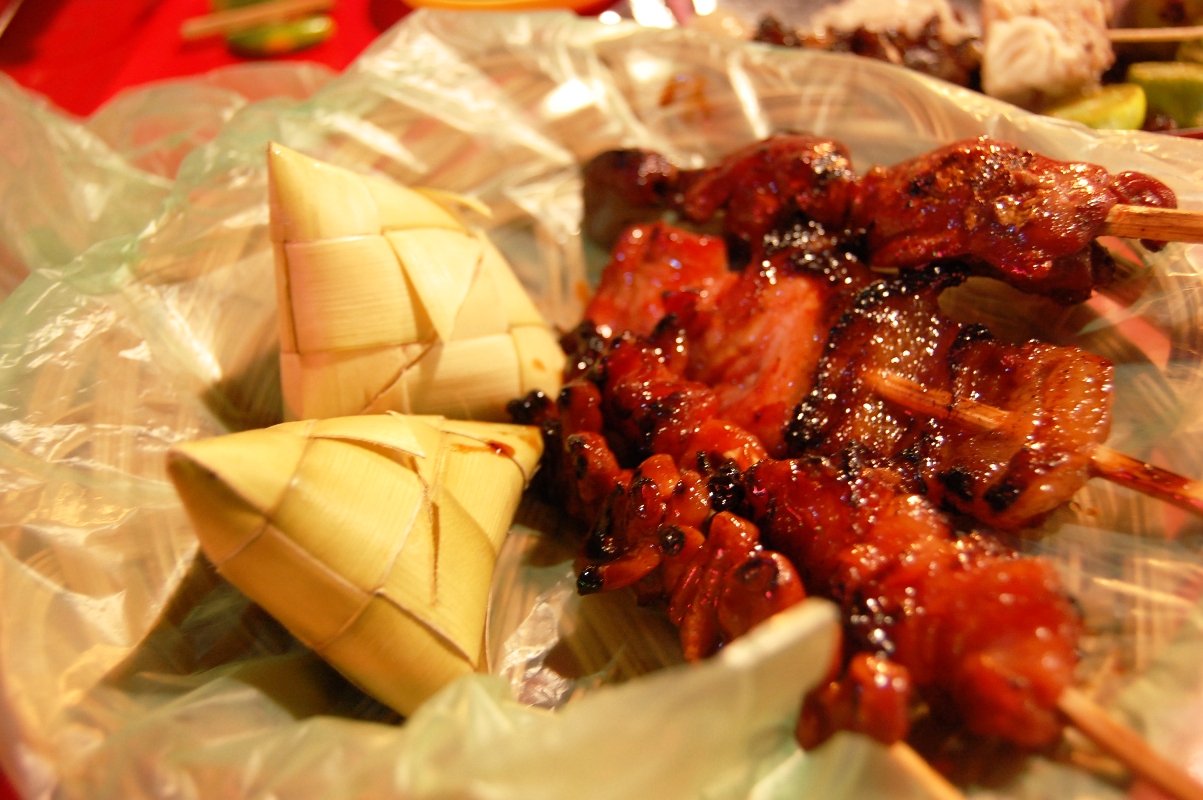 Inihaw
🇵🇭 PhilippinesGrilled meats and seafood, often on skewers, from the Philippines
Main dish, Lunch, Dinner
Inihaw
🇵🇭 PhilippinesGrilled meats and seafood, often on skewers, from the Philippines
Main dish, Lunch, Dinner
 Jiaozi餃子
🇨🇳 China and 1 moreChinese dumplings with meat or vegetable filling, served boiled, steamed or fried
Dumpling, Breakfast, Lunch
Jiaozi餃子
🇨🇳 China and 1 moreChinese dumplings with meat or vegetable filling, served boiled, steamed or fried
Dumpling, Breakfast, Lunch
 Adobo
🇵🇭 PhilippinesMeat, seafood, or vegetables simmered in vinegar, soy sauce, garlic and spices
Main dish, Lunch, Dinner
Adobo
🇵🇭 PhilippinesMeat, seafood, or vegetables simmered in vinegar, soy sauce, garlic and spices
Main dish, Lunch, Dinner