
Tlacoyo
Thick oval masa cakes stuffed with beans, cheese or chicharron
Tlacoyo is a Mexican food from pre-Hispanic times made with masa (corn dough), thicker than a tortilla and stuffed with fillings like beans, cheese, or chicharron. Usually oval or triangular, it is fried or toasted and eaten as a snack, appetizer, or with soups and stews.
- Tlacoyos are thicker than tortillas and always stuffed before cooking
- Traditional tlacoyos use no lard or salt in the dough
- They are often made with blue corn masa
- Oval is the most common shape, but some are triangular
- Best eaten fresh, as they become tough if left to cool
What is Tlacoyo?
A tlacoyo is a thick, stuffed cake made from masa, the dough of ground corn. It is denser and more robust than a tortilla, shaped most often into an oval, though sometimes triangular. The dough is filled before cooking, usually with beans, cheese, fava beans, or chicharron (fried pork skin). The outside can be blue, white, or yellow, depending on the corn used. Traditionally, tlacoyos are fried or toasted, giving them a crisp exterior and a soft, hearty center.
Where does Tlacoyo come from?
Tlacoyos have roots in pre-Hispanic Mexico and are typical of central regions. The name comes from Nahuatl, the language of the Aztecs, where it referred to a local snack or appetizer. Over time, tlacoyos have remained a common street food and market snack in Mexico, especially in Mexico City and Puebla. Their enduring popularity comes from their simple ingredients and filling nature.
How is Tlacoyo made?
To make a tlacoyo, masa is shaped into a thick patty, then filled with a stuffing such as beans, cheese, or chicharron. The filled dough is sealed and formed into an oval or triangle. It is then fried or toasted on a griddle. Traditional recipes do not add lard or salt to the dough, which means they are best eaten soon after cooking, as they can become tough if left to cool.

How and when is Tlacoyo eaten?
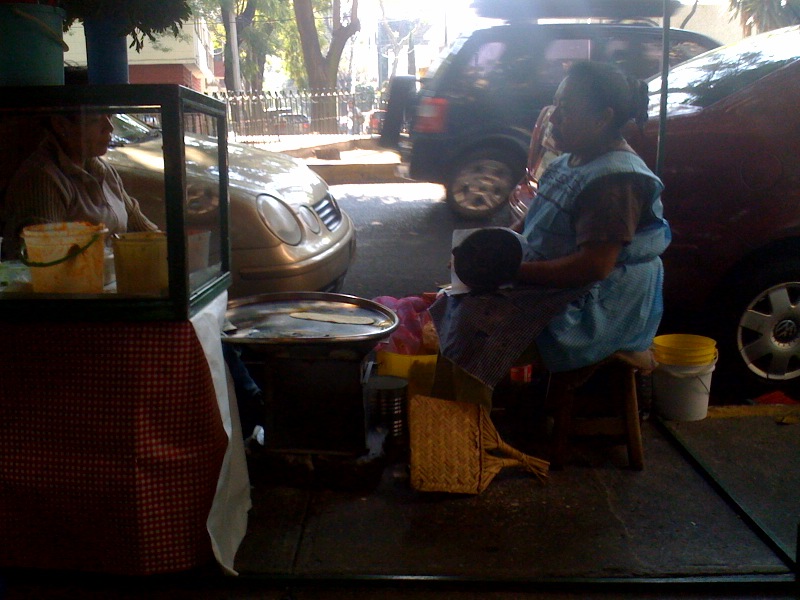
Tlacoyos are eaten as snacks or appetizers, often sold by street vendors in Mexican markets. They may be served plain or with a spoonful of fresh salsa on top. Sometimes they accompany soups or stews. Vendors keep them warm in covered baskets, which helps keep them moist. In celebrations, they can appear as starters or side dishes.
Kinds of Tlacoyo
In Puebla, tlacoyos are usually smaller and triangular. In Mexico City, vendors sometimes add toppings, similar to those used on sopes or huaraches, though the traditional way is with only salsa. The dough can be made from different types of corn, giving tlacoyos blue, white, or yellow colors, depending on the cornmeal used. The fillings can vary by region and vendor.
What Tlacoyo means
Tlacoyos are a familiar sight in Mexican markets and streets, valued for their connection to pre-Hispanic food traditions. They are part of everyday eating and also appear at festivals and gatherings. The food is seen as a link to indigenous heritage, and the use of blue corn masa is especially traditional. The snack is often enjoyed fresh and warm, reflecting the communal and lively atmosphere of Mexican street food culture.
Questions people ask about Tlacoyo
What is a tlacoyo made of?
A tlacoyo is made from masa, a dough of ground corn, and is stuffed with fillings like beans, cheese, fava beans, or chicharron before being fried or toasted.
Where does the tlacoyo come from?
Tlacoyos are from Mexico, with origins in pre-Hispanic times, especially in central regions such as Mexico City and Puebla.
How is a tlacoyo different from a tortilla?
Tlacoyos are thicker than tortillas, are always stuffed before cooking, and are usually oval or triangular rather than round.
What do tlacoyos taste like?
Tlacoyos have a hearty corn flavor from the masa, with a soft center from the filling and a crisp exterior when fried or toasted.
Are tlacoyos vegetarian?
Some tlacoyos are vegetarian, filled with beans, cheese, or fava beans, but others may contain chicharron, which is pork skin.
Good reading and sources
The facts on this page come from the Wikipedia article "Tlacoyo", written by its contributors and used under the CC BY-SA 4.0 licence, and from its Wikidata record (CC0). Thali rewrote the text in its own words, with AI assistance, and compares every page with the article to make sure no passage is copied. It may be reused under the same CC BY-SA 4.0 licence with a link back.
It may contain mistakes, and it is not dietary or allergy advice: recipes differ from cook to cook. If something is wrong, tell us. Last refreshed 2026-10-03.
More from Mexico
All the food of Mexico Taco
🇲🇽 Mexico and 1 moreA folded tortilla filled with meat, beans or vegetables, eaten by hand
Street food, Lunch, Dinner
Blood sausageMeat
🇫🇷 France and 5 moreA sausage made with animal blood, fillers and spices, cooked or dried until firm
Main dish, Lunch, Dinner
Taco
🇲🇽 Mexico and 1 moreA folded tortilla filled with meat, beans or vegetables, eaten by hand
Street food, Lunch, Dinner
Blood sausageMeat
🇫🇷 France and 5 moreA sausage made with animal blood, fillers and spices, cooked or dried until firm
Main dish, Lunch, Dinner
 BarbacoaMeat
🇲🇽 Mexico and 3 moreMeat slow-cooked in a pit lined with agave or banana leaves
Main dish, Lunch, Dinner
BarbacoaMeat
🇲🇽 Mexico and 3 moreMeat slow-cooked in a pit lined with agave or banana leaves
Main dish, Lunch, Dinner
 Chapulines
🇲🇽 Mexico and 1 moreToasted grasshoppers seasoned with lime, chili, and salt, eaten as a snack in Mexico
Street food, Snacks
Chapulines
🇲🇽 Mexico and 1 moreToasted grasshoppers seasoned with lime, chili, and salt, eaten as a snack in Mexico
Street food, Snacks
Its cousins elsewhere
All street food Pizza
🇮🇹 Italy and 4 moreFlatbread topped with tomato, cheese and baked at high heat
Main dish, Lunch, Dinner
Pizza
🇮🇹 Italy and 4 moreFlatbread topped with tomato, cheese and baked at high heat
Main dish, Lunch, Dinner
 Samosa
🇮🇳 India and 5 moreFried or baked pastry with a spiced filling, shaped into triangles or cones
Pie or savoury pastry, Snacks, Lunch
Ta'ameyaVeganطعمية
🇪🇬 EgyptEgyptian fritters of fava beans and herbs, deep-fried and eaten in pita sandwiches
Street food, Breakfast, Lunch
Samosa
🇮🇳 India and 5 moreFried or baked pastry with a spiced filling, shaped into triangles or cones
Pie or savoury pastry, Snacks, Lunch
Ta'ameyaVeganطعمية
🇪🇬 EgyptEgyptian fritters of fava beans and herbs, deep-fried and eaten in pita sandwiches
Street food, Breakfast, Lunch
 Carimañola
🇨🇴 Colombia and 1 moreDeep-fried yuca dough stuffed with meat or cheese
Street food, Breakfast, Snacks
Carimañola
🇨🇴 Colombia and 1 moreDeep-fried yuca dough stuffed with meat or cheese
Street food, Breakfast, Snacks