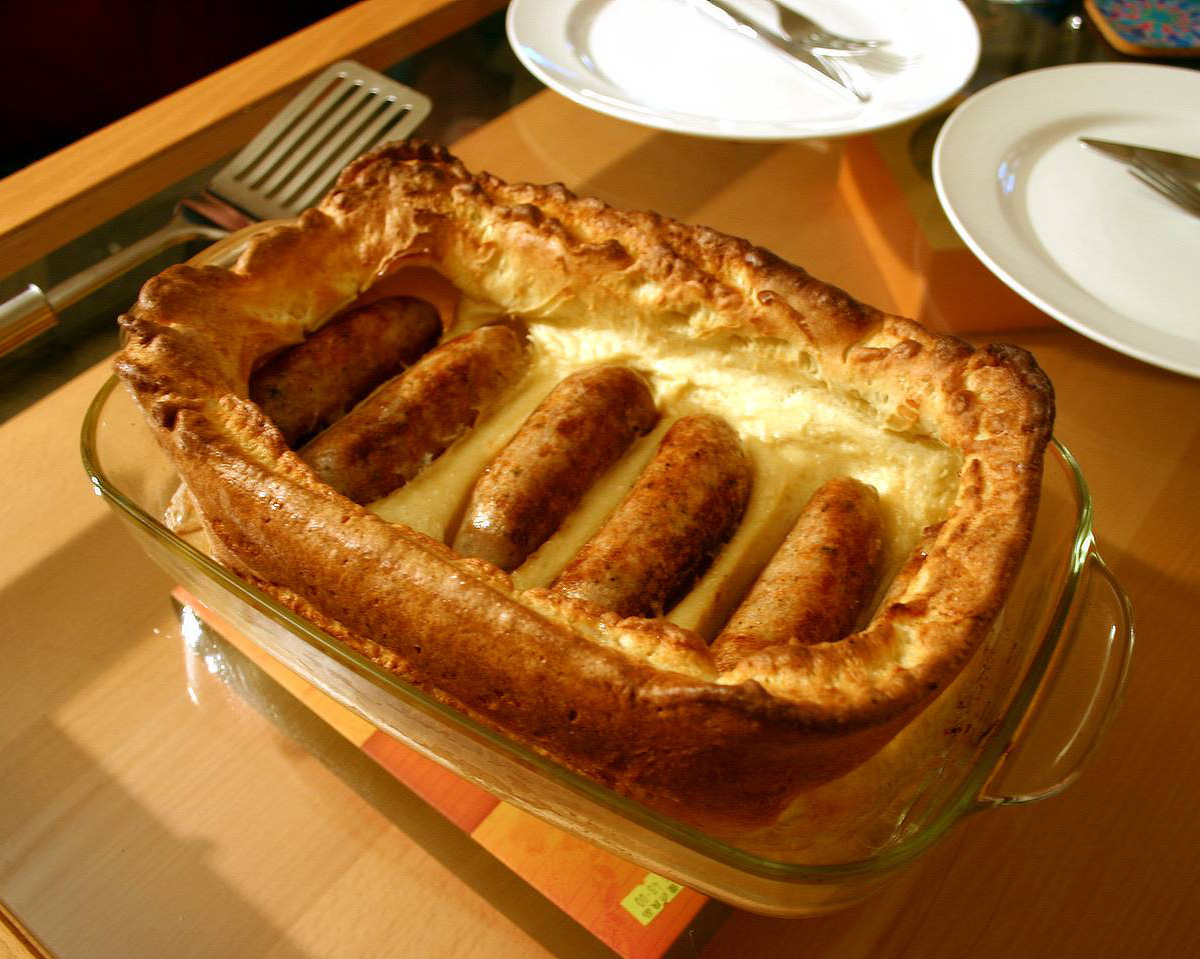
Toad in the hole
Sausages baked in a puffy batter and served hot with onion gravy
Toad in the hole is a British dish where sausages are baked in a light, airy batter similar to Yorkshire pudding. It is commonly eaten hot, often with onion gravy, and sometimes with mashed potatoes and vegetables. The dish has roots in England and has been adapted with various meats and vegetarian versions.
- Sausages baked in a Yorkshire pudding-style batter
- Served hot, often with onion gravy
- Originated in England in the 18th century
- Earlier versions used various meats, not just sausage
- Vegetarian and vegan versions now exist
What is Toad in the hole?
Toad in the hole features sausages cooked inside a golden, risen batter made from flour, eggs, and milk, much like Yorkshire pudding. The sausages are nestled in the batter, which puffs up around them as it bakes. The finished dish is typically served hot, with a side of onion gravy. Its appearance is rustic, with sausages poking through the crisp, airy crust.
Where does Toad in the hole come from?
This dish began in England in the 18th century, when cooks used batter puddings to make small amounts of meat go further. Early versions sometimes used beef, lamb's kidney, or even pigeon. The name's origin is uncertain, but it may come from the way sausages look as they peek through the batter, resembling toads in burrows. The dish was once considered a practical, inexpensive meal for working families.
How is Toad in the hole made?
To make toad in the hole, sausages are first browned, then placed in a baking dish. A batter is prepared from flour, eggs, and milk, and poured over the sausages. The dish is baked until the batter rises and turns golden. Onion gravy is often made separately and served alongside. The process is straightforward and relies on simple ingredients.
How and when is Toad in the hole eaten?
Toad in the hole is usually eaten as a main meal, either for lunch or dinner. It is served hot, often with onion gravy and sometimes with mashed potatoes and cooked vegetables. The dish is enjoyed at home as everyday comfort food. There are no special rituals, but it is a familiar part of British home cooking.
Kinds of Toad in the hole
While sausages are the standard filling today, earlier recipes used other meats such as beef or lamb's kidney. Modern versions include vegetarian and vegan adaptations, using plant-based sausages or combining the batter with vegetables like cauliflower. The basic method remains the same, but the fillings can vary to suit different tastes.
What Toad in the hole means
Toad in the hole is seen as a classic British comfort food and has been part of school meals and home cooking for generations. It is sometimes mentioned in discussions of traditional English fare. The dish has inspired vegetarian and vegan versions in recent years, reflecting changing diets. Its name and appearance have also sparked curiosity and folklore.
Questions people ask about Toad in the hole
What is toad in the hole made of?
It is made by baking sausages in a batter similar to Yorkshire pudding, usually served with onion gravy.
Where does toad in the hole come from?
The dish comes from England and has been part of British cooking since at least the 18th century.
Is toad in the hole always made with sausage?
While sausages are most common today, earlier versions used meats like beef, lamb's kidney, or even pigeon.
Are there vegetarian or vegan versions?
Yes, modern adaptations use plant-based sausages or combine the batter with vegetables for vegetarian and vegan options.
How is toad in the hole usually served?
It is served hot, often with onion gravy and sometimes with mashed potatoes and vegetables.
Good reading and sources
- Pork belly with turnips, celeriac pakora and cauliflower toad in the hole: Ravinder Bhogal’s recipes for British winter vegThe Guardian, Recipe
- What did people eat during World War One?BBC, Article
- Toad in the hole on WikipediaEncyclopedia
- More photos on Wikimedia CommonsPhotos
- Wikidata recordOpen data
The facts on this page come from the Wikipedia article "Toad in the hole", written by its contributors and used under the CC BY-SA 4.0 licence, and from its Wikidata record (CC0). Thali rewrote the text in its own words, with AI assistance, and compares every page with the article to make sure no passage is copied. It may be reused under the same CC BY-SA 4.0 licence with a link back.
It may contain mistakes, and it is not dietary or allergy advice: recipes differ from cook to cook. If something is wrong, tell us. Last refreshed 2026-10-03.
More from the United Kingdom
All the food of the United Kingdom Pizza
🇮🇹 Italy and 4 moreFlatbread topped with tomato, cheese and baked at high heat
Main dish, Lunch, Dinner
Pizza
🇮🇹 Italy and 4 moreFlatbread topped with tomato, cheese and baked at high heat
Main dish, Lunch, Dinner
 French toast
🇫🇷 France and 5 moreBread soaked in egg and milk, pan-fried and served sweet or savoury
Main dish, Breakfast, Snacks
French toast
🇫🇷 France and 5 moreBread soaked in egg and milk, pan-fried and served sweet or savoury
Main dish, Breakfast, Snacks
 Pancake
🇺🇸 United States and 5 moreFlat cakes made from batter, cooked on a griddle or pan and served sweet or savoury
Main dish, Breakfast, Snacks
Pancake
🇺🇸 United States and 5 moreFlat cakes made from batter, cooked on a griddle or pan and served sweet or savoury
Main dish, Breakfast, Snacks
 Fish and chipsFish or seafood
🇬🇧 United Kingdom and 8 moreBattered fried fish served hot with thick-cut chips
Main dish, Lunch, Dinner
Fish and chipsFish or seafood
🇬🇧 United Kingdom and 8 moreBattered fried fish served hot with thick-cut chips
Main dish, Lunch, Dinner
Its cousins elsewhere
All main dishes Hot dogMeat
🇺🇸 United States and 2 moreA sausage in a sliced bun, topped with condiments and eaten hot
Street food, Lunch, Dinner
Hot dogMeat
🇺🇸 United States and 2 moreA sausage in a sliced bun, topped with condiments and eaten hot
Street food, Lunch, Dinner
 Pique machoMeat
🇧🇴 Bolivia and 1 moreA Bolivian platter of beef, sausage, fries, vegetables and spicy sauces
Main dish, Dinner, Lunch
Pique machoMeat
🇧🇴 Bolivia and 1 moreA Bolivian platter of beef, sausage, fries, vegetables and spicy sauces
Main dish, Dinner, Lunch
 Seafood boil
🇺🇸 United States and 1 moreShellfish and sides cooked together for a communal feast
Main dish, Lunch, Dinner
Seafood boil
🇺🇸 United States and 1 moreShellfish and sides cooked together for a communal feast
Main dish, Lunch, Dinner
 Jambalaya
🇺🇸 United States and 5 moreLouisiana rice cooked with meats, vegetables and spices in one pot
Main dish, Lunch, Dinner
Jambalaya
🇺🇸 United States and 5 moreLouisiana rice cooked with meats, vegetables and spices in one pot
Main dish, Lunch, Dinner