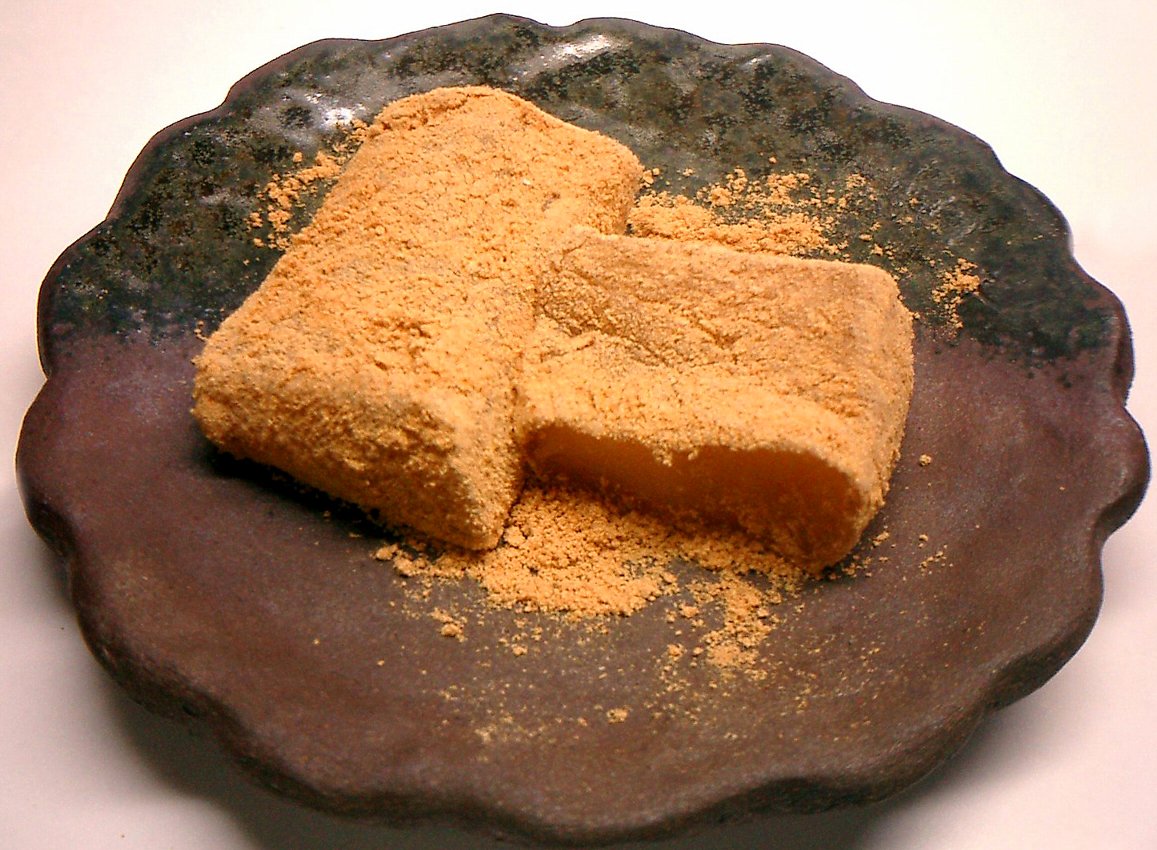
Warabimochi
In its own language: 蕨餅
Soft jelly-like sweets dusted with roasted soybean flour
Warabimochi is a Japanese sweet with a jelly-like texture, made from bracken starch and finished with a coating of kinako, a roasted soybean flour. Sometimes served with kuromitsu syrup, it is especially enjoyed in summer and is popular in regions like Kansai and Okinawa.
- Made from bracken starch and coated in roasted soybean flour
- Sometimes topped with kuromitsu, a dark sugar syrup
- Popular in Kansai and Okinawa, especially in summer
- Often uses other starches due to the high cost of bracken starch
What is Warabimochi?
Warabimochi is a traditional Japanese confection with a soft, smooth texture that feels almost like jelly. Its main ingredient is starch from the roots of the bracken plant, which gives it a translucent look. The pieces are coated in kinako, a sweet flour made by roasting and grinding soybeans, adding a nutty flavor. Sometimes, a dark sugar syrup called kuromitsu is poured over the top for extra sweetness. Warabimochi is not chewy like rice mochi but instead is light and refreshing, making it a favorite during hot weather.
Where does Warabimochi come from?
This sweet dates back to Japan’s Heian period, where it was a treat enjoyed by nobles, including Emperor Daigo. It appears in early travel diaries and guides from the 1600s, showing its presence along travel routes. By the Edo period, warabimochi became a common offering in tea houses and was included in tea ceremonies. Over time, it spread in popularity, especially in the Kansai region and Okinawa, and is now a familiar sight in summer across Japan.
How is Warabimochi made?
To make warabimochi, bracken starch is mixed with water and sugar, then heated until it thickens and becomes clear. The mixture is poured out and allowed to cool, then cut into bite-sized pieces. Each piece is rolled in kinako, which prevents sticking and adds flavor. Because bracken starch is rare and costly, many versions use other starches such as those from sweet potatoes or tapioca, but the texture and taste are best when bracken starch is used.


How and when is Warabimochi eaten?
Warabimochi is usually eaten as a snack or dessert, often in the warmer months. It is served chilled or at room temperature, sometimes with a drizzle of kuromitsu syrup. The sweet is enjoyed on its own or with green tea, especially in tea houses. Its cool, smooth feel makes it especially popular in summer, and it is commonly found at festivals, street stalls, and specialty shops.
Kinds of Warabimochi
Some versions of warabimochi use sesame instead of, or along with, kinako for a different flavor. While the classic uses bracken starch, many modern warabimochi are made with potato or tapioca starch, which changes the texture slightly. Regional preferences exist, with Kansai and Okinawa being especially known for their warabimochi.
What Warabimochi means
Warabimochi is a well-loved part of Japan’s wagashi, or traditional sweets, and is closely tied to summer. It is often sold at street stalls and enjoyed at festivals. Its historical connection to the tea ceremony and the aristocracy adds to its cultural value. The high price of real bracken starch means authentic warabimochi is considered a special treat.
Questions people ask about Warabimochi
What is warabimochi made of?
Warabimochi is made from bracken starch, sugar, and is coated with kinako, a roasted soybean flour. Some versions may use other starches like sweet potato or tapioca instead of bracken.
Where does warabimochi come from?
Warabimochi is from Japan and has a long history, dating back to the Heian period. It is especially popular in the Kansai region and Okinawa.
How is warabimochi different from regular mochi?
Unlike regular mochi, which is made from glutinous rice, warabimochi uses bracken starch. This gives it a jelly-like, smooth texture instead of the chewy feel of rice mochi.
When is warabimochi usually eaten?
Warabimochi is most often enjoyed as a snack or dessert during the summer months, but it can be found year-round in some places.
What does warabimochi taste like?
It has a mild, subtly sweet flavor with a nutty taste from the kinako. The texture is smooth and light, making it refreshing in hot weather.
Good reading and sources
The facts on this page come from the Wikipedia article "Warabimochi", written by its contributors and used under the CC BY-SA 4.0 licence, and from its Wikidata record (CC0). Thali rewrote the text in its own words, with AI assistance, and compares every page with the article to make sure no passage is copied. It may be reused under the same CC BY-SA 4.0 licence with a link back.
It may contain mistakes, and it is not dietary or allergy advice: recipes differ from cook to cook. If something is wrong, tell us. Last refreshed 2026-10-03.
More from Japan
All the food of Japan Ice cream
🇺🇸 United States and 5 moreA frozen dessert made from sweetened, flavoured milk or cream
Sweet or dessert, Snacks
Ice cream
🇺🇸 United States and 5 moreA frozen dessert made from sweetened, flavoured milk or cream
Sweet or dessert, Snacks
 KabochaVeganカボチャ
🇯🇵 Japan and 5 moreA sweet, dense winter squash with edible skin, used in Japanese and Asian cooking
Main dish, Lunch, Dinner
KabochaVeganカボチャ
🇯🇵 Japan and 5 moreA sweet, dense winter squash with edible skin, used in Japanese and Asian cooking
Main dish, Lunch, Dinner
 Cheesecake
🇬🇷 Greece and 5 moreA chilled dessert of sweetened soft cheese on a crumb or pastry base
Sweet or dessert, Snacks
Cheesecake
🇬🇷 Greece and 5 moreA chilled dessert of sweetened soft cheese on a crumb or pastry base
Sweet or dessert, Snacks
 MochiVegan餅
🇯🇵 JapanJapanese rice cake made by pounding glutinous rice into a sticky, chewy mass
Sweet or dessert
MochiVegan餅
🇯🇵 JapanJapanese rice cake made by pounding glutinous rice into a sticky, chewy mass
Sweet or dessert
Its cousins elsewhere
All sweets and desserts Chocolate
🇨🇮 Ivory Coast and 5 moreA sweet or bitter food made from processed cocoa beans, enjoyed in many forms worldwide
Sweet or dessert, Snacks
Chocolate
🇨🇮 Ivory Coast and 5 moreA sweet or bitter food made from processed cocoa beans, enjoyed in many forms worldwide
Sweet or dessert, Snacks
 Candy
🇺🇸 United States and 5 moreSmall sweet treats made mainly from sugar or sweeteners
Sweet or dessert, Snacks
Candy
🇺🇸 United States and 5 moreSmall sweet treats made mainly from sugar or sweeteners
Sweet or dessert, Snacks
 Doughnut
🇺🇸 United States and 5 moreSweet fried or baked rings or balls, often glazed or filled
Sweet or dessert, Breakfast, Snacks
Doughnut
🇺🇸 United States and 5 moreSweet fried or baked rings or balls, often glazed or filled
Sweet or dessert, Breakfast, Snacks
 TiramisuVegetariantiramisù
🇮🇹 ItalyCoffee-soaked ladyfingers layered with mascarpone cream and cocoa powder
Sweet or dessert
TiramisuVegetariantiramisù
🇮🇹 ItalyCoffee-soaked ladyfingers layered with mascarpone cream and cocoa powder
Sweet or dessert