
Zarangollo
Murcian scrambled eggs with zucchini, onion, and sometimes potato
Zarangollo is a warm egg dish from the countryside of Murcia, Spain. It is made by frying thinly sliced zucchini and onion, sometimes with potato, in olive oil, then mixing them with beaten eggs. Often served hot as a tapa with wine or as a side to fish.
- A specialty of Murcia, Spain
- Made with eggs, zucchini, onion, and sometimes potato
- Vegetables are fried before mixing with eggs
- Served hot, often as a tapa with wine
- Common in local bars and homes
What is Zarangollo?
Zarangollo is a simple, rustic dish from Murcia in southeastern Spain. It consists mainly of eggs, zucchini (also called courgette), and onion, with potato sometimes added. The vegetables are sliced very thin and fried in olive oil until soft. These are then combined with beaten eggs and gently scrambled together. The finished dish is soft and golden, with the eggs binding the vegetables. It is typically served hot, either as a tapa (a small plate in Spanish bars) or as a side dish.
Where does Zarangollo come from?
Zarangollo comes from the countryside of Murcia, a region in Spain known for its vegetables. The dish has long been part of local cooking, especially in rural areas. Traditionally, it did not include potato, but this changed over time, especially when zucchini was scarce. Now, both zucchini and potato are commonly used. Zarangollo is closely tied to the region's tapas culture and is a familiar sight in local bars.
How is Zarangollo made?
To make zarangollo, zucchini and onion are sliced very finely. Sometimes potato is included, especially in modern versions. The vegetables are fried in olive oil until tender. Once cooked, beaten eggs are poured over the mixture and everything is gently scrambled together until just set. The result is a soft, savory scramble with the vegetables well blended into the eggs. It is served hot.

How and when is Zarangollo eaten?
Zarangollo is usually eaten as a tapa, a small appetizer served in bars, often with a glass of wine. It can also be served as a side dish, especially with fish. The dish is enjoyed hot and is popular at lunch or dinner, as well as a snack. In Murcia, it is a common part of everyday meals, both at home and in local eateries.
Kinds of Zarangollo
While the classic zarangollo uses only zucchini and onion, potato is now often added. This change began when zucchini was not available, but today both vegetables are commonly included. The proportions and exact ingredients can vary from one cook to another, reflecting local tastes and what is on hand.
What Zarangollo means
Zarangollo is a staple of Murcian cuisine and a familiar offering in tapas bars across the region. It reflects the area's agricultural roots and the importance of vegetables in local cooking. The dish is part of daily life rather than tied to festivals or special occasions, and it is valued for its simplicity and flavor.
Questions people ask about Zarangollo
What is zarangollo made of?
Zarangollo is made from eggs, thinly sliced zucchini, onion, and sometimes potato. The vegetables are fried in olive oil and then scrambled together with beaten eggs.
Where does zarangollo come from?
Zarangollo comes from Murcia, a region in southeastern Spain. It is a traditional dish of the local countryside and is popular in the area's tapas bars.
How is zarangollo served?
It is served hot, often as a tapa (small plate) in bars, usually with wine. It can also be served as a side dish, especially with fish.
Is zarangollo vegetarian?
Yes, zarangollo is vegetarian. It contains eggs and vegetables, with no meat or fish in the dish itself.
Does zarangollo always have potato?
Traditionally, zarangollo did not include potato, but nowadays it is common to find versions with both zucchini and potato.
Good reading and sources
The facts on this page come from the Wikipedia article "Zarangollo", written by its contributors and used under the CC BY-SA 4.0 licence, and from its Wikidata record (CC0). Thali rewrote the text in its own words, with AI assistance, and compares every page with the article to make sure no passage is copied. It may be reused under the same CC BY-SA 4.0 licence with a link back.
It may contain mistakes, and it is not dietary or allergy advice: recipes differ from cook to cook. If something is wrong, tell us. Last refreshed 2026-10-03.
More from Spain
All the food of Spain Paella
🇪🇸 Spain and 1 moreRice cooked with meat, seafood or vegetables in a wide shallow pan from Valencia
Main dish, Lunch
Paella
🇪🇸 Spain and 1 moreRice cooked with meat, seafood or vegetables in a wide shallow pan from Valencia
Main dish, Lunch
 Oxtail stewMeat
🇮🇹 Italy and 4 moreStew made with oxtail, found in many world cuisines
Stew or curry, Lunch, Dinner
Oxtail stewMeat
🇮🇹 Italy and 4 moreStew made with oxtail, found in many world cuisines
Stew or curry, Lunch, Dinner
 MolleteVegetarian
🇲🇽 Mexico and 6 moreOpen-faced Mexican sandwich with refried beans and melted cheese
Bread, Breakfast, Snacks
MolleteVegetarian
🇲🇽 Mexico and 6 moreOpen-faced Mexican sandwich with refried beans and melted cheese
Bread, Breakfast, Snacks
 TocinoMeat
🇵🇭 Philippines and 5 moreCured or fried pork enjoyed in Spain, the Philippines, and the Caribbean
Main dish, Breakfast, Lunch
TocinoMeat
🇵🇭 Philippines and 5 moreCured or fried pork enjoyed in Spain, the Philippines, and the Caribbean
Main dish, Breakfast, Lunch
Its cousins elsewhere
All main dishes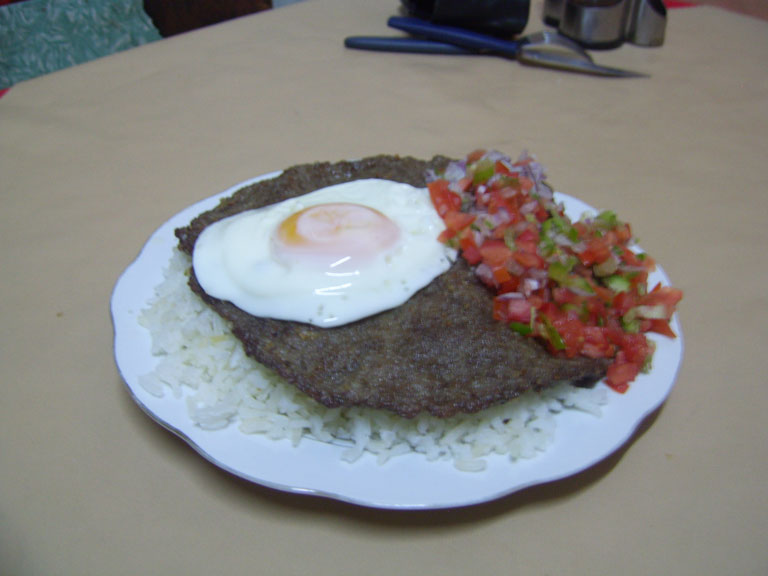 SilpanchoMeatSillp'anchu
🇧🇴 BoliviaLayered Bolivian meal with rice, potatoes, breaded meat, and fried eggs
Main dish, Lunch, Dinner
SilpanchoMeatSillp'anchu
🇧🇴 BoliviaLayered Bolivian meal with rice, potatoes, breaded meat, and fried eggs
Main dish, Lunch, Dinner
 Börek
🇹🇷 Turkey and 5 moreFlaky pastry filled with cheese, meat or vegetables, baked or fried
Pie or savoury pastry, Breakfast, Lunch
Börek
🇹🇷 Turkey and 5 moreFlaky pastry filled with cheese, meat or vegetables, baked or fried
Pie or savoury pastry, Breakfast, Lunch
 ShakshukaVegetarian
🇹🇳 Tunisia and 5 moreEggs poached in a spiced tomato and pepper sauce from North Africa
Main dish, Breakfast, Dinner
ShakshukaVegetarian
🇹🇳 Tunisia and 5 moreEggs poached in a spiced tomato and pepper sauce from North Africa
Main dish, Breakfast, Dinner
 Lentil soupVegan
🇪🇬 Egypt and 5 moreA hearty soup made from lentils, often with vegetables and spices
Soup, Lunch, Dinner
Lentil soupVegan
🇪🇬 Egypt and 5 moreA hearty soup made from lentils, often with vegetables and spices
Soup, Lunch, Dinner