
Zrazy
Beef slices rolled around a savory filling and cooked as a main dish
Zrazy is a rolled meat dish from the region once known as the Polish–Lithuanian Commonwealth, now popular in Poland, Lithuania, and western Belarus. Thin beef slices are seasoned and wrapped around a filling of vegetables, mushrooms, eggs, or potato, then cooked. It is served hot as a main course.
- Made from thin slices of beef rolled around a savory filling
- Popular in Poland, Lithuania, and western Belarus
- Fillings include vegetables, mushrooms, eggs, or potato
- Served hot as a main course
- Origin dates to the Polish–Lithuanian Commonwealth
What is Zrazy?
Zrazy are savory rolls made from thin slices of beef, which are seasoned and wrapped around a filling. The stuffing can include vegetables, mushrooms, eggs, or potato, giving the dish a hearty and varied texture. Once rolled, the meat parcels are cooked until tender. Zrazy are typically served hot and eaten as a main dish. The finished rolls are compact, with the filling visible at the ends, and the beef exterior often browned from cooking.
Where does Zrazy come from?
The roots of zrazy go back to the era of the Polish–Lithuanian Commonwealth, a historical union of Poland and Lithuania. Both Poland and Lithuania claim to have created the dish, and its exact birthplace is not known. The traditional rolled form is thought to have come from Lithuanian cooking, while the name 'zrazy' is Polish and refers to a slice of meat cut from a roast. Over time, zrazy became established in the cuisines of Poland, Lithuania, and western Belarus.
How is Zrazy made?
To make zrazy, thin slices of beef are first seasoned with salt and pepper. Each slice is then topped with a mixture of vegetables, mushrooms, eggs, or potato, depending on the recipe. The beef is rolled tightly around the filling to form a compact parcel. These rolls are then cooked, often by braising or roasting, until the meat is tender and the flavors have blended. The finished zrazy are served hot, sometimes with a sauce or alongside side dishes.
How and when is Zrazy eaten?
Zrazy are eaten as a main course, usually at lunch or dinner. They are served hot, often accompanied by potatoes or other side dishes. The dish is part of everyday meals in the regions where it is popular, rather than being tied to specific festivals or religious occasions. Zrazy can be found in home cooking as well as in restaurants that serve traditional Polish, Lithuanian, or Belarusian food.
Kinds of Zrazy
While beef is the classic choice for zrazy, other meats like mutton or pork may be used in some versions. The filling can also vary, with different vegetables, mushrooms, eggs, or potato used depending on local tastes and available ingredients. In Poland, a Silesian version called rouladen is known, showing regional adaptation. The basic idea of a rolled, stuffed meat dish is shared with similar dishes in other European cuisines.
What Zrazy means
Zrazy is a dish with deep roots in the shared history of Poland, Lithuania, and Belarus. It reflects the blending of culinary traditions from the Polish–Lithuanian Commonwealth. The dish is a staple of home cooking and is valued for its comforting, hearty qualities. Its name and form have become part of the food heritage of the region, and it is recognized as a classic example of stuffed and rolled meat dishes.
Questions people ask about Zrazy
What is zrazy made of?
Zrazy is made from thin slices of beef that are seasoned and rolled around a filling, which can include vegetables, mushrooms, eggs, or potato.
Where does zrazy come from?
Zrazy comes from the region of the former Polish–Lithuanian Commonwealth and is now popular in Poland, Lithuania, and western Belarus.
How is zrazy served?
Zrazy is served hot as a main course, often with potatoes or other side dishes, usually at lunch or dinner.
Are there different kinds of zrazy?
Yes, while beef is traditional, some versions use mutton or pork, and the fillings can vary with vegetables, mushrooms, eggs, or potato.
Is zrazy eaten for special occasions?
Zrazy is mainly an everyday dish and is not specifically tied to festivals or religious events.
Good reading and sources
The facts on this page come from the Wikipedia article "Zrazy", written by its contributors and used under the CC BY-SA 4.0 licence, and from its Wikidata record (CC0). Thali rewrote the text in its own words, with AI assistance, and compares every page with the article to make sure no passage is copied. It may be reused under the same CC BY-SA 4.0 licence with a link back.
It may contain mistakes, and it is not dietary or allergy advice: recipes differ from cook to cook. If something is wrong, tell us. Last refreshed 2026-10-03.
More from Poland
All the food of Poland Pancake
🇺🇸 United States and 5 moreFlat cakes made from batter, cooked on a griddle or pan and served sweet or savoury
Main dish, Breakfast, Snacks
Pancake
🇺🇸 United States and 5 moreFlat cakes made from batter, cooked on a griddle or pan and served sweet or savoury
Main dish, Breakfast, Snacks
 BigosMeat
🇵🇱 Poland and 5 morePolish stew of mixed meats, sauerkraut and cabbage, simmered with spices
Stew or curry, Breakfast, Dinner
BigosMeat
🇵🇱 Poland and 5 morePolish stew of mixed meats, sauerkraut and cabbage, simmered with spices
Stew or curry, Breakfast, Dinner
 Potato pancakeVegetarian
🇧🇾 Belarus and 5 moreShallow-fried pancakes made from grated or mashed potato, common across Europe
Main dish, Lunch, Dinner
Pierogi
🇵🇱 Poland and 6 moreDumplings of unleavened dough filled with savory or sweet mixtures
Dumpling, Lunch, Dinner
Potato pancakeVegetarian
🇧🇾 Belarus and 5 moreShallow-fried pancakes made from grated or mashed potato, common across Europe
Main dish, Lunch, Dinner
Pierogi
🇵🇱 Poland and 6 moreDumplings of unleavened dough filled with savory or sweet mixtures
Dumpling, Lunch, Dinner
Its cousins elsewhere
All main dishes Bibimbap비빔밥
🇰🇷 South Korea and 1 moreKorean rice bowl with mixed vegetables, meat, egg and chili paste
Main dish, Lunch, Dinner
Bibimbap비빔밥
🇰🇷 South Korea and 1 moreKorean rice bowl with mixed vegetables, meat, egg and chili paste
Main dish, Lunch, Dinner
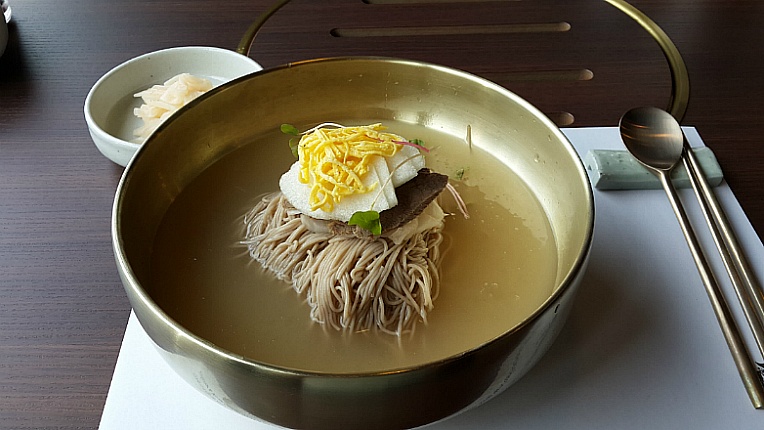 Naengmyeon냉면
🇰🇵 North Korea and 3 moreLong, chewy noodles served cold, often in a tangy broth or spicy sauce
Noodle or pasta dish, Lunch, Dinner
Naengmyeon냉면
🇰🇵 North Korea and 3 moreLong, chewy noodles served cold, often in a tangy broth or spicy sauce
Noodle or pasta dish, Lunch, Dinner
 Shabu-shabuしゃぶしゃぶ
🇯🇵 Japan and 4 moreJapanese hot pot where diners cook thin meat and vegetables at the table
Main dish, Dinner, Lunch
Shabu-shabuしゃぶしゃぶ
🇯🇵 Japan and 4 moreJapanese hot pot where diners cook thin meat and vegetables at the table
Main dish, Dinner, Lunch
 Pirozhkiпирожки
🇷🇺 Russia and 5 moreYeast-leavened buns filled with sweet or savory fillings, baked or fried
Pie or savoury pastry, Lunch, Dinner
Pirozhkiпирожки
🇷🇺 Russia and 5 moreYeast-leavened buns filled with sweet or savory fillings, baked or fried
Pie or savoury pastry, Lunch, Dinner