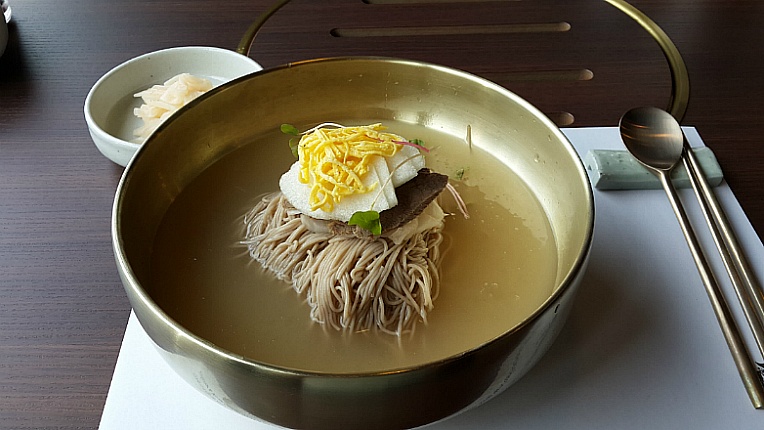
Naengmyeon
In its own language: 냉면
Long, chewy noodles served cold, often in a tangy broth or spicy sauce
Naengmyeon is a Korean dish of long, thin noodles made from buckwheat, potato, or sweet potato starch, served cold. It comes from North Korea, especially Pyongyang and Hamhung, and is enjoyed in both North and South Korea. Naengmyeon is eaten mainly in summer today, but was once a winter specialty. It is served in chilled broth or with spicy sauce, often topped with cucumber, pear, pickled radish, and egg.
- Originated in Pyongyang and Hamhung, North Korea
- Noodles made from buckwheat, potato, or sweet potato starch
- Served cold, often with icy broth or spicy sauce
- Topped with cucumber, pear, radish, egg, and sometimes beef
- Mul naengmyeon and bibim naengmyeon are the main varieties
What is Naengmyeon?
Naengmyeon is a Korean noodle dish served cold, with long, thin noodles that are chewy and slightly elastic. The noodles are made from buckwheat, potato, sweet potato, arrowroot, or kudzu starch, and sometimes seaweed or green tea. They are placed in a chilled, tangy broth or mixed with a spicy sauce. Typical toppings include cucumber, Korean pear, pickled radish, and slices of boiled egg or beef. The dish is refreshing and often eaten in hot weather, though it was once a winter treat.
Where does Naengmyeon come from?
Naengmyeon originated in northern Korea, especially in Pyongyang and Hamhung. Its history goes back to at least the Joseon period, as described in the 19th-century text Dongguksesigi. After the Korean War, naengmyeon spread throughout both North and South Korea. Traditionally, the noodles were eaten whole to symbolize long life, but today they are often cut with scissors at the table.
How is Naengmyeon made?
To make naengmyeon, noodles are prepared from buckwheat or other starches, boiled, and then rinsed in cold water. For mul naengmyeon, the noodles are served in a bowl of icy broth made from beef, chicken, or radish water kimchi (dongchimi). Bibim naengmyeon is tossed with a spicy gochujang-based sauce. Garnishes such as cucumber, pear, pickled radish, boiled egg, and sometimes beef slices are added. Mustard sauce and vinegar are often provided for extra flavor.


How and when is Naengmyeon eaten?
Naengmyeon is usually eaten for lunch or dinner, especially in summer, though it was once a winter dish. It is served in large metal bowls to keep it cold. Diners may add mustard sauce, vinegar, or sugar to taste. The noodles are traditionally left uncut, but servers often offer to cut them with scissors. It can be a main meal, often enjoyed on its own or with side dishes.
Kinds of Naengmyeon
The two main types are mul naengmyeon, with cold broth, and bibim naengmyeon, with spicy sauce. Pyongyang naengmyeon uses buckwheat noodles and beef or pheasant broth, while Hamhung naengmyeon features chewier noodles made from potato or sweet potato starch and is often served with marinated raw fish. Jinju-naengmyeon includes seafood and meat in the broth. There are also versions with kimchi, and Chinese and Japanese adaptations exist.
What Naengmyeon means
Naengmyeon is a well-loved dish in both Koreas and has become a symbol of Korean culinary tradition. It is featured in popular culture, such as a hit song named after it. The dish was also served at a historic North-South Korean summit. Instant versions are widely available, showing its popularity and everyday presence in Korean life.
Questions people ask about Naengmyeon
What is naengmyeon made of?
Naengmyeon noodles are made from buckwheat, potato, sweet potato, arrowroot, or kudzu starch. The dish is served with toppings like cucumber, pear, pickled radish, egg, and sometimes beef, in a cold broth or with spicy sauce.
Where does naengmyeon come from?
Naengmyeon comes from North Korea, especially the cities of Pyongyang and Hamhung, but is now enjoyed throughout Korea and in neighboring countries.
How is naengmyeon served?
It is served cold, either in a tangy, icy broth (mul naengmyeon) or mixed with a spicy gochujang-based sauce (bibim naengmyeon). Common garnishes include cucumber, pear, radish, egg, and beef.
When is naengmyeon usually eaten?
Today, naengmyeon is mostly eaten in summer for its refreshing coldness, but it was originally a winter dish. It is typically served for lunch or dinner.
Are there different types of naengmyeon?
Yes, the main types are mul naengmyeon (with broth) and bibim naengmyeon (with spicy sauce). There are also regional and seafood versions, and adaptations in China and Japan.
Good reading and sources
- Here's why you want to go to K-Town for cold noodles, even in the middle of winterLos Angeles Times, Article
- 'Cold noodles are peace symbol': summit to savour for euphoric Koreans | South KoreaThe Guardian, Article
The facts on this page come from the Wikipedia article "Naengmyeon", written by its contributors and used under the CC BY-SA 4.0 licence, and from its Wikidata record (CC0). Thali rewrote the text in its own words, with AI assistance, and compares every page with the article to make sure no passage is copied. It may be reused under the same CC BY-SA 4.0 licence with a link back.
It may contain mistakes, and it is not dietary or allergy advice: recipes differ from cook to cook. If something is wrong, tell us. Last refreshed 2026-10-03.
More from North Korea
All the food of North Korea BulgogiMeat불고기
🇰🇷 South Korea and 1 moreThin marinated beef grilled or pan-cooked, a classic of Korean barbecue
Main dish, Lunch, Dinner
BulgogiMeat불고기
🇰🇷 South Korea and 1 moreThin marinated beef grilled or pan-cooked, a classic of Korean barbecue
Main dish, Lunch, Dinner
 Tteokbokki떡볶이
🇰🇷 South Korea and 1 moreChewy rice cakes simmered in spicy or savory sauce, a Korean street food staple
Street food, Snacks, Lunch
Tteokbokki떡볶이
🇰🇷 South Korea and 1 moreChewy rice cakes simmered in spicy or savory sauce, a Korean street food staple
Street food, Snacks, Lunch
 Japanese curryMeatカレー
🇯🇵 Japan and 2 moreA thick, mildly spiced curry sauce served with rice, noodles or bread
Main dish, Lunch, Dinner
Japanese curryMeatカレー
🇯🇵 Japan and 2 moreA thick, mildly spiced curry sauce served with rice, noodles or bread
Main dish, Lunch, Dinner
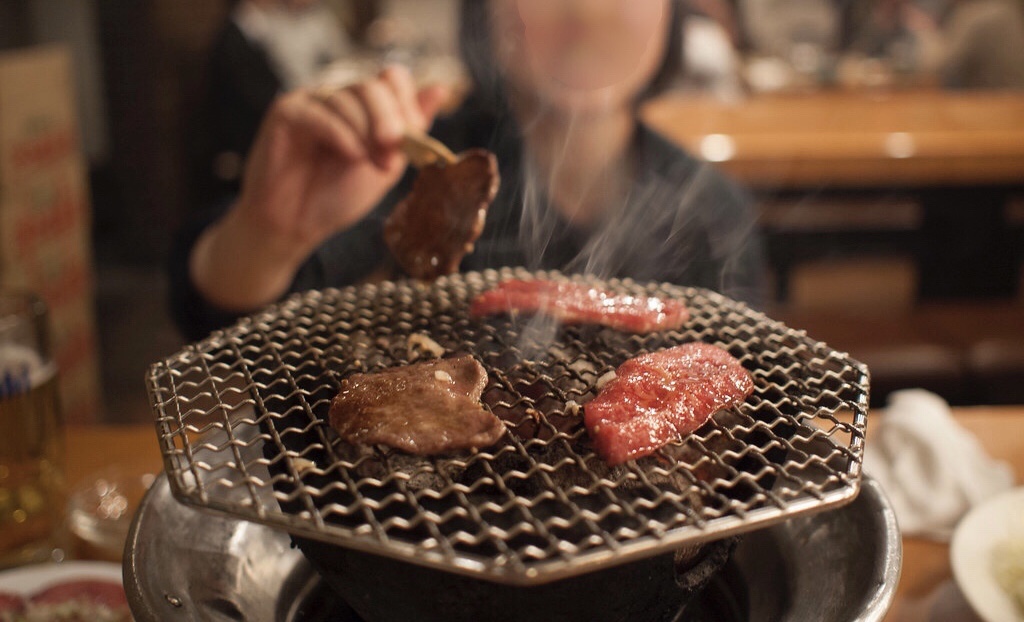 YakinikuMeat焼肉
🇯🇵 Japan and 2 moreJapanese grilled meat cooked at the table and dipped in savoury sauces
Main dish, Dinner, Lunch
YakinikuMeat焼肉
🇯🇵 Japan and 2 moreJapanese grilled meat cooked at the table and dipped in savoury sauces
Main dish, Dinner, Lunch
Its cousins elsewhere
All noodles and pasta Pasta
🇮🇹 Italy and 1 moreUnleavened dough shaped and cooked, a staple of Italian cuisine
Main dish, Lunch, Dinner
Pasta
🇮🇹 Italy and 1 moreUnleavened dough shaped and cooked, a staple of Italian cuisine
Main dish, Lunch, Dinner
 TortelliniMeat
🇮🇹 ItalySmall ring-shaped pasta parcels filled with seasoned meat and cheese
Main dish, Lunch, Dinner
TortelliniMeat
🇮🇹 ItalySmall ring-shaped pasta parcels filled with seasoned meat and cheese
Main dish, Lunch, Dinner
 SpätzleSpätzla
🇩🇪 Germany and 5 moreIrregular egg noodles from Swabia, served as a side or main dish
Main dish, Lunch, Dinner
SpätzleSpätzla
🇩🇪 Germany and 5 moreIrregular egg noodles from Swabia, served as a side or main dish
Main dish, Lunch, Dinner
 SpaghettiVegan
🇮🇹 Italy and 2 moreLong, thin pasta strands made from durum wheat and water
Noodle or pasta dish, Lunch, Dinner
SpaghettiVegan
🇮🇹 Italy and 2 moreLong, thin pasta strands made from durum wheat and water
Noodle or pasta dish, Lunch, Dinner