Sacred and ceremonial meals
Temple prasadam and annadanam
Food first offered to the deity in a Hindu temple and then shared with devotees as a blessing, often as a full free meal for all who come.
Presented by ClearTrust Free for cooks, travellers and the curious.
In Hindu worship, food is offered to the deity before anyone eats. Once offered, it is prasadam, a gift returned with divine grace, and devotees receive it with reverence. Annadanam, the giving of food, is held to be among the highest forms of charity, and many temples serve free meals to pilgrims every day.

What it is
Prasadam can be as small as a spoon of sweetened water, a piece of fruit or a pinch of sugar pressed into the palm after worship. It can also be a signature sweet tied to one shrine, such as the laddu of Tirumala. Annadanam is a full meal: rice, lentil curry, a vegetable, buttermilk and often a sweet, served in a dining hall on leaf plates or steel trays. It is given free to anyone, and donors pay for it as an act of merit.
How it is prepared
Temple kitchens follow strict rules of purity. Cooks bathe first and often belong to families that have done the work for generations. The food is vegetarian, and many temples cook without onion or garlic. Nothing is tasted during cooking, because the deity must be the first to receive it. At the Jagannath Temple in Puri, food is cooked in clay pots over wood fires, offered, and then sold and shared in a market inside the temple as Mahaprasad.
How it works
After seeing the deity, you receive prasadam from a priest or at a counter. For a meal, you join the queue for the dining hall. Some large temples issue free tokens with a time. Diners sit in rows, on the floor or at long tables, and volunteers serve each item along the line. Meals are served at set hours, usually around midday and again in the evening. You eat what is given, and you leave nothing.
How to do it
- Remove your shoes and follow the temple's dress rules.
- Receive prasadam in your right hand, with the left hand cupped beneath.
- For a meal, ask for the annadanam hall and its serving times.
- Sit in the row and wait until everyone has been served.
- Eat with your right hand, then wash at the taps outside.
Good manners
- Never refuse prasadam, and never throw it away. Share what you cannot eat.
- Do not smell or taste food meant as an offering before it is offered.
- Some temples admit only Hindus to the inner areas. Check before visiting.
What is eaten
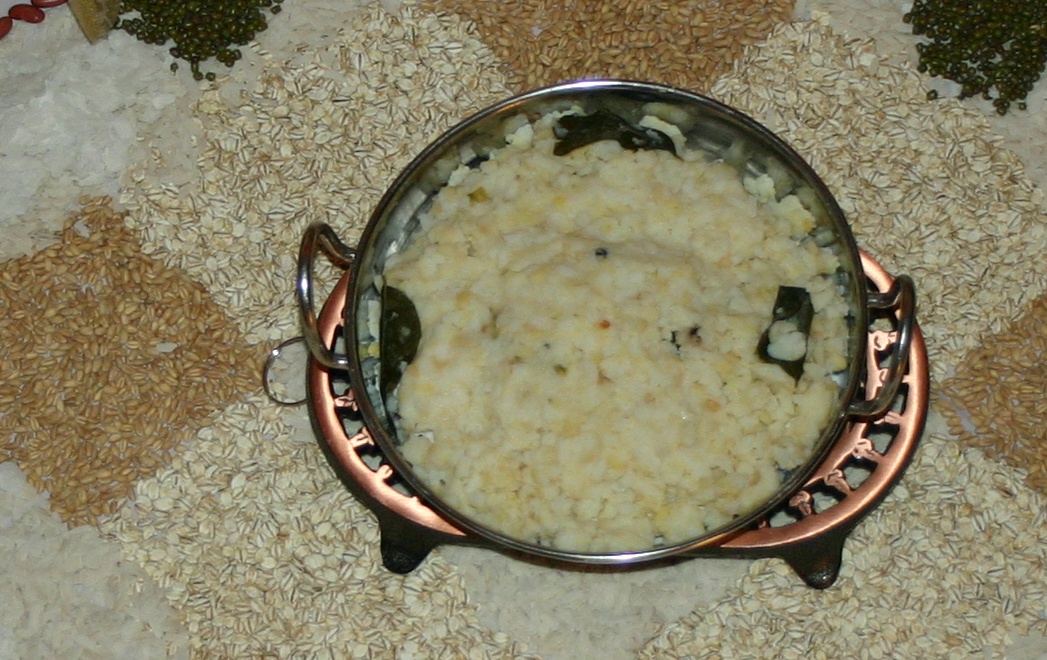 PongalRice cooked in milk, central to the Tamil harvest festival
 PanchamritaA sacred blend of five sweet ingredients offered in Hindu and Jain rituals
 KhichdiRice and lentils cooked together, often with vegetables and spices
 KheerA sweet pudding of rice, milk and sugar, flavoured with cardamom and nuts
 ModakA sweet dumpling with coconut and jaggery, offered in Hindu and Buddhist rituals
 Curd riceSteamed rice mixed with yogurt and seasoned with spices
 MahaprasadSanctified vegetarian food served at the Jagannath Temple in Puri, Odisha
Also part of it, and being written: Pulihora.
Sources and further reading
Original text by the Thali desk, written with AI assistance and checked against the sources above. Customs vary from place to place. If we have something wrong, tell us.
Photo credits on this page
The small pictures above come from Wikimedia Commons under free licences. Some are cropped to fit.
- Khichdi: Dkgohil, CC BY-SA 4.0, source
- Panchamrita: Skubydoo, CC BY-SA 4.0, source
- Mahaprasad: Government of Odisha, CC BY 4.0, source
- Kheer: stu spivack, CC BY-SA 2.0, source
- Modak: MAHESH MUTTA, CC BY-SA 3.0, source
- Pongal: Jennifer Kumar, Public domain, source
- Curd rice: Sudharshan Shanmugasundaram, CC BY-SA 4.0, source