
Mahaprasad
In its own language: ମହାପ୍ରସାଦ
Sanctified vegetarian food served at the Jagannath Temple in Puri, Odisha
Mahaprasad is a sacred vegetarian meal prepared and offered in the Jagannath Temple in Puri, Odisha, India. It includes both dry sweets and cooked rice-based dishes, all made without onion or garlic. After ritual offerings, devotees from all backgrounds share Mahaprasad together, especially during festivals and temple events.
- Prepared in the world's largest temple kitchen at Puri
- Always vegetarian and made without onion or garlic
- Shared by all devotees, breaking social barriers
- Includes both dry sweets and cooked rice dishes
- Nirmalya, dried rice, is taken home as a blessing
What is Mahaprasad?
Mahaprasad is a collection of vegetarian foods prepared daily at the Jagannath Temple in Puri. The offerings range from plain rice and lentil stews to spiced rice-lentil mixes, leafy greens, and vegetables cooked in mustard paste. There are also dry sweets like deep-fried gaja, coconut slices, and puffed rice with jaggery. All items are made without onion or garlic and cooked in earthen pots over wood fires. The food is shared by devotees in a communal setting, symbolizing unity and equality.
Where does Mahaprasad come from?
Mahaprasad is deeply tied to the worship of Lord Jagannath in Odisha. The practice of preparing and sharing this food at the Puri temple has been part of local religious life for centuries. Legends say the goddess Mahalakshmi supervises the kitchen herself. The temple's kitchen, called Rosa Ghara, is renowned as one of the largest in the world. While similar offerings exist in other temples, only food sanctified at Jagannath Temple is called Mahaprasad.
How is Mahaprasad made?
Designated temple cooks, known as Suaras and Maha-Suaras, prepare Mahaprasad in the Rosa Ghara using traditional methods. They cook the food in clay pots over wood fires, following strict rules that exclude onion, garlic, and tasting before the ritual. The food is first offered to Lord Jagannath, then to Devi Bimala, before it is distributed to devotees. The process is highly ritualized and follows prescribed codes of purity.

How and when is Mahaprasad eaten?
Devotees gather at Ananda Bazaar, the temple's food court, to eat Mahaprasad together. Anyone, regardless of background, may partake, reflecting the food's role in breaking down social barriers. People often take some Mahaprasad home, especially the dried rice called Nirmalya, which is considered especially auspicious. Mahaprasad is eaten during daily worship, festivals, and important life events such as weddings and funerals.
Kinds of Mahaprasad
Mahaprasad is divided into two main types: Sukhila Bhoga, which includes dry sweets and snacks, and Sankhudi Bhoga, which covers cooked rice, lentils, and vegetables. While similar foods are prepared in other temples and homes across Odisha, only those made and sanctified at the Jagannath Temple are called Mahaprasad. The menu changes with the time of day and the festival calendar.
What Mahaprasad means
Mahaprasad is a symbol of spiritual equality and community in Odisha. Eating together at the temple is seen as breaking down social divisions. The food is central to major festivals like Ratha Yatra and is part of life events from birth to mourning. Legends and beliefs about the kitchen and the food's miraculous qualities are widespread, and Mahaprasad is regarded as a blessing rather than just a meal.
Questions people ask about Mahaprasad
What is Mahaprasad made of?
Mahaprasad includes plain rice, lentil stews, spiced rice with lentils, leafy greens, vegetables in mustard paste, and dry sweets like puffed rice with jaggery, coconut slices, and deep-fried gaja. All items are vegetarian and exclude onion and garlic.
Where does Mahaprasad come from?
Mahaprasad is prepared and offered at the Jagannath Temple in Puri, Odisha, India. Only food sanctified inside this temple is called Mahaprasad.
Who can eat Mahaprasad?
Anyone, regardless of caste, creed, or religion, may eat Mahaprasad. It is shared communally at the temple, reflecting its role in promoting unity and equality.
How is Mahaprasad prepared?
Designated cooks make Mahaprasad in earthen pots over wood fires, following strict temple rules. The food is first offered to Lord Jagannath and then to Devi Bimala before being distributed to devotees.
What is Nirmalya?
Nirmalya is dried rice from Mahaprasad, considered highly auspicious. Devotees often take it home as a token of blessing, and it is sometimes given to the dying.
Good reading and sources
- Mahaprasad (Jagannath Temple) on WikipediaEncyclopedia
- More photos on Wikimedia CommonsPhotos
- Wikidata recordOpen data
The facts on this page come from the Wikipedia article "Mahaprasad (Jagannath Temple)", written by its contributors and used under the CC BY-SA 4.0 licence, and from its Wikidata record (CC0). Thali rewrote the text in its own words, with AI assistance, and compares every page with the article to make sure no passage is copied. It may be reused under the same CC BY-SA 4.0 licence with a link back.
It may contain mistakes, and it is not dietary or allergy advice: recipes differ from cook to cook. If something is wrong, tell us. Last refreshed 2026-10-03.
More from India
All the food of India Ice cream
🇺🇸 United States and 5 moreA frozen dessert made from sweetened, flavoured milk or cream
Sweet or dessert, Snacks
Ice cream
🇺🇸 United States and 5 moreA frozen dessert made from sweetened, flavoured milk or cream
Sweet or dessert, Snacks
 Kebabكَبَاب
🇹🇷 Turkey and 5 moreGrilled or roasted meat, often on skewers, found across the Middle East and beyond
Main dish, Lunch, Dinner
Halvaحَلَاوَة
🇮🇷 Iran and 5 moreDense sweet made from seeds, grains, or vegetables, found across Asia, Africa, and Europe
Sweet or dessert, Snacks, Tea time
Kebabكَبَاب
🇹🇷 Turkey and 5 moreGrilled or roasted meat, often on skewers, found across the Middle East and beyond
Main dish, Lunch, Dinner
Halvaحَلَاوَة
🇮🇷 Iran and 5 moreDense sweet made from seeds, grains, or vegetables, found across Asia, Africa, and Europe
Sweet or dessert, Snacks, Tea time
 Candy
🇺🇸 United States and 5 moreSmall sweet treats made mainly from sugar or sweeteners
Sweet or dessert, Snacks
Candy
🇺🇸 United States and 5 moreSmall sweet treats made mainly from sugar or sweeteners
Sweet or dessert, Snacks
Its cousins elsewhere
All main dishes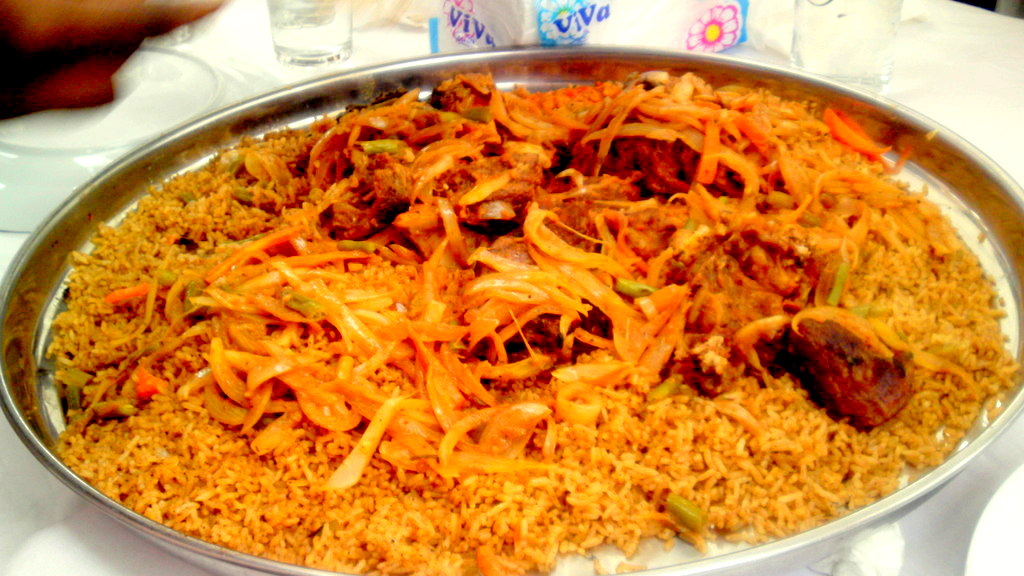 Riz grasMeat
🇧🇫 Burkina Faso and 4 moreWest African rice cooked with meat and vegetables, served hot
Main dish, Lunch, Dinner
Riz grasMeat
🇧🇫 Burkina Faso and 4 moreWest African rice cooked with meat and vegetables, served hot
Main dish, Lunch, Dinner
 Cabbage roll
🇺🇦 Ukraine and 5 moreCooked cabbage leaves wrapped around seasoned fillings, simmered or baked
Main dish, Lunch, Dinner
Cabbage roll
🇺🇦 Ukraine and 5 moreCooked cabbage leaves wrapped around seasoned fillings, simmered or baked
Main dish, Lunch, Dinner
 Chicken soupMeat
🇺🇸 United States and 4 moreA hot soup of chicken simmered with vegetables, noodles or grains
Soup, Lunch, Dinner
Chicken soupMeat
🇺🇸 United States and 4 moreA hot soup of chicken simmered with vegetables, noodles or grains
Soup, Lunch, Dinner
 Hariraالحريرة
🇲🇦 Morocco and 3 moreNorth African soup of tomato, legumes, herbs and spices, often served during Ramadan
Soup, Dinner, Supper
Hariraالحريرة
🇲🇦 Morocco and 3 moreNorth African soup of tomato, legumes, herbs and spices, often served during Ramadan
Soup, Dinner, Supper