🇨🇮 The food of Ivory Coast
9 dishes from Ivory Coast, best known first, across 1 city or region.
Ivorian cooking draws on local tubers, grains, and a wide range of meats, seafood, and fresh produce. Its food is shaped by West African traditions, with dishes built around cassava, plantains, and peanuts, and a fondness for slow-cooked stews and spicy sauces. Unique touches include attiéké, alloco, and the open-air maquis restaurant.
- Attiéké is grated, fermented cassava served like couscous.
- Maquis are open-air restaurants unique to Côte d'Ivoire.
- Alloco is fried ripe plantain with spicy sauce, sold as street food.
- Kedjenou is a spicy chicken and vegetable stew cooked in a sealed pot.
- Bangui is a local palm wine.
The cooking of Ivory Coast
Cooking in Côte d'Ivoire centers on starchy vegetables like cassava and plantains, with grains, peanuts, and palm oil playing key roles. Meals often feature grilled or stewed meats, especially chicken, fish, and Guinea fowl, alongside seafood such as shrimp and sardines. Stews are common, simmered slowly to deepen flavors, sometimes using a pottery jar called a canari. Spices, chili, and onions add heat and sweetness, while local fruits and vegetables round out the diet. The cuisine shares much with neighboring West African countries but stands out for its use of attiéké and the lively maquis restaurants.
Staple foods in Ivory Coast
Cassava, plantains, maize, and yams are the backbone of Ivorian meals. Attiéké, made from grated and fermented cassava, is a staple side, often served like couscous. Peanuts are used in sauces, and palm oil is a key cooking fat. Rice, especially riz gras, and corn paste (aitiu) are also common. Fruits such as mango, coconut, and soursop are widely eaten.
Snacks and street food in Ivory Coast
Alloco, fried ripe plantains in palm oil with spicy onion-chili sauce, is a popular street snack, sometimes paired with a hard-boiled egg. Grilled land snails and smoked fish are also enjoyed as snacks. These foods are often sold by vendors and eaten on the go.
Sweets and drinks in Ivory Coast
Bangui, a palm wine, is a local alcoholic drink. Non-alcoholic options include gnamakoudji, a ginger drink mellowed with pineapple juice, lemon, and vanilla, and nyamanku, made from ginger root and citrus juices. Sweets are less described, but fruits like mango and soursop are common.
At the table in Ivory Coast
Meals are often eaten in small open-air restaurants called maquis, unique to Côte d'Ivoire, where braised chicken or fish is served with attiéké or kedjenou. Stews are slow-cooked, sometimes in a canari pot. Eating with the hands, especially when using mashed plantains or yams to scoop up sauces, is traditional.
The facts in this overview come from the Wikipedia article "Ivorian cuisine", written by its contributors and used under the CC BY-SA 4.0 licence. Thali rewrote the text in its own words, with AI assistance, and compares every page with the article to make sure no passage is copied. It may be reused under the same CC BY-SA 4.0 licence with a link back.
Cities and regions of Ivory Coast
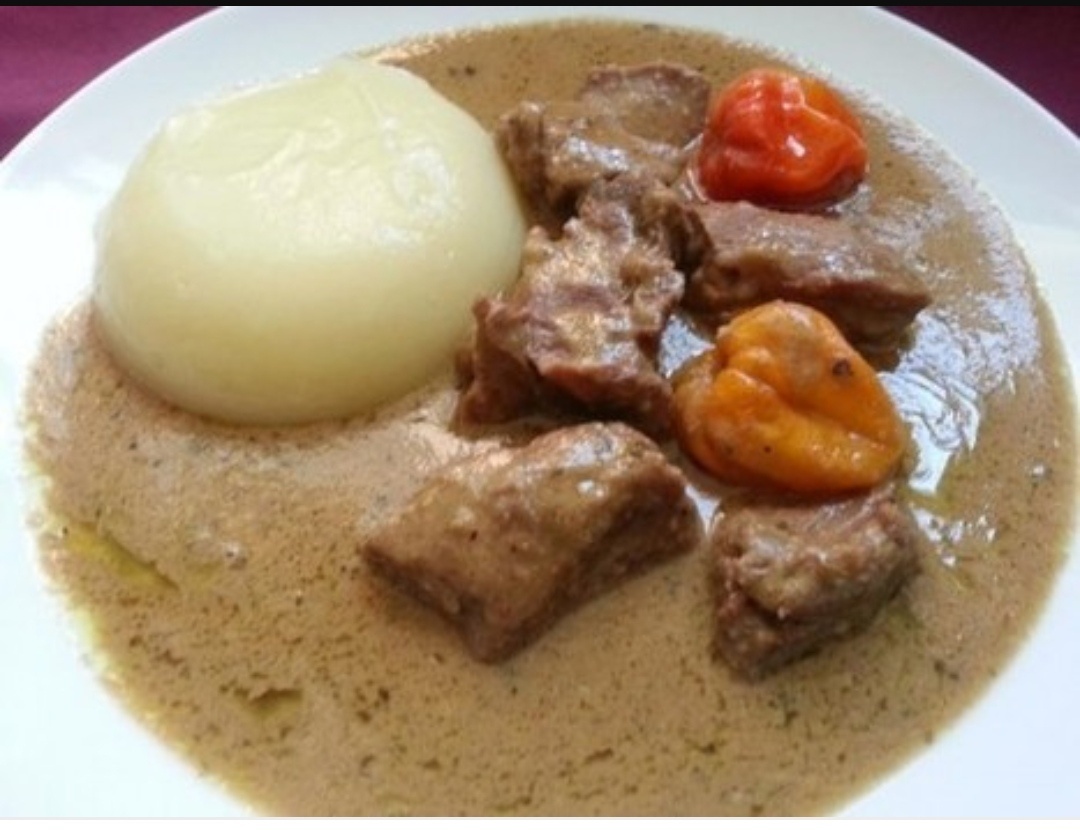 Peanut stew
🇸🇳 Senegal and 5 moreA rich West African stew of meat and vegetables in a spiced peanut sauce
Stew or curry, Lunch, Dinner
Peanut stew
🇸🇳 Senegal and 5 moreA rich West African stew of meat and vegetables in a spiced peanut sauce
Stew or curry, Lunch, Dinner
 Palm nut soup
🇳🇬 Nigeria and 4 moreA rich, red soup made from palm fruit, meat, fish and spices
Soup, Lunch, Dinner
Palm nut soup
🇳🇬 Nigeria and 4 moreA rich, red soup made from palm fruit, meat, fish and spices
Soup, Lunch, Dinner
 KenkeyVegan
🇬🇭 Ghana and 3 moreFermented maize dough dumpling, steamed and served with spicy sides
Main dish, Lunch, Dinner
KenkeyVegan
🇬🇭 Ghana and 3 moreFermented maize dough dumpling, steamed and served with spicy sides
Main dish, Lunch, Dinner
 KedjenouMeat
🇨🇮 Ivory CoastSpicy West African stew of chicken or guinea hen slow-cooked in a sealed pot
Stew or curry, Lunch, Dinner
KedjenouMeat
🇨🇮 Ivory CoastSpicy West African stew of chicken or guinea hen slow-cooked in a sealed pot
Stew or curry, Lunch, Dinner
 Fried plantainVegan
🇳🇬 Nigeria and 5 moreSlices of plantain fried in oil, eaten across Africa, the Caribbean and Latin America
Street food, Lunch, Dinner
Fried plantainVegan
🇳🇬 Nigeria and 5 moreSlices of plantain fried in oil, eaten across Africa, the Caribbean and Latin America
Street food, Lunch, Dinner
Photo credits on this page
The small pictures above come from Wikimedia Commons under free licences. Some are cropped to fit.
- Peanut stew: Marshiayers, CC0, source
- Palm nut soup: Nkansahrexford, CC BY-SA 4.0, source
- Kenkey: juxtapose^esopatxuj, CC BY-SA 2.0, source
- Kedjenou: Serein, CC BY-SA 3.0, source
- Fried plantain: Dtarazona, CC BY-SA 4.0, source