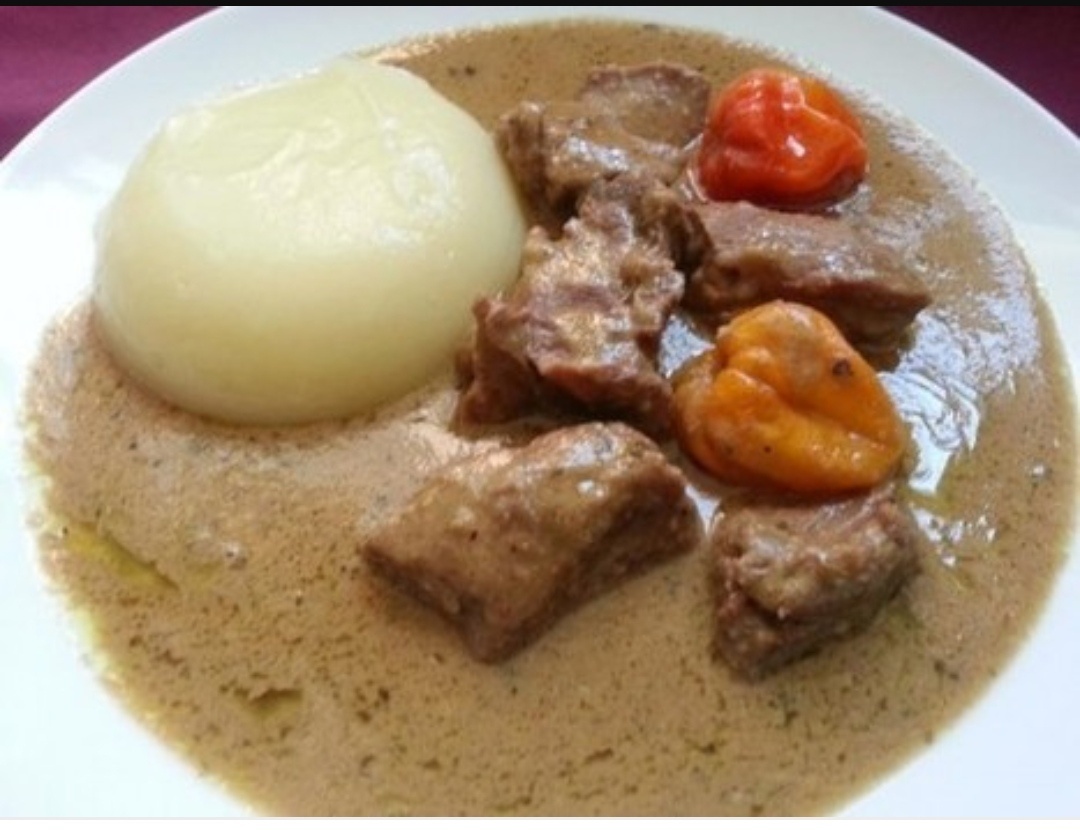
Peanut stew
A rich West African stew of meat and vegetables in a spiced peanut sauce
Peanut stew is a hearty dish from Senegal and Mali, now enjoyed across West Africa. It is made by simmering meat such as chicken, lamb, or beef with vegetables like tomato, onion, cabbage, and root or leafy greens in a sauce thickened with ground peanuts. The stew is often served with rice, millet dough, or fufu, and appears at everyday meals as well as on special occasions.
- Peanut stew is a staple in Senegal, Mali, and The Gambia
- It can be made with chicken, lamb, beef, or no meat
- Served with rice, millet dough, fufu, or couscous
- Known as maafe, tigadèguèna, or domodah in different regions
- Vegetables and spices vary widely by country and season
What is Peanut stew?
Peanut stew is a thick, savory dish built around a sauce of ground peanuts or peanut butter. The sauce is simmered with pieces of meat—often chicken, lamb, or beef—and a mix of vegetables such as tomatoes, onions, cabbage, and sometimes okra or carrots. Leafy or root vegetables are common additions. The stew is typically spiced with garlic and a blend of local seasonings, which may include hot peppers, turmeric, cumin, or paprika. The finished stew is creamy and rich, with the peanuts giving it a distinct flavor and texture. It is usually served over rice, millet dough, or fufu, depending on the region.
Where does Peanut stew come from?
Peanut stew, known as maafe in Senegal and tigadèguèna in Mali, traces its roots to the Mandinka and Bambara peoples. Maafe developed in Senegal during the colonial era, incorporating rice and peanuts, and later spread to Mali and beyond. The Malian version, tigadèguèna, traditionally used Bambara groundnuts before peanuts became common. Over time, the dish became a staple across West Africa, with each region adapting it to local tastes and ingredients. In The Gambia, a similar stew called domoda is considered a national dish.
How is Peanut stew made?
To prepare peanut stew, cooks start by browning meat and sautéing onions and garlic. Tomatoes and a variety of vegetables are added, then simmered together. Ground peanuts or peanut butter is mixed in to thicken the sauce and give it its signature flavor. Spices such as hot pepper, turmeric, or cumin are often included for depth. The stew is cooked until the meat is tender and the sauce is creamy. It is then ladled over rice, millet dough, fufu, or couscous, depending on local custom.


How and when is Peanut stew eaten?
Peanut stew is commonly eaten at lunch or dinner as a main meal. It is served hot, often shared among family or friends from a communal bowl. In Senegal and neighboring countries, it is typically paired with white rice, while in Mali, millet dough or fonio is traditional. In Ghana and Ivory Coast, fufu or sweet potatoes may accompany the stew. The dish is enjoyed both as an everyday meal and at festive gatherings, reflecting its importance in West African home cooking.
Kinds of Peanut stew
Many regional and family versions of peanut stew exist. Some use lamb, beef, or chicken, while others are made without meat. Vegetables vary by season and location, with okra, carrots, and greens often included. In Ghana, boiled eggs may be added. Um'bido is a variant that uses greens. The dish can be spiced differently, and in some places, couscous or findi (a grain similar to couscous) is used as a base. The stew has also influenced dishes outside Africa, such as Virginia peanut soup in the United States.
What Peanut stew means
Peanut stew is a symbol of hospitality and everyday life in West Africa. It is considered a national dish in Mali and The Gambia, and is popular across Senegal, Mauritania, and beyond. The dish brings together local ingredients and reflects the region’s agricultural traditions. Its spread to other continents, especially through the African diaspora, shows its lasting cultural impact. In many homes, peanut stew is a comfort food and a centerpiece at both daily meals and special occasions.
Questions people ask about Peanut stew
What is peanut stew made of?
Peanut stew is made with ground peanuts or peanut butter, meat such as chicken, lamb, or beef, and vegetables like tomato, onion, cabbage, and sometimes okra or carrots. It is flavored with garlic and a mix of spices.
Where does peanut stew come from?
Peanut stew originated in Senegal and Mali, among the Mandinka and Bambara peoples. It has since become popular across West Africa and is known by different names in various countries.
What do you eat with peanut stew?
Peanut stew is usually served over rice in Senegal and neighboring countries, with millet dough or fonio in Mali, and with fufu or sweet potatoes in Ghana and Ivory Coast. It may also be served with couscous or findi.
Is peanut stew always made with meat?
No, peanut stew can be made with lamb, beef, chicken, or without meat. The choice of protein and vegetables varies by region and personal preference.
What are other names for peanut stew?
Peanut stew is also called groundnut stew, maafe, mafé, domodah, and pate d'arachide, depending on the country and language.
Good reading and sources
The facts on this page come from the Wikipedia article "Peanut stew", written by its contributors and used under the CC BY-SA 4.0 licence, and from its Wikidata record (CC0). Thali rewrote the text in its own words, with AI assistance, and compares every page with the article to make sure no passage is copied. It may be reused under the same CC BY-SA 4.0 licence with a link back.
It may contain mistakes, and it is not dietary or allergy advice: recipes differ from cook to cook. If something is wrong, tell us. Last refreshed 2026-10-03.
More from Senegal
All the food of Senegal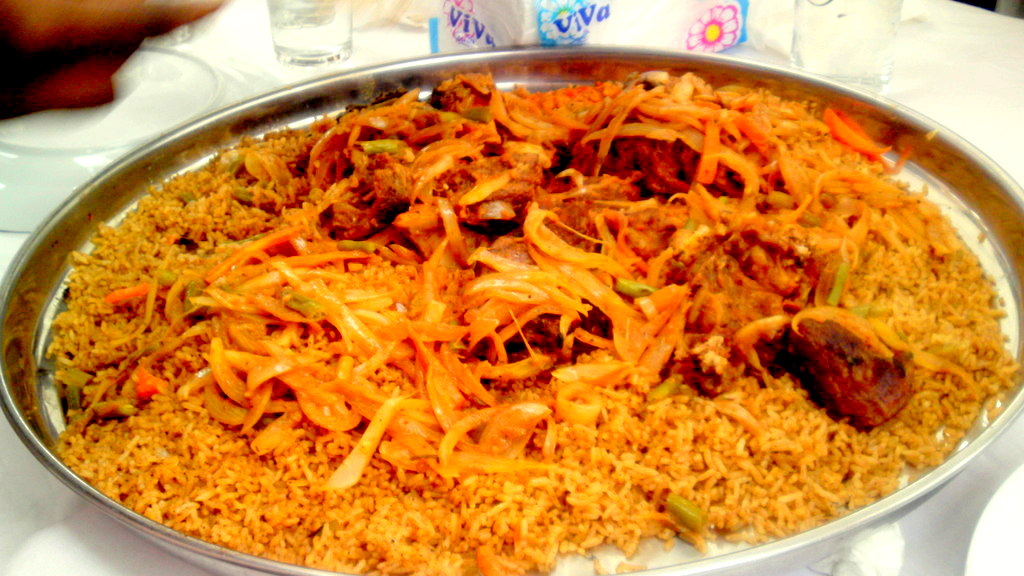 Riz grasMeat
🇧🇫 Burkina Faso and 4 moreWest African rice cooked with meat and vegetables, served hot
Main dish, Lunch, Dinner
Riz grasMeat
🇧🇫 Burkina Faso and 4 moreWest African rice cooked with meat and vegetables, served hot
Main dish, Lunch, Dinner
 Jambalaya
🇺🇸 United States and 5 moreLouisiana rice cooked with meats, vegetables and spices in one pot
Main dish, Lunch, Dinner
Jollof rice
🇸🇳 Senegal and 5 moreWest African rice simmered in tomato, chili and spices, often served with meat or fish
Main dish, Lunch, Dinner
Jambalaya
🇺🇸 United States and 5 moreLouisiana rice cooked with meats, vegetables and spices in one pot
Main dish, Lunch, Dinner
Jollof rice
🇸🇳 Senegal and 5 moreWest African rice simmered in tomato, chili and spices, often served with meat or fish
Main dish, Lunch, Dinner
 ThieboudienneFish or seafood
🇸🇳 Senegal and 5 moreSenegalese rice and fish cooked together with vegetables and tomato
Main dish
ThieboudienneFish or seafood
🇸🇳 Senegal and 5 moreSenegalese rice and fish cooked together with vegetables and tomato
Main dish
Its cousins elsewhere
All stews and curries Chili con carneMeat
🇲🇽 Mexico and 1 moreA spicy stew of meat and chili peppers from Mexico and the United States
Main dish, Lunch, Dinner
Chili con carneMeat
🇲🇽 Mexico and 1 moreA spicy stew of meat and chili peppers from Mexico and the United States
Main dish, Lunch, Dinner
 Pörkölt
🇭🇺 Hungary and 4 moreHungarian stew of meat, paprika and onion, simmered with vegetables
Stew or curry, Lunch, Dinner
Bosnian potMeatBosanski lonac
🇧🇦 Bosnia and HerzegovinaA hearty Bosnian stew of chunky meat and vegetables, layered and slow-cooked
Stew or curry, Lunch, Dinner
Pörkölt
🇭🇺 Hungary and 4 moreHungarian stew of meat, paprika and onion, simmered with vegetables
Stew or curry, Lunch, Dinner
Bosnian potMeatBosanski lonac
🇧🇦 Bosnia and HerzegovinaA hearty Bosnian stew of chunky meat and vegetables, layered and slow-cooked
Stew or curry, Lunch, Dinner
 RatatouilleVegan
🇫🇷 FranceA Provençal stew of summer vegetables cooked in olive oil
Main dish, Lunch, Dinner
RatatouilleVegan
🇫🇷 FranceA Provençal stew of summer vegetables cooked in olive oil
Main dish, Lunch, Dinner