🇵🇹 The food of Portugal
52 dishes from Portugal, best known first, across 44 cities and regions.
Portuguese cooking blends Atlantic, Mediterranean, and colonial influences, with olive oil, garlic, and a wide range of spices at its core. Fish and seafood, especially salted cod, are central, while bread, rice, and potatoes are staples. Regional traditions and a love of soups, stews, and pastries set it apart.
- Portugal has Europe's highest fish consumption per person.
- There are over 365 ways to cook salted cod (bacalhau).
- Olive oil is graded for cooking or dressing based on acidity.
- Pastel de nata is a signature custard tart, often with cinnamon.
- Lunch and dinner usually begin with soup.
The cooking of Portugal
Portugal’s food reflects its Atlantic setting and a history shaped by trade and exploration. Olive oil, garlic, and onions form the base of many dishes, while herbs like bay leaf, parsley, and coriander add depth. Spices from former colonies—such as piri piri, cinnamon, and clove—are used in both savory and sweet foods. Fish and seafood are central, with cod and sardines especially prominent. Meals often start with soup and include a variety of meats, breads, and vegetables. Regional breads and cheeses are important, and desserts often feature eggs, cinnamon, and citrus zest.
Staple foods in Portugal
Bread, rice, and potatoes are eaten daily, with many traditional breads like broa (a cornbread) found across the country. Olive oil is used for both cooking and dressing, with different grades for various uses. Pork and beef are the main meats, but poultry and game also appear. Legumes, brassicas (like collard greens), and chestnuts are common, and fish—especially salted cod—features in countless recipes.
Breakfast in Portugal 6 dishes
A typical breakfast is simple: fresh bread with butter, ham, cheese, or jam, alongside coffee, milk, tea, or hot chocolate. Sweet pastries, such as the pastel de nata (a small custard tart), are popular, often enjoyed with espresso. Breakfast cereals with milk or yogurt and fruit are also common.
Lunch in Portugal 26 dishes
Lunch is a main meal, usually served between noon and 2 pm, often lasting over an hour. It typically includes three courses, with soup as a common starter. Caldo verde, a potato and collard green soup, is a favorite. Fish, meat, and vegetables follow, and meals may end with fruit or dessert.
Dinner in Portugal 30 dishes
Dinner is generally eaten around 8 pm and is similar in structure to lunch, with soup, a main course, and dessert. The meal may be lighter than lunch but still features fish, meat, and vegetables, often accompanied by bread.
Sweets and drinks in Portugal
Desserts are varied, with caramel custard (pudim de ovos), chocolate mousse, rice pudding with cinnamon, and apple tart among the favorites. Cheeses made from sheep, goat, or cow’s milk are widely enjoyed. The pastel de nata is a signature sweet, often paired with coffee. Espresso is a staple drink throughout the day.
From region to region in Portugal
Regional cooking varies: the north is known for tripe dishes and toasted sandwiches like francesinha; the Bairrada area specializes in roasted suckling pig and goat stews; coastal regions focus on fresh and preserved fish, including sardines and tuna. The islands of the Azores and Madeira have their own seafood traditions and cheeses. Bread types and use of spices can also differ by region.
At the table in Portugal
Meals are social and leisurely, with lunch and dinner often lasting over an hour. Soup is a common first course. Bread is served with most meals. Coffee, especially espresso, is enjoyed after meals or as a break during the day. Meals are typically eaten at set times: lunch around 1 pm, dinner around 8 pm.
Festival and religious food in Portugal
Festive foods include special dishes for holidays and religious events. Cozido à portuguesa, a meat and vegetable stew, is popular in winter and at gatherings. Eel and lamprey stews are prepared for seasonal festivals in certain regions. Sweets like pastel de nata and rice pudding are common at celebrations.
The facts in this overview come from the Wikipedia article "Portuguese cuisine", written by its contributors and used under the CC BY-SA 4.0 licence. Thali rewrote the text in its own words, with AI assistance, and compares every page with the article to make sure no passage is copied. It may be reused under the same CC BY-SA 4.0 licence with a link back.
Cities and regions of Portugal
 ChorizoMeat
🇪🇸 Spain and 5 moreA seasoned pork sausage from the Iberian Peninsula, made in many regional styles
Sausage or cured food, Breakfast, Lunch
ChorizoMeat
🇪🇸 Spain and 5 moreA seasoned pork sausage from the Iberian Peninsula, made in many regional styles
Sausage or cured food, Breakfast, Lunch
 VindalooMeat
🇮🇳 India and 2 moreA spicy curry of meat, vinegar and chili from Goa, now found worldwide
Main dish, Lunch, Dinner
VindalooMeat
🇮🇳 India and 2 moreA spicy curry of meat, vinegar and chili from Goa, now found worldwide
Main dish, Lunch, Dinner
 FeijoadaMeat
🇵🇹 Portugal and 4 moreBean stew with pork or beef, common in Portugal and Brazil
Stew or curry, Lunch, Dinner
FeijoadaMeat
🇵🇹 Portugal and 4 moreBean stew with pork or beef, common in Portugal and Brazil
Stew or curry, Lunch, Dinner
 Suckling pigMeat
🇪🇸 Spain and 5 moreWhole roasted piglet, prized for its tender meat and crisp skin
Main dish, Lunch, Dinner
Suckling pigMeat
🇪🇸 Spain and 5 moreWhole roasted piglet, prized for its tender meat and crisp skin
Main dish, Lunch, Dinner
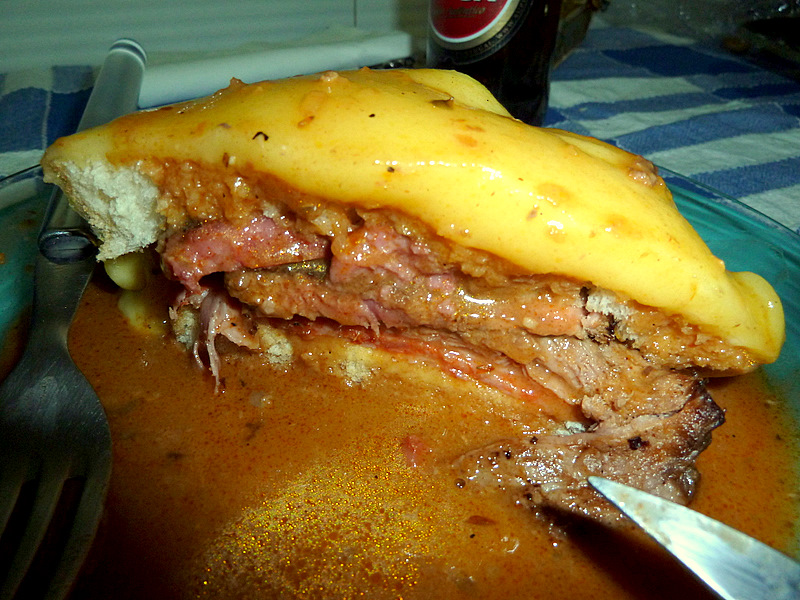 FrancesinhaMeat
🇵🇹 PortugalA layered sandwich from Porto with meats, cheese and a hot beer-tomato sauce
Sandwich or wrap, Lunch, Dinner
FrancesinhaMeat
🇵🇹 PortugalA layered sandwich from Porto with meats, cheese and a hot beer-tomato sauce
Sandwich or wrap, Lunch, Dinner
 ChurrascoMeat
🇧🇷 Brazil and 6 moreGrilled meat, often beef, cooked over coals or on skewers in South America and Iberia
Main dish, Lunch, Dinner
ChurrascoMeat
🇧🇷 Brazil and 6 moreGrilled meat, often beef, cooked over coals or on skewers in South America and Iberia
Main dish, Lunch, Dinner
 Ibérico hamMeat
🇪🇸 Spain and 1 moreCured leg of Black Iberian pig, prized in Spain and Portugal
Sausage or cured food
Ibérico hamMeat
🇪🇸 Spain and 1 moreCured leg of Black Iberian pig, prized in Spain and Portugal
Sausage or cured food
 AlheiraMeat
🇵🇹 PortugalPortuguese sausage made with meat and bread, often fried and served with egg and fries
Sausage or cured food, Lunch, Dinner
AlheiraMeat
🇵🇹 PortugalPortuguese sausage made with meat and bread, often fried and served with egg and fries
Sausage or cured food, Lunch, Dinner
 Carne de porco à alentejanaMeat
🇵🇹 PortugalPork and clams cooked together with potatoes and coriander
Main dish, Lunch, Dinner
Carne de porco à alentejanaMeat
🇵🇹 PortugalPork and clams cooked together with potatoes and coriander
Main dish, Lunch, Dinner
 LinguiçaMeat
🇵🇹 Portugal and 4 morePortuguese pork sausage seasoned with garlic, paprika and smoked or cooked fresh
Sausage or cured food, Breakfast, Lunch
LinguiçaMeat
🇵🇹 Portugal and 4 morePortuguese pork sausage seasoned with garlic, paprika and smoked or cooked fresh
Sausage or cured food, Breakfast, Lunch
 Tripas à moda do PortoMeat
🇵🇹 PortugalBeef tripe stew with beans, carrots and rice from Porto
Main dish, Lunch, Dinner
Tripas à moda do PortoMeat
🇵🇹 PortugalBeef tripe stew with beans, carrots and rice from Porto
Main dish, Lunch, Dinner
 Cozido à portuguesaMeat
🇵🇹 PortugalA hearty Portuguese stew of meats, sausages and vegetables simmered together
Main dish, Lunch, Dinner
Cozido à portuguesaMeat
🇵🇹 PortugalA hearty Portuguese stew of meats, sausages and vegetables simmered together
Main dish, Lunch, Dinner
 BifanaMeat
🇵🇹 PortugalPortuguese sandwich of seasoned pork in a warm bread roll
Sandwich or wrap, Lunch, Dinner
BifanaMeat
🇵🇹 PortugalPortuguese sandwich of seasoned pork in a warm bread roll
Sandwich or wrap, Lunch, Dinner
 EspetadaMeat
🇵🇹 Portugal and 1 morePortuguese skewered meat grilled over coals, often served with bread or polenta
Main dish, Lunch, Dinner
EspetadaMeat
🇵🇹 Portugal and 1 morePortuguese skewered meat grilled over coals, often served with bread or polenta
Main dish, Lunch, Dinner
Photo credits on this page
The small pictures above come from Wikimedia Commons under free licences. Some are cropped to fit.
- Feijoada: Melsj, CC BY-SA 4.0, source
- Bifana: Siliconred, CC BY-SA 4.0, source
- Alheira: Lichinga, CC BY-SA 4.0, source
- Espetada: GerritR, CC BY-SA 4.0, source
- Churrasco: Julio Cesar Martins, CC BY-SA 3.0, source
- Chorizo: Asturnut ( talk ), CC BY-SA 3.0, source
- Vindaloo: Adriao, CC BY 2.5, source
- Francesinha: José Raeiro, CC BY-SA 4.0, source
- Ibérico ham: Cantabrucu, CC0, source
- Suckling pig: Joan Sebastián Araújo Arena, CC BY-SA 2.0, source
- Carne de porco à alentejana: Rui Ornelas, CC BY 2.0, source
- Linguiça: No machine-readable author provided. Ardo Beltz assumed (based on copy, CC BY-SA 3.0, source
- Tripas à moda do Porto: MariaCartas, CC BY-SA 3.0, source
- Cozido à portuguesa: Uxbona, CC BY-SA 3.0, source