
Agedashi dōfu
In its own language: 揚げ出し豆腐
Crisp tofu cubes served in a warm, savory Japanese broth
Agedashi dōfu is a Japanese dish featuring cubes of silken tofu coated in starch and deep-fried until golden. The tofu is placed in a hot broth made from dashi, mirin, and soy sauce, then topped with spring onion and grated daikon. It is enjoyed hot, often as a side or small plate.
- Tofu cubes are deep-fried and served in a hot, savory broth
- The broth combines dashi, mirin, and soy sauce
- Topped with spring onion and grated daikon radish
- Mentioned in a Japanese cookbook from 1782
- Eggplant can also be prepared in this style
What is Agedashi dōfu?
Agedashi dōfu is made from soft or medium silken tofu, which is cut into cubes and coated in a thin layer of potato or corn starch. The tofu is deep-fried until the outside turns crisp and lightly golden, while the inside stays tender. It is served in a bowl of hot broth flavored with dashi (a stock made from seaweed and fish), mirin (a sweet rice wine), and Japanese soy sauce. The dish is finished with toppings like chopped spring onion and grated daikon radish, and sometimes dried fish flakes.
Where does Agedashi dōfu come from?
This dish has been part of Japanese cooking for centuries. It appeared in a tofu recipe book called Tofu Hyakuchin, published in 1782, which collected many ways to prepare tofu. Alongside agedashi dōfu, the book also described other classic tofu dishes such as chilled and simmered tofu. Its long history has made it a familiar item in Japanese homes and restaurants.
How is Agedashi dōfu made?
To prepare agedashi dōfu, silken tofu is first cut into cubes. Each piece is dusted lightly with potato or corn starch, then deep-fried until the outside becomes crisp. The fried tofu is placed in a bowl, and a hot broth made from dashi, mirin, and soy sauce is poured over it. The dish is topped with sliced spring onion and grated daikon, and sometimes with dried fish flakes for extra flavor.


How and when is Agedashi dōfu eaten?
Agedashi dōfu is typically served hot, often as a side dish or small plate in Japanese meals. It is enjoyed in both homes and restaurants, and can be found in izakaya (Japanese pubs) as well. The broth soaks into the crisp coating, making it both crunchy and soft. It is usually eaten with chopsticks and a spoon for the broth.
Kinds of Agedashi dōfu
While tofu is the most common ingredient, the same method can be used with other foods. For example, eggplant is sometimes prepared in this style, known as agedashinasu. These variations use the same technique of coating and deep-frying, then serving in a seasoned broth.
What Agedashi dōfu means
Agedashi dōfu is a well-loved part of Japanese cuisine, appearing in both traditional and modern settings. Its inclusion in an 18th-century cookbook shows its long-standing role in the food culture. The dish is valued for its simple ingredients and the contrast between the crisp exterior and soft interior.
Questions people ask about Agedashi dōfu
What is agedashi dōfu made of?
It is made from silken tofu coated in potato or corn starch, deep-fried, and served in a broth of dashi, mirin, and soy sauce. Toppings include spring onion, grated daikon, and sometimes dried fish flakes.
Where does agedashi dōfu come from?
Agedashi dōfu comes from Japan and has been eaten there for centuries. It was already described in a Japanese tofu cookbook published in 1782.
Is agedashi dōfu vegetarian?
It is usually vegetarian if made with dashi from seaweed, but sometimes the broth or toppings include fish-based ingredients like dried fish flakes.
How is agedashi dōfu served?
It is served hot, with the fried tofu cubes in a bowl of broth, and topped with spring onion and grated daikon. It is often eaten as a side dish.
Are there other dishes like agedashi dōfu?
Yes, the same deep-frying and broth technique can be used with other foods, such as eggplant, which is called agedashinasu.
Good reading and sources
- Agedashi dōfu on WikipediaEncyclopedia
- More photos on Wikimedia CommonsPhotos
- Wikidata recordOpen data
The facts on this page come from the Wikipedia article "Agedashi dōfu", written by its contributors and used under the CC BY-SA 4.0 licence, and from its Wikidata record (CC0). Thali rewrote the text in its own words, with AI assistance, and compares every page with the article to make sure no passage is copied. It may be reused under the same CC BY-SA 4.0 licence with a link back.
It may contain mistakes, and it is not dietary or allergy advice: recipes differ from cook to cook. If something is wrong, tell us. Last refreshed 2026-10-03.
More from Japan
All the food of Japan Pizza
🇮🇹 Italy and 4 moreFlatbread topped with tomato, cheese and baked at high heat
Main dish, Lunch, Dinner
Pizza
🇮🇹 Italy and 4 moreFlatbread topped with tomato, cheese and baked at high heat
Main dish, Lunch, Dinner
 Sushi寿司
🇯🇵 JapanVinegared rice paired with seafood, vegetables or other toppings
Main dish, Lunch, Dinner
TofuVegan豆腐
🇨🇳 China and 5 moreSoft white blocks made by curdling soy milk and pressing the curds
Main dish
Sushi寿司
🇯🇵 JapanVinegared rice paired with seafood, vegetables or other toppings
Main dish, Lunch, Dinner
TofuVegan豆腐
🇨🇳 China and 5 moreSoft white blocks made by curdling soy milk and pressing the curds
Main dish
 Sashimi刺身
🇯🇵 JapanThin slices of raw fish or meat, served with soy sauce and condiments
Main dish, Lunch, Dinner
Sashimi刺身
🇯🇵 JapanThin slices of raw fish or meat, served with soy sauce and condiments
Main dish, Lunch, Dinner
Its cousins elsewhere
All main dishes Bryndzové halušky
🇸🇰 SlovakiaPotato dumplings tossed with sheep cheese, a Slovak national dish
Main dish, Lunch, Dinner
Bryndzové halušky
🇸🇰 SlovakiaPotato dumplings tossed with sheep cheese, a Slovak national dish
Main dish, Lunch, Dinner
 Poke
🇺🇸 United StatesHawaiian dish of diced raw fish tossed with seasonings and often served over rice
Main dish, Lunch, Dinner
Lomo saltadoMeat
🇵🇪 PeruPeruvian stir-fried beef with onions, tomatoes, fries and rice
Main dish, Lunch, Dinner
Poke
🇺🇸 United StatesHawaiian dish of diced raw fish tossed with seasonings and often served over rice
Main dish, Lunch, Dinner
Lomo saltadoMeat
🇵🇪 PeruPeruvian stir-fried beef with onions, tomatoes, fries and rice
Main dish, Lunch, Dinner
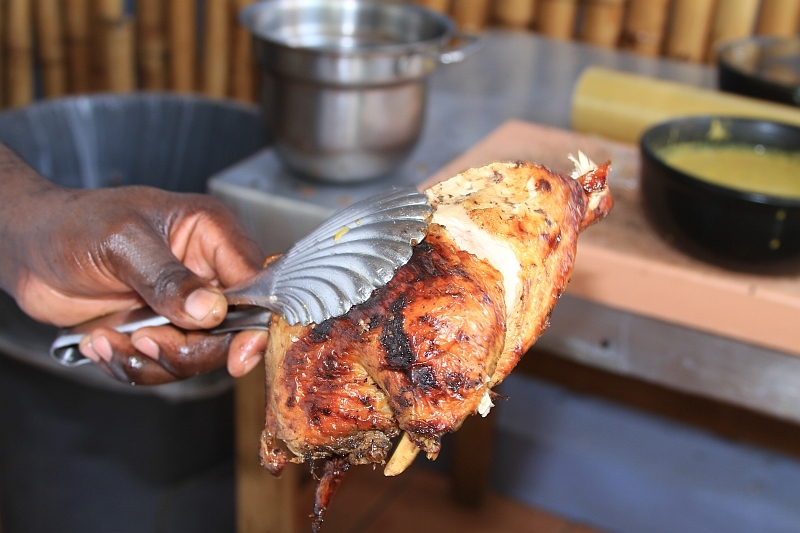 Jerk
🇯🇲 Jamaica and 5 moreMeat marinated with hot spices and smoked over pimento wood
Main dish, Lunch, Dinner
Jerk
🇯🇲 Jamaica and 5 moreMeat marinated with hot spices and smoked over pimento wood
Main dish, Lunch, Dinner