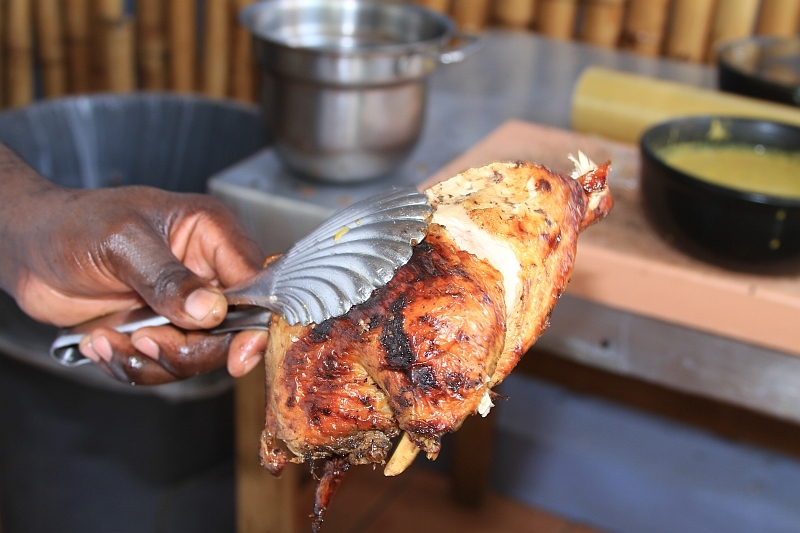
Jerk
Meat marinated with hot spices and smoked over pimento wood
Jerk is a Jamaican way of preparing meat, usually chicken or pork, with a spicy blend called jerk seasoning. The meat is marinated or rubbed with a mixture of allspice and Scotch bonnet peppers, then slow-cooked over pimento wood for a smoky flavor. Jerk is eaten hot, often at street stands or gatherings, and is a staple of Jamaican cuisine.
- Jerk is cooked with allspice and Scotch bonnet peppers for heat and aroma
- Traditional jerk uses pimento wood for smoky flavor
- Jerk started with Jamaica’s Taíno people and Maroons
- Jerk can be found at street stands across Jamaica
- Jamaica Jerk is a protected geographical indication
What is Jerk?
Jerk is a way of cooking meat that comes from Jamaica. The meat, often chicken or pork, is coated in a spicy mixture known as jerk seasoning. This blend centers on allspice, a fragrant berry also called pimento, and Scotch bonnet peppers, which are very hot and native to Jamaica. Other common ingredients include thyme, garlic, scallion, ginger, and sometimes soy sauce or vinegar. The meat is cooked slowly over pimento wood, giving it a deep, smoky aroma and a fiery, complex taste. Jerk can be found at street stands and restaurants, served hot and often paired with local breads or dumplings.
Where does Jerk come from?
Jerk cooking began with Jamaica’s indigenous Taíno people, who used native peppers and pimento to season and preserve meat over a wooden grill called a barbacoa. Spanish colonists and later the Jamaican Maroons, descendants of Africans who escaped slavery, adopted and adapted this method. The word 'jerk' may come from the Spanish 'charqui', meaning dried meat. Over time, the technique spread and evolved, with new meats and seasonings added as different cultures mingled on the island. Today, jerk is a symbol of Jamaican heritage and is enjoyed by people of Caribbean descent around the world.
How is Jerk made?
To make jerk, meat is either dry-rubbed or marinated with a paste of allspice, Scotch bonnet peppers, and other herbs and spices. The traditional way is to cook the meat slowly over a fire made from pimento wood, which adds a distinct smoky flavor. In modern times, grills made from old oil barrels or wood-burning ovens are also common. The slow cooking allows the spices to penetrate deeply and the outside to develop a flavorful crust. Jerk seasoning is now used on a variety of meats, seafood, and even vegetables.


How and when is Jerk eaten?
Jerk is usually eaten hot, often as a main dish for lunch or dinner. In Jamaica, it is common to buy jerk chicken or pork from roadside stands, known as jerk centres, where it is served with sides like hard dough bread, bammy (cassava flatbread), or fried dumplings called festival. The dish is popular at gatherings and celebrations, but is also a regular part of everyday meals. Jerk’s spicy, smoky flavor makes it a favorite for those who enjoy bold tastes.
Kinds of Jerk
While chicken and pork are the most common, jerk seasoning is now used on fish, shrimp, lobster, beef, sausage, lamb, goat, tofu, and vegetables. Outside Jamaica, jerk has been adapted to pizzas, pastas, patties, and burgers. Similar styles exist in other Caribbean countries, such as poulet boucané in Martinique and Guadeloupe. Each cook may add their own twist, but allspice and Scotch bonnet remain at the heart of jerk.
What Jerk means
Jerk is deeply tied to Jamaican identity and history, blending indigenous, African, and European influences. It is a point of pride for Jamaicans and has become a symbol of the island’s cuisine worldwide. In 2015, 'Jamaica Jerk' was registered as a geographical indication to protect its authenticity. Jerk is celebrated at festivals and is a staple at street stands, reflecting its roots in both tradition and everyday life.
Questions people ask about Jerk
What is jerk made of?
Jerk is made by marinating or rubbing meat with a spicy blend of allspice, Scotch bonnet peppers, and other herbs and spices. The seasoning may also include thyme, garlic, scallion, ginger, brown sugar, soy sauce, and vinegar.
Where does jerk come from?
Jerk comes from Jamaica. The technique began with the island’s indigenous Taíno people and was later developed by the Jamaican Maroons, blending local and African traditions.
What meats are used for jerk?
Chicken and pork are most common, but jerk seasoning is also used on fish, shrimp, lobster, beef, sausage, lamb, goat, tofu, and vegetables.
How is jerk cooked?
Traditionally, jerked meat is slow-cooked over pimento wood, which gives it a smoky flavor. Modern methods use grills made from oil barrels or wood-burning ovens.
Is jerk always spicy?
Jerk is known for its heat, mainly from Scotch bonnet peppers, but the level of spiciness can be adjusted. Allspice and other seasonings add depth to the flavor.
Good reading and sources
- How to cook perfect jerk chickenThe Guardian, Article
- Loose Ends - Anthony Horowitz, Melissa Thompson, James Yorkston, Louise Mothersole and Rebecca Biscuit, GoGo Penguin, Lissie, Arthur SmithBBC, Article
- Jerk (cooking) on WikipediaEncyclopedia
- More photos on Wikimedia CommonsPhotos
- Wikidata recordOpen data
The facts on this page come from the Wikipedia article "Jerk (cooking)", written by its contributors and used under the CC BY-SA 4.0 licence, and from its Wikidata record (CC0). Thali rewrote the text in its own words, with AI assistance, and compares every page with the article to make sure no passage is copied. It may be reused under the same CC BY-SA 4.0 licence with a link back.
It may contain mistakes, and it is not dietary or allergy advice: recipes differ from cook to cook. If something is wrong, tell us. Last refreshed 2026-10-03.
More from Jamaica
All the food of Jamaica KabochaVeganカボチャ
🇯🇵 Japan and 5 moreA sweet, dense winter squash with edible skin, used in Japanese and Asian cooking
Main dish, Lunch, Dinner
KabochaVeganカボチャ
🇯🇵 Japan and 5 moreA sweet, dense winter squash with edible skin, used in Japanese and Asian cooking
Main dish, Lunch, Dinner
 BreadfruitVegan
🇵🇭 Philippines and 4 moreLarge tropical fruit cooked as a starchy staple in many island cuisines
Main dish, Lunch, Dinner
BreadfruitVegan
🇵🇭 Philippines and 4 moreLarge tropical fruit cooked as a starchy staple in many island cuisines
Main dish, Lunch, Dinner
 DalVeganदाल
🇮🇳 India and 5 moreSoupy dish made from split lentils, peas or beans, a staple across South Asia
Main dish, Lunch, Dinner
DalVeganदाल
🇮🇳 India and 5 moreSoupy dish made from split lentils, peas or beans, a staple across South Asia
Main dish, Lunch, Dinner
 Dried and salted codFish or seafood
🇳🇴 Norway and 5 moreCod preserved with salt and dried for long storage and global cooking
Main dish, Breakfast, Lunch
Dried and salted codFish or seafood
🇳🇴 Norway and 5 moreCod preserved with salt and dried for long storage and global cooking
Main dish, Breakfast, Lunch
Its cousins elsewhere
All main dishes JjajangmyeonMeat짜장면; 자장면
🇰🇷 South Korea and 1 moreKorean Chinese noodles topped with a thick black bean sauce and diced pork
Noodle or pasta dish, Lunch, Dinner
JjajangmyeonMeat짜장면; 자장면
🇰🇷 South Korea and 1 moreKorean Chinese noodles topped with a thick black bean sauce and diced pork
Noodle or pasta dish, Lunch, Dinner
 Ants climbing a treeMeat螞蟻上樹
🇨🇳 ChinaSichuan noodles with minced meat in a savory sauce
Main dish, Lunch, Dinner
Ants climbing a treeMeat螞蟻上樹
🇨🇳 ChinaSichuan noodles with minced meat in a savory sauce
Main dish, Lunch, Dinner
 Sashimi刺身
🇯🇵 JapanThin slices of raw fish or meat, served with soy sauce and condiments
Main dish, Lunch, Dinner
Sashimi刺身
🇯🇵 JapanThin slices of raw fish or meat, served with soy sauce and condiments
Main dish, Lunch, Dinner
 Laing
🇵🇭 PhilippinesTaro leaves and meat or seafood simmered in spiced coconut milk
Stew or curry, Lunch, Dinner
Laing
🇵🇭 PhilippinesTaro leaves and meat or seafood simmered in spiced coconut milk
Stew or curry, Lunch, Dinner