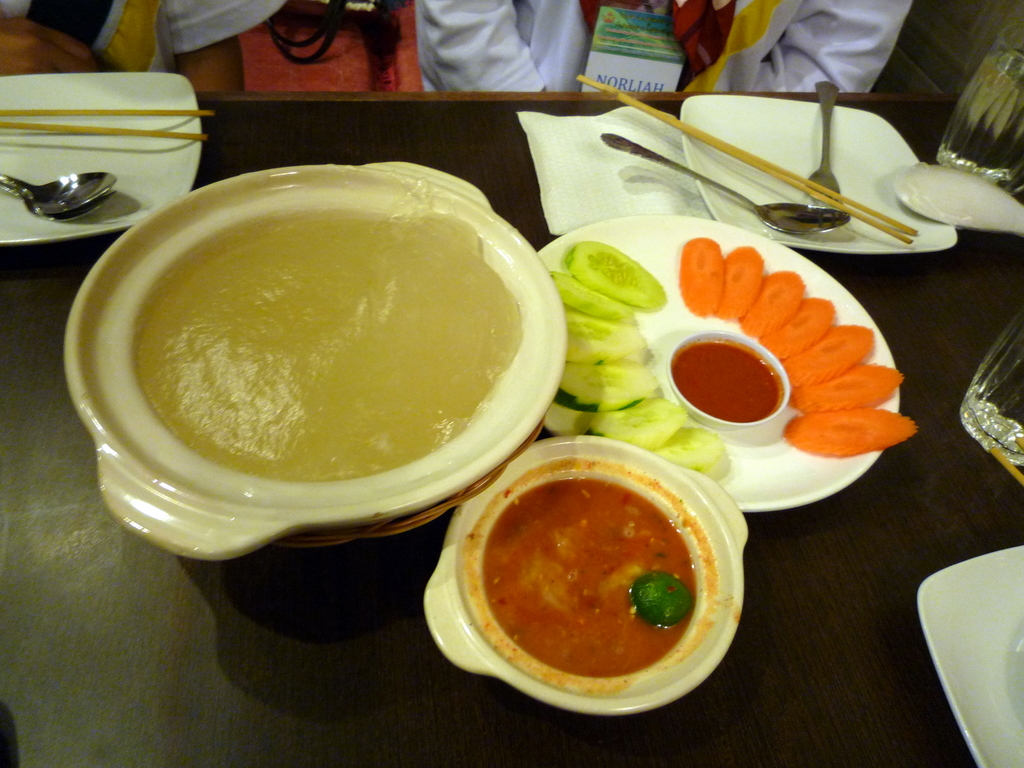
Ambuyat
Sticky sago starch eaten with sauces, a staple in Brunei and East Malaysia
Ambuyat is a thick, gluey starch made from the pith of the sago palm and is a central dish in Brunei, where it is considered the national food. It is also found in Sarawak, Sabah, and Labuan in Malaysia, often eaten with various tangy or spicy sauces. Traditionally, it is picked up with bamboo chopsticks and dipped before eating.
- Made from the pith of the sago palm
- Served with a range of spicy or sour sauces
- Eaten using bamboo chopsticks called chandas
- National dish of Brunei
- Also known as linut or pinantung in Malaysia
What is Ambuyat?
Ambuyat is a smooth, sticky paste made from the inner trunk of the sago palm. It has a neutral taste and a texture similar to thick tapioca. The dish is usually served in a communal bowl and eaten by twirling a portion around bamboo chopsticks. Since ambuyat itself is bland, it is always paired with flavourful sauces, often spicy or sour, to make it enjoyable.
Where does Ambuyat come from?
Ambuyat comes from Brunei and is also common in parts of East Malaysia, including Sarawak, Sabah, and Labuan. It has long been a staple food for several local communities, who relied on sago as a main source of carbohydrates. Over time, ambuyat became an important part of daily meals and is now seen as a symbol of Bruneian identity. Similar sago-based dishes are found in nearby regions, such as papeda in eastern Indonesia.
How is Ambuyat made?
The main step in making ambuyat is extracting starch from the sago palm’s trunk. The starch is mixed with boiling water until it thickens and turns translucent, forming a sticky mass. It is then transferred to a serving bowl. Ambuyat is not eaten alone; it is served with a variety of dipping sauces, which are prepared separately and placed alongside the main dish.
How and when is Ambuyat eaten?
Ambuyat is eaten by using a special pair of bamboo chopsticks, called chandas, to twirl and lift the sticky starch. Diners dip each mouthful into sauces before eating. Popular accompaniments include spicy shrimp paste, fermented durian or shrimp, and wild mango sauces. The meal is usually shared, with everyone dipping from the same bowl, making it a social and communal experience.
Kinds of Ambuyat
In different regions, ambuyat may be called linut or pinantung. The sauces served with it can vary widely, from sambal belacan (shrimp paste with chilli) to sambal tempoyak (fermented durian), depending on local tastes and available ingredients. While the basic preparation of the starch remains the same, the choice of dips and side dishes can reflect local traditions.
What Ambuyat means
Ambuyat is more than just a food; it is closely tied to the identity and traditions of Brunei and surrounding regions. It is often eaten at family gatherings and community events. The use of chandas and the shared nature of the meal highlight its role in bringing people together. In Brunei, it is recognized as the national dish and a symbol of heritage.
Questions people ask about Ambuyat
What is ambuyat made from?
Ambuyat is made from the starch extracted from the inner trunk of the sago palm. The starch is mixed with hot water to create a sticky, glue-like paste.
Where does ambuyat come from?
Ambuyat is a traditional food from Brunei and is also common in Sarawak, Sabah, and Labuan in Malaysia.
How is ambuyat eaten?
Ambuyat is picked up using a pair of bamboo chopsticks and dipped into various sauces, such as spicy shrimp paste or fermented durian, before eating.
What does ambuyat taste like?
Ambuyat itself is bland and has a sticky, smooth texture. Its flavour comes mainly from the sauces served with it.
Are there other names for ambuyat?
Yes, in some areas of Malaysia, ambuyat is called linut or pinantung.
Good reading and sources
The facts on this page come from the Wikipedia article "Ambuyat", written by its contributors and used under the CC BY-SA 4.0 licence, and from its Wikidata record (CC0). Thali rewrote the text in its own words, with AI assistance, and compares every page with the article to make sure no passage is copied. It may be reused under the same CC BY-SA 4.0 licence with a link back.
It may contain mistakes, and it is not dietary or allergy advice: recipes differ from cook to cook. If something is wrong, tell us. Last refreshed 2026-10-03.
More from Brunei
All the food of Brunei Nasi katokناسي كاتوق
🇧🇳 Brunei and 1 moreBrunei's rice meal with fried chicken and spicy sambal, often wrapped in brown paper
Main dish, Lunch, Dinner
Nasi katokناسي كاتوق
🇧🇳 Brunei and 1 moreBrunei's rice meal with fried chicken and spicy sambal, often wrapped in brown paper
Main dish, Lunch, Dinner
 Roti canaiரொட்டி சென்னை
🇲🇾 Malaysia and 5 moreUnleavened flatbread tossed thin and cooked until crisp, served with curry or dal
Bread, Breakfast, Snacks
Roti canaiரொட்டி சென்னை
🇲🇾 Malaysia and 5 moreUnleavened flatbread tossed thin and cooked until crisp, served with curry or dal
Bread, Breakfast, Snacks
 Satayꦱꦠꦺ
🇮🇩 Indonesia and 5 moreGrilled skewers of seasoned meat or seafood, often served with peanut sauce
Main dish, Lunch, Dinner
Satayꦱꦠꦺ
🇮🇩 Indonesia and 5 moreGrilled skewers of seasoned meat or seafood, often served with peanut sauce
Main dish, Lunch, Dinner
 Nasi goreng
🇮🇩 Indonesia and 5 moreSoutheast Asian fried rice seasoned with sweet soy sauce and spices
Main dish, Breakfast, Lunch
Nasi goreng
🇮🇩 Indonesia and 5 moreSoutheast Asian fried rice seasoned with sweet soy sauce and spices
Main dish, Breakfast, Lunch
Its cousins elsewhere
All main dishes Pizza
🇮🇹 Italy and 4 moreFlatbread topped with tomato, cheese and baked at high heat
Main dish, Lunch, Dinner
Pizza
🇮🇹 Italy and 4 moreFlatbread topped with tomato, cheese and baked at high heat
Main dish, Lunch, Dinner
 HamburgerMeat
🇺🇸 United States and 1 moreA hot ground meat patty in a sliced bun, often with salad and sauces
Main dish, Lunch, Dinner
HamburgerMeat
🇺🇸 United States and 1 moreA hot ground meat patty in a sliced bun, often with salad and sauces
Main dish, Lunch, Dinner
 Pasta
🇮🇹 Italy and 1 moreUnleavened dough shaped and cooked, a staple of Italian cuisine
Main dish, Lunch, Dinner
Pasta
🇮🇹 Italy and 1 moreUnleavened dough shaped and cooked, a staple of Italian cuisine
Main dish, Lunch, Dinner
 SpaghettiVegan
🇮🇹 Italy and 2 moreLong, thin pasta strands made from durum wheat and water
Noodle or pasta dish, Lunch, Dinner
SpaghettiVegan
🇮🇹 Italy and 2 moreLong, thin pasta strands made from durum wheat and water
Noodle or pasta dish, Lunch, Dinner