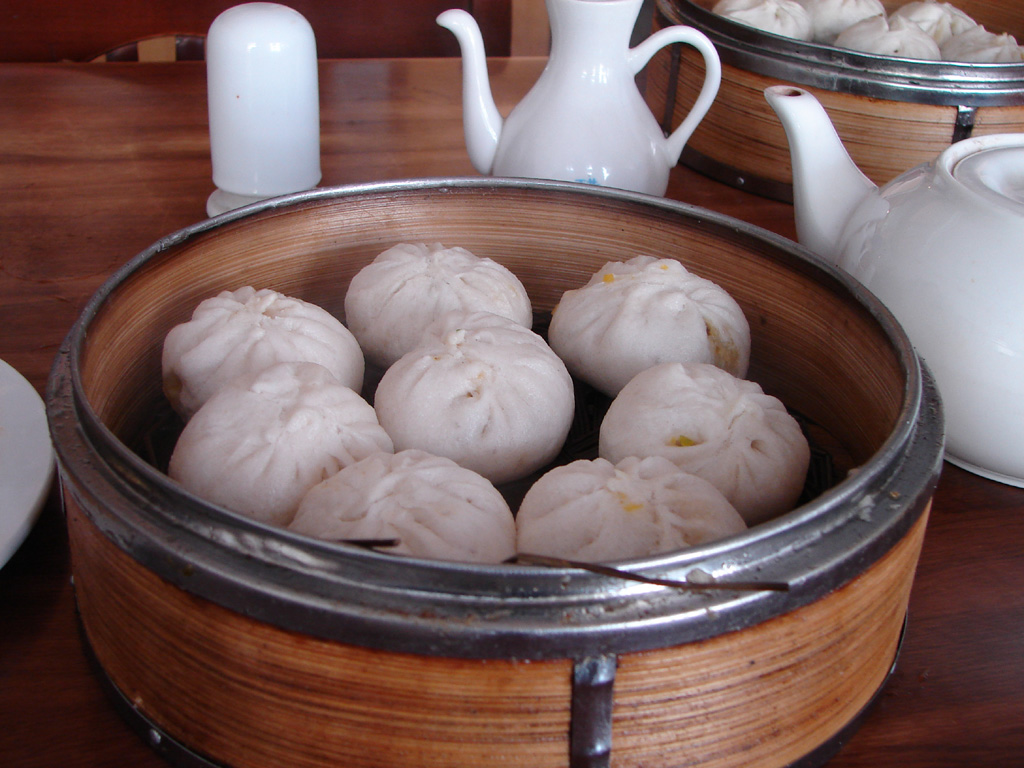
Baozi
In its own language: 包子
Steamed wheat buns filled with meat or vegetables, common across China and beyond
Baozi are soft, steamed buns made from wheat flour and filled with savory or sweet mixtures. Originating in China, they are enjoyed across East and Southeast Asia, often for breakfast or as a snack. Fillings range from pork or chicken to vegetables or sweet pastes, reflecting local tastes.
- Baozi are steamed buns with savory or sweet fillings
- They originated in Northern China as a variation of mantou
- Popular for breakfast and as a snack in China and abroad
- Fillings include pork, chicken, vegetables, or sweet pastes
- Known as bakpau in Indonesia, pau in Malaysia, and siopao in the Philippines
What is Baozi?
Baozi are round, steamed buns made from a yeast-leavened wheat dough. Each bun is filled before steaming, with fillings that can be savory—such as pork, chicken, beef, or vegetables—or sweet, like red bean paste or coconut jam. The dough is soft and slightly chewy, while the filling is moist and flavorful. Sizes and shapes vary, but most are small enough to be eaten by hand. Baozi are a familiar sight in markets and food stalls, especially in the morning.
Where does Baozi come from?
Baozi trace their roots to Northern China as a variation of mantou, which were originally filled buns. The name 'baozi' became common during the Song dynasty, while earlier, all steamed buns were called mantou. Over centuries, baozi spread through Chinese migration, influencing and adapting to local cuisines in Asia and beyond. Legends about their invention, such as Zhuge Liang using buns in a ritual, are part of their lore, but their true origins lie in the evolution of wheat-based foods in ancient China.
How is Baozi made?
To make baozi, wheat flour is mixed with yeast and water to form a soft dough, which is left to rise. The dough is divided into small rounds, each flattened and filled with a prepared mixture—meat, vegetables, or sweet pastes. The edges are gathered and sealed, forming a bun. These are then steamed until the dough is cooked through and the filling is hot. The process results in a soft, fluffy bun with a flavorful center.


How and when is Baozi eaten?
Baozi are commonly eaten for breakfast or as a snack, often bought from street vendors or markets. They are portable and can be eaten on the go, making them a popular choice for busy mornings. In some countries, baozi are also served at festivals or as part of a meal with tea. Fillings and sauces vary by region; in Indonesia, sweet chili sauce is common, while in Malaysia, curry fillings are popular. Baozi are usually eaten hot, straight from the steamer.
Kinds of Baozi
Across Asia, baozi have many local names and adaptations. In Indonesia, bakpau may be filled with beef, chicken, or sweet pastes. Malaysia’s pau often contains curry or coconut jam. In Japan, chūkaman and nikuman are sold in convenience stores, especially in winter. The Philippines’ siopao includes pork or tuna, while Vietnam’s bánh bao features pork, mushrooms, and egg. Even in the Netherlands, bapao is sold as a quick snack, showing the bun’s global reach.
What Baozi means
Baozi are a staple of Chinese breakfast culture and a symbol of comfort food for many. Their spread through migration has made them a familiar snack in countries with significant Chinese communities. In some places, baozi are tied to local customs, such as being sold at Ramadan bazaars in Malaysia or tea shops in Myanmar. The bun’s adaptability and portability have helped it become a beloved food across cultures and generations.
Questions people ask about Baozi
What is baozi made of?
Baozi are made from a yeast-leavened wheat flour dough, filled with mixtures such as meat, vegetables, or sweet pastes, then steamed until soft and cooked through.
Where does baozi come from?
Baozi originated in Northern China as a filled variation of the steamed bun known as mantou. Over time, it spread across China and to many other countries through migration.
Are there vegetarian versions of baozi?
Yes, baozi can be filled with vegetables or sweet pastes, making vegetarian and even vegan versions common in many regions.
How is baozi usually eaten?
Baozi are typically eaten hot, often for breakfast or as a snack. They are sold by street vendors, in markets, and sometimes served with sauces depending on the region.
What are some popular fillings for baozi?
Popular fillings include pork, chicken, beef, vegetables, red bean paste, coconut jam, and in some countries, curry or sweet potato.
Good reading and sources
The facts on this page come from the Wikipedia article "Baozi", written by its contributors and used under the CC BY-SA 4.0 licence, and from its Wikidata record (CC0). Thali rewrote the text in its own words, with AI assistance, and compares every page with the article to make sure no passage is copied. It may be reused under the same CC BY-SA 4.0 licence with a link back.
It may contain mistakes, and it is not dietary or allergy advice: recipes differ from cook to cook. If something is wrong, tell us. Last refreshed 2026-10-03.
More from China
All the food of China Pasta
🇮🇹 Italy and 1 moreUnleavened dough shaped and cooked, a staple of Italian cuisine
Main dish, Lunch, Dinner
TofuVegan豆腐
🇨🇳 China and 5 moreSoft white blocks made by curdling soy milk and pressing the curds
Main dish
Pasta
🇮🇹 Italy and 1 moreUnleavened dough shaped and cooked, a staple of Italian cuisine
Main dish, Lunch, Dinner
TofuVegan豆腐
🇨🇳 China and 5 moreSoft white blocks made by curdling soy milk and pressing the curds
Main dish
 Chuanr串
🇨🇳 ChinaGrilled skewers of meat, seafood or vegetables from northern China
Grill or roast, Dinner, Snacks
Chuanr串
🇨🇳 ChinaGrilled skewers of meat, seafood or vegetables from northern China
Grill or roast, Dinner, Snacks
 Tofu skin roll
🇨🇳 ChinaTofu skin wrapped around a savoury filling, served steamed or fried as dim sum
Main dish, Lunch, Dinner
Tofu skin roll
🇨🇳 ChinaTofu skin wrapped around a savoury filling, served steamed or fried as dim sum
Main dish, Lunch, Dinner
Its cousins elsewhere
All main dishes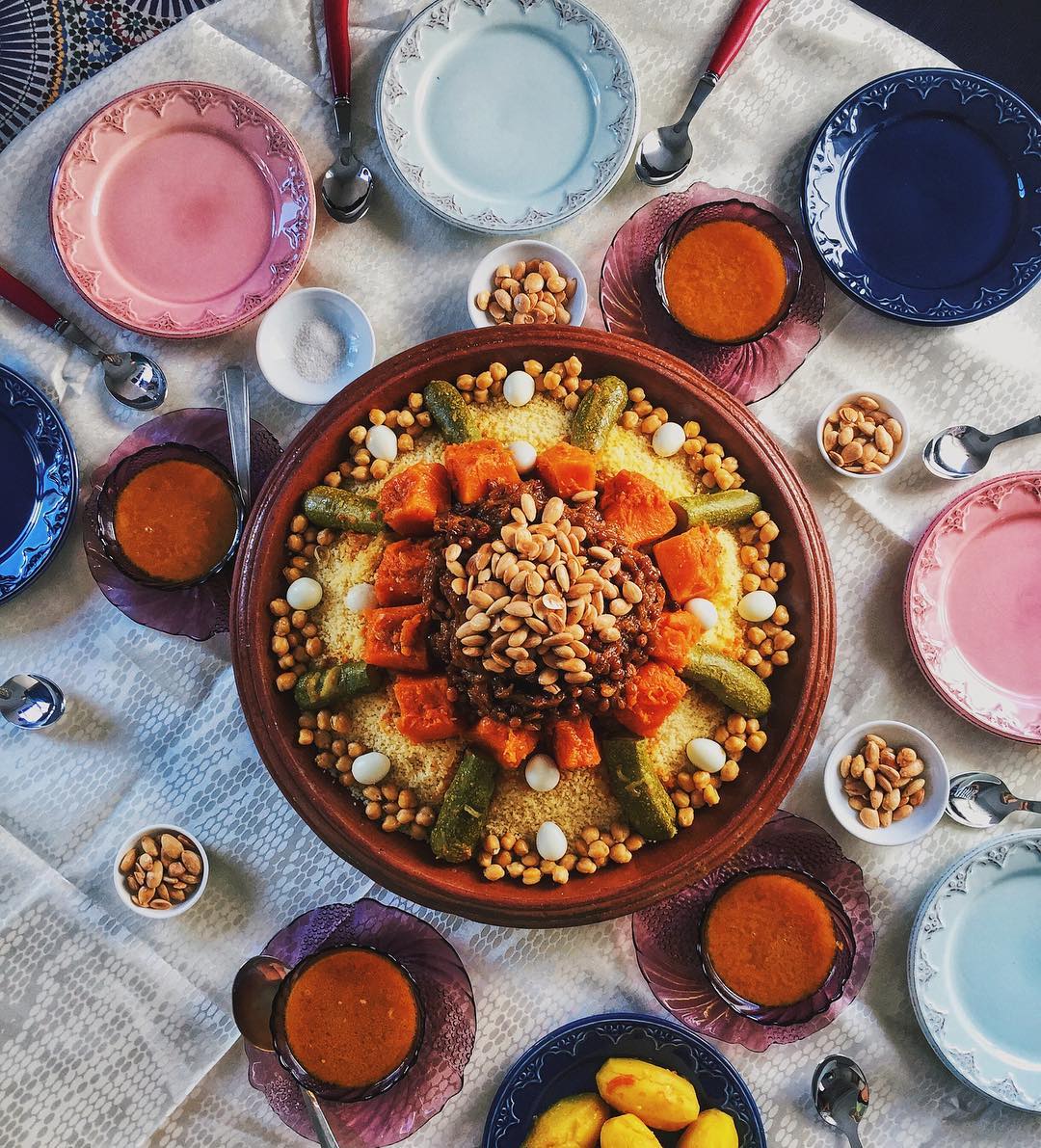 Couscousseksu
🇩🇿 Algeria and 4 moreSteamed semolina granules served with stew or vegetables across North Africa
Main dish, Lunch, Dinner
Couscousseksu
🇩🇿 Algeria and 4 moreSteamed semolina granules served with stew or vegetables across North Africa
Main dish, Lunch, Dinner
 Lasagnalasagne
🇮🇹 ItalyBaked layers of pasta sheets, sauce, cheese and fillings from Italy
Main dish, Lunch, Dinner
Lasagnalasagne
🇮🇹 ItalyBaked layers of pasta sheets, sauce, cheese and fillings from Italy
Main dish, Lunch, Dinner
 Taco
🇲🇽 Mexico and 1 moreA folded tortilla filled with meat, beans or vegetables, eaten by hand
Street food, Lunch, Dinner
Taco
🇲🇽 Mexico and 1 moreA folded tortilla filled with meat, beans or vegetables, eaten by hand
Street food, Lunch, Dinner
 Pie
🇬🇧 United Kingdom and 5 moreA baked dish with a pastry crust and sweet or savoury filling
Main dish, Lunch, Dinner
Pie
🇬🇧 United Kingdom and 5 moreA baked dish with a pastry crust and sweet or savoury filling
Main dish, Lunch, Dinner