
Bazin
In its own language: بازين
Libyan dome-shaped barley bread served with stew and eggs
Bazin is a traditional Libyan bread made mainly from barley flour, water and salt, shaped into a dome and served with a tomato-based stew, eggs, potatoes, and meat such as mutton or camel. The bread has a firm, paste-like texture and is usually eaten communally by hand, often as part of everyday meals.
- Bazin is shaped into a dome and served with stew and eggs
- Made mainly from barley flour, water, and salt
- Traditionally eaten communally by hand
- A national dish of Libya
- Sometimes served with pumpkin and tomato sauce
What is Bazin?
Bazin is a dense, unleavened bread from Libya, usually made with barley flour, water, and salt. The dough is worked into a dome shape, giving it a solid, paste-like texture. It is typically served with a rich tomato-based stew that includes potatoes, hard-boiled eggs, and meat such as mutton or camel. Sometimes, pumpkin or a raw egg is added to the sauce. The bread is often eaten by crumpling it with the fingers, making it a hands-on, communal dish.
Where does Bazin come from?
Bazin comes from Libya and is regarded as a national dish there. Traditionally, the dough was formed into palm-sized cakes and cooked in a copper pot called a qidir, then broken up and mixed into a single mass. Over time, the preparation has changed, with some now using blenders or cooking the dough directly in water like a pudding. Bazin remains a staple in Libyan cuisine and is also known in Tunisia.
How is Bazin made?
To make bazin, barley or wheat flour is boiled with water and salt, then beaten into a dough using a special stick called a magraf. The dough is shaped into a dome and allowed to harden, then baked or steamed. The bread is served with a stew made from mutton, onions, spices, tomato paste, and sometimes beans or lentils. The stew, eggs, potatoes, and meat are arranged around the bread dome, and lemon or pickled chillies may be served on the side.
How and when is Bazin eaten?
Bazin is eaten communally, often using the right hand to break off pieces and dip them into the surrounding stew. It is a main meal, usually served for lunch or dinner. The dish is enjoyed with family or friends, and the bread is crumpled and mixed with the sauce before eating. Lemon and pickled chillies may be offered to add extra flavor.
Kinds of Bazin
While barley is most common, bazin can also be made with whole wheat flour. Some versions include olive oil, honey, or pepper in the dough. The accompanying stew may vary, sometimes featuring pumpkin, broad beans, or lentils. The bread's texture can range from paste-like to quite firm, depending on the amount of salt and method used.
What Bazin means
Bazin is a symbol of Libyan culinary tradition and is considered a national dish. Its communal style of eating reflects the importance of sharing meals in Libyan culture. The use of local ingredients like barley and mutton ties the dish to the region's agricultural heritage. Bazin is a staple at everyday meals and is a point of pride in Libyan households.
Questions people ask about Bazin
What is bazin made of?
Bazin is made from barley or wheat flour, water, and salt. Sometimes, olive oil, honey, or pepper are added. The dough is shaped into a dome and served with a stew.
Where does bazin come from?
Bazin originates from Libya, where it is considered a national dish. It is also known in Tunisia.
How is bazin served?
Bazin is served as a dome-shaped bread surrounded by a tomato-based stew with potatoes, hard-boiled eggs, and meat such as mutton or camel. Lemon and pickled chillies may be offered on the side.
How do people eat bazin?
Bazin is usually eaten communally, using the right hand to crumple the bread and dip it into the stew. It is a main meal, often shared with family or friends.
What does bazin taste like?
Bazin has a dense, paste-like texture and a plain taste from the barley, which is complemented by the rich, spiced stew it is served with.
Good reading and sources
- Bazin (bread) on WikipediaEncyclopedia
- More photos on Wikimedia CommonsPhotos
- Wikidata recordOpen data
The facts on this page come from the Wikipedia article "Bazin (bread)", written by its contributors and used under the CC BY-SA 4.0 licence, and from its Wikidata record (CC0). Thali rewrote the text in its own words, with AI assistance, and compares every page with the article to make sure no passage is copied. It may be reused under the same CC BY-SA 4.0 licence with a link back.
It may contain mistakes, and it is not dietary or allergy advice: recipes differ from cook to cook. If something is wrong, tell us. Last refreshed 2026-10-03.
More from Libya
All the food of Libya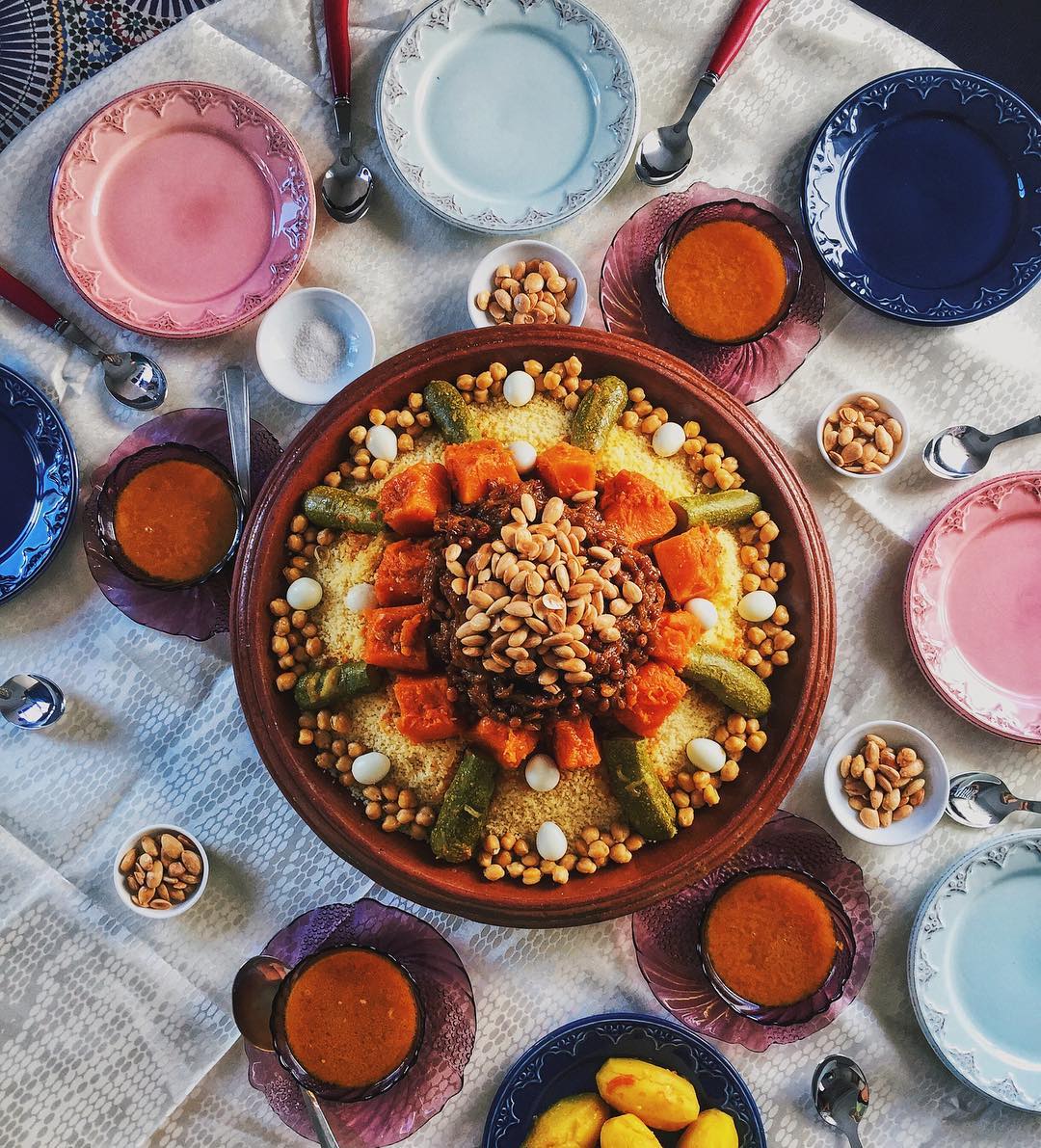 Couscousseksu
🇩🇿 Algeria and 4 moreSteamed semolina granules served with stew or vegetables across North Africa
Main dish, Lunch, Dinner
Couscousseksu
🇩🇿 Algeria and 4 moreSteamed semolina granules served with stew or vegetables across North Africa
Main dish, Lunch, Dinner
 Tajineطاجين
🇲🇦 Morocco and 4 moreNorth African stew slow-cooked in a cone-lidded clay pot
Main dish, Lunch, Dinner
Tajineطاجين
🇲🇦 Morocco and 4 moreNorth African stew slow-cooked in a cone-lidded clay pot
Main dish, Lunch, Dinner
 Hariraالحريرة
🇲🇦 Morocco and 3 moreNorth African soup of tomato, legumes, herbs and spices, often served during Ramadan
Soup, Dinner, Supper
Hariraالحريرة
🇲🇦 Morocco and 3 moreNorth African soup of tomato, legumes, herbs and spices, often served during Ramadan
Soup, Dinner, Supper
 UsbanMeatعصبان
🇹🇳 Tunisia and 2 moreNorth African sausage stuffed with rice, lamb, liver, herbs and spices
Main dish, Lunch, Dinner
UsbanMeatعصبان
🇹🇳 Tunisia and 2 moreNorth African sausage stuffed with rice, lamb, liver, herbs and spices
Main dish, Lunch, Dinner
Its cousins elsewhere
All breads Bagel
🇵🇱 Poland and 2 moreRing-shaped bread roll, boiled then baked for a dense, chewy texture
Bread, Breakfast, Lunch
Bagel
🇵🇱 Poland and 2 moreRing-shaped bread roll, boiled then baked for a dense, chewy texture
Bread, Breakfast, Lunch
 FocacciaVegetarian
🇮🇹 Italy and 1 moreItalian flatbread baked with olive oil and often herbs or salt
Bread, Breakfast, Snacks
Naanनान
🇮🇳 India and 5 moreLeavened flatbread baked in a tandoor or on a pan, soft and spotted with golden brown
Bread, Lunch, Dinner
FocacciaVegetarian
🇮🇹 Italy and 1 moreItalian flatbread baked with olive oil and often herbs or salt
Bread, Breakfast, Snacks
Naanनान
🇮🇳 India and 5 moreLeavened flatbread baked in a tandoor or on a pan, soft and spotted with golden brown
Bread, Lunch, Dinner
 BaguetteVegan
🇫🇷 France and 5 moreLong, thin French bread with a crisp crust and soft interior
Bread, Breakfast, Lunch
BaguetteVegan
🇫🇷 France and 5 moreLong, thin French bread with a crisp crust and soft interior
Bread, Breakfast, Lunch