
Boulfaf
In its own language: بولفاف
Liver kebabs wrapped in caul fat, grilled and served for Eid al-Adha in Morocco
Boulfaf is a Moroccan kebab made by wrapping pieces of liver in caul fat and grilling them on skewers. Prepared especially for Eid al-Adha from a sacrificial lamb, it is often seasoned with red pepper and cumin, and sometimes eaten as a sandwich in khobz bread.
- Made from liver wrapped in caul fat and grilled on skewers
- Prepared right after the Eid al-Adha sacrifice in Morocco
- Seasoned with red pepper and cumin
- Sometimes served inside khobz bread as a sandwich
- Known as kouah when sold as street food
What is Boulfaf?
Boulfaf is a kebab from Morocco, made by wrapping diced liver in strips of caul fat. The caul fat, a lacy membrane from the animal, is dried until crisp before use. The liver pieces are skewered, wrapped, and seasoned with red pepper and cumin. Once grilled, boulfaf has a smoky aroma and a rich, savoury taste, with the caul fat turning crisp around the tender liver. It is sometimes served as brochettes or stuffed into khobz, a round Moroccan bread.
Where does Boulfaf come from?
Boulfaf comes from Morocco and is closely tied to Eid al-Adha, when families prepare it from the freshly slaughtered sacrificial lamb. The dish makes use of offal, which spoils quickly, so it is eaten soon after the animal is butchered. The tradition of grilling liver wrapped in fat is longstanding in Moroccan cuisine, reflecting a custom of using all parts of the animal during festive meals.
How is Boulfaf made?
To make boulfaf, the caul fat is first removed from the animal and hung in the sun for about an hour until it dries and crisps. The liver is diced, then each piece is wrapped in a strip of the dried caul fat. The wrapped liver is skewered, seasoned with red pepper and cumin, and grilled over an open flame. The brochettes are ready when the fat crisps and the liver is cooked through.


How and when is Boulfaf eaten?
Boulfaf is usually eaten as one of the first dishes after the Eid al-Adha sacrifice, often at a family lunch. It can be enjoyed straight from the skewer or removed and served inside khobz bread, sometimes with additional garnishes. It is commonly accompanied by Maghrebi mint tea. The dish is also found as street food, especially in Moroccan souks, where it may be sold as kouah.
Kinds of Boulfaf
Kouah is a broader term for grilled liver kebabs in Morocco, often made with calf or sheep liver and sometimes including suet or heart. These versions may be served as brochettes or as sandwiches in khobz. Some variations use heart in place of or alongside liver, and suet may be alternated with liver on the skewers.
What Boulfaf means
Boulfaf holds a special place in Moroccan Eid al-Adha celebrations, marking the beginning of the feast after the ritual sacrifice. Preparing and sharing boulfaf is a family tradition, reflecting respect for the animal and the importance of not wasting any part. It is also a familiar sight in Moroccan markets as a popular street food under the name kouah.
When Boulfaf is on the table
Questions people ask about Boulfaf
What is boulfaf made of?
Boulfaf is made from diced liver, usually lamb, wrapped in strips of caul fat, then seasoned with red pepper and cumin before being grilled on skewers.
Where does boulfaf come from?
Boulfaf comes from Morocco and is especially associated with the festival of Eid al-Adha, when it is prepared from the sacrificial lamb.
How is boulfaf traditionally served?
It is served hot, often straight from the skewer, or placed inside khobz bread as a sandwich. It is commonly eaten as a family lunch dish, sometimes with mint tea.
What does caul fat mean in this dish?
Caul fat is a thin, lacy membrane from the animal, used to wrap the liver pieces before grilling. It crisps up during cooking and adds flavor and moisture.
Are there variations of boulfaf?
Yes, kouah is a similar Moroccan kebab made with calf or sheep liver, sometimes with suet or heart, and may be served as brochettes or in bread as a sandwich.
Good reading and sources
The facts on this page come from the Wikipedia article "Boulfaf", written by its contributors and used under the CC BY-SA 4.0 licence, and from its Wikidata record (CC0). Thali rewrote the text in its own words, with AI assistance, and compares every page with the article to make sure no passage is copied. It may be reused under the same CC BY-SA 4.0 licence with a link back.
It may contain mistakes, and it is not dietary or allergy advice: recipes differ from cook to cook. If something is wrong, tell us. Last refreshed 2026-10-03.
More from Morocco
All the food of Morocco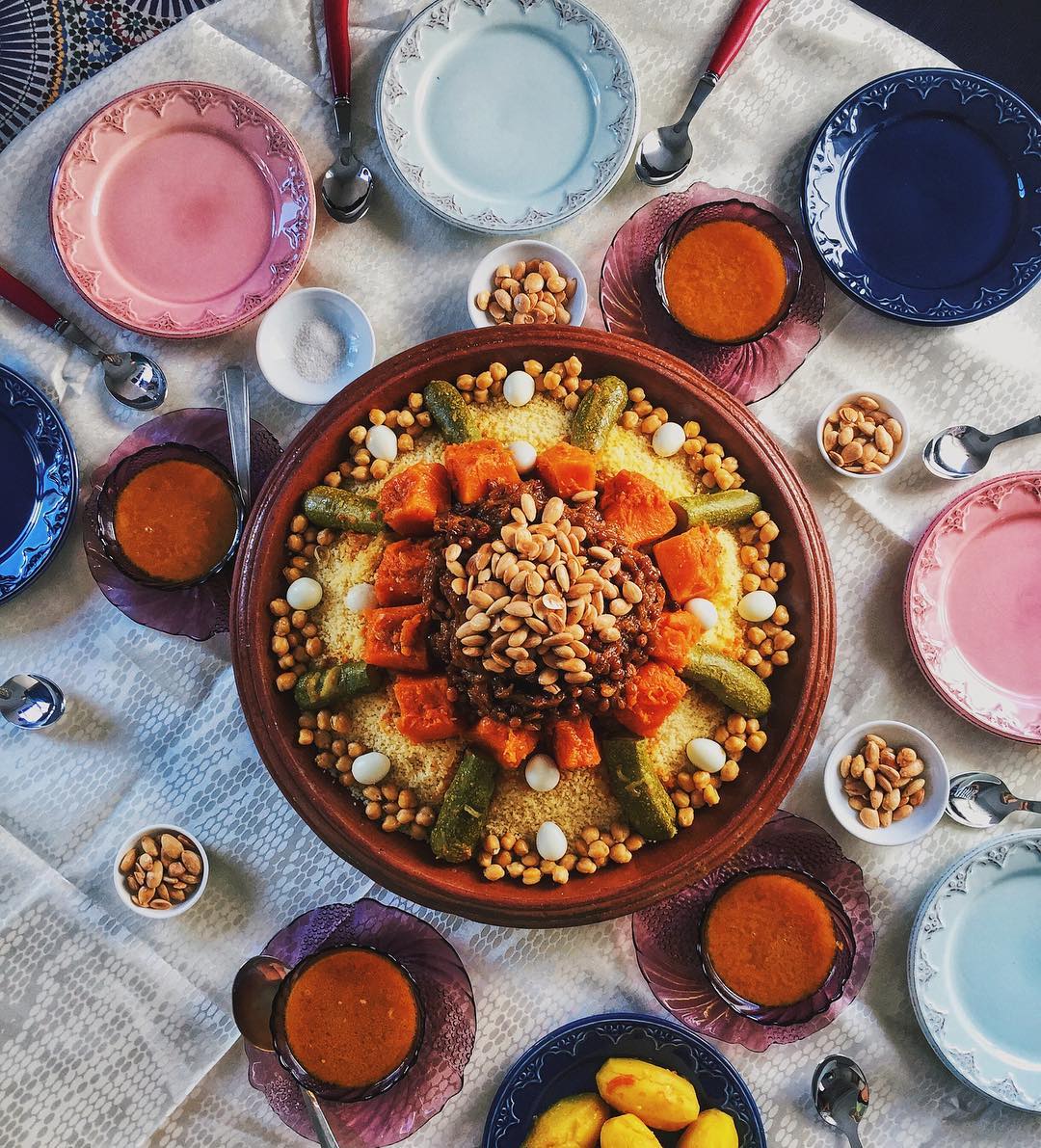 Couscousseksu
🇩🇿 Algeria and 4 moreSteamed semolina granules served with stew or vegetables across North Africa
Main dish, Lunch, Dinner
Couscousseksu
🇩🇿 Algeria and 4 moreSteamed semolina granules served with stew or vegetables across North Africa
Main dish, Lunch, Dinner
 ShakshukaVegetarian
🇹🇳 Tunisia and 5 moreEggs poached in a spiced tomato and pepper sauce from North Africa
Main dish, Breakfast, Dinner
ShakshukaVegetarian
🇹🇳 Tunisia and 5 moreEggs poached in a spiced tomato and pepper sauce from North Africa
Main dish, Breakfast, Dinner
 Tajineطاجين
🇲🇦 Morocco and 4 moreNorth African stew slow-cooked in a cone-lidded clay pot
Main dish, Lunch, Dinner
Tajineطاجين
🇲🇦 Morocco and 4 moreNorth African stew slow-cooked in a cone-lidded clay pot
Main dish, Lunch, Dinner
 Hariraالحريرة
🇲🇦 Morocco and 3 moreNorth African soup of tomato, legumes, herbs and spices, often served during Ramadan
Soup, Dinner, Supper
Hariraالحريرة
🇲🇦 Morocco and 3 moreNorth African soup of tomato, legumes, herbs and spices, often served during Ramadan
Soup, Dinner, Supper
Its cousins elsewhere
All main dishes KebapcheMeatкебапче
🇧🇬 BulgariaGrilled minced meat shaped like a sausage, a staple in Bulgaria
Grill or roast, Lunch, Dinner
KebapcheMeatкебапче
🇧🇬 BulgariaGrilled minced meat shaped like a sausage, a staple in Bulgaria
Grill or roast, Lunch, Dinner
 Cataplana
🇵🇹 PortugalSeafood and meat stew cooked in a sealed metal vessel from Portugal's Algarve
Main dish, Lunch, Dinner
Cataplana
🇵🇹 PortugalSeafood and meat stew cooked in a sealed metal vessel from Portugal's Algarve
Main dish, Lunch, Dinner
 RajmaVegetarian
🇮🇳 India and 2 moreKidney beans stewed with spices, often served with rice in North India and Nepal
Main dish, Lunch, Dinner
RajmaVegetarian
🇮🇳 India and 2 moreKidney beans stewed with spices, often served with rice in North India and Nepal
Main dish, Lunch, Dinner
 Pâté
🇫🇷 France and 5 moreA smooth or coarse spread made from minced meat, liver, or vegetables
Sauce, pickle or ferment
Pâté
🇫🇷 France and 5 moreA smooth or coarse spread made from minced meat, liver, or vegetables
Sauce, pickle or ferment