Braciola
Italian pan-fried or grilled slices of meat, often cooked in olive oil
Braciola is an Italian dish of meat slices, usually pan-fried or grilled with a little olive oil or in their own juices. The meat is cut thicker than fettine and may have a bone. This dish is part of Italian cooking and is enjoyed as a main course.
- Braciola is a pan-fried or grilled slice of meat from Italy
- It is thicker and sometimes has a bone, unlike fettine
- Often cooked in its own juice or with light olive oil
- The French brageole is a rolled and seasoned version
What is Braciola?
Braciola is made from slices of meat, which are thicker than the very thin, boneless fettine. The slices may include a bone and are cooked by pan-frying or grilling, usually with a little olive oil or in their own juices. The result is a savory, simple meat dish with a browned exterior. The meat can be beef or another kind, but the sources do not specify further. The taste is that of well-cooked meat, with a hint of olive oil if used.
Where does Braciola come from?
Braciola comes from Italy and refers to a traditional way of preparing meat. The word can mean different things in Italian cooking, but here it means a slice of meat cooked simply. There is a similar dish in French cooking called brageole, which uses beef chuck cutlets rolled and seasoned. The Italian version is distinct from fettine, which are always boneless and thinner.
How is Braciola made?
To make braciola, slices of meat are cut thicker than those used for fettine. These are then pan-fried or grilled, either in their own juices or with a small amount of light olive oil. The process gives the meat a browned crust while keeping it juicy. The French brageole version is rolled and seasoned inside before cooking, but the Italian braciola is not described as stuffed or rolled in the sources.
How and when is Braciola eaten?
Braciola is served as a main dish in Italian meals. It is enjoyed for its straightforward preparation and the flavor of the meat itself. The sources do not mention specific accompaniments, meals, or settings, but as a main meat dish, it is likely eaten at lunch or dinner. There are no special customs or rituals described.
Kinds of Braciola
The French brageole is a related dish, made by rolling beef chuck cutlets and seasoning them inside with garlic, parsley, salt, and pepper before cooking. The Italian braciola, by contrast, is simply a slice of meat, not stuffed or rolled. Fettine, another Italian meat cut, is always thinner and boneless, setting it apart from braciola.
What Braciola means
Braciola is a part of Italian culinary tradition, representing a simple and direct way to prepare meat. It is distinct enough to be mentioned in media, such as a television episode, but the sources do not describe any special cultural or festive significance. It is a straightforward dish that reflects everyday Italian cooking.
Questions people ask about Braciola
What is braciola made of?
Braciola is made from slices of meat, which are pan-fried or grilled, often with a little olive oil or in their own juices.
Where does braciola come from?
Braciola comes from Italy and is part of Italian cuisine. There is also a similar French dish called brageole.
How is braciola different from fettine?
Braciola is cut thicker and may have a bone, while fettine are always thin, boneless slices of meat.
How is braciola cooked?
Braciola is usually pan-fried or grilled, cooked in its own juices or with a small amount of light olive oil.
Good reading and sources
The facts on this page come from the Wikipedia article "Braciola", written by its contributors and used under the CC BY-SA 4.0 licence, and from its Wikidata record (CC0). Thali rewrote the text in its own words, with AI assistance, and compares every page with the article to make sure no passage is copied. It may be reused under the same CC BY-SA 4.0 licence with a link back.
It may contain mistakes, and it is not dietary or allergy advice: recipes differ from cook to cook. If something is wrong, tell us. Last refreshed 2026-10-03.
More from Italy
All the food of Italy Pizza
🇮🇹 Italy and 4 moreFlatbread topped with tomato, cheese and baked at high heat
Main dish, Lunch, Dinner
Pizza
🇮🇹 Italy and 4 moreFlatbread topped with tomato, cheese and baked at high heat
Main dish, Lunch, Dinner
 Pasta
🇮🇹 Italy and 1 moreUnleavened dough shaped and cooked, a staple of Italian cuisine
Main dish, Lunch, Dinner
Pasta
🇮🇹 Italy and 1 moreUnleavened dough shaped and cooked, a staple of Italian cuisine
Main dish, Lunch, Dinner
 SpaghettiVegan
🇮🇹 Italy and 2 moreLong, thin pasta strands made from durum wheat and water
Noodle or pasta dish, Lunch, Dinner
SpaghettiVegan
🇮🇹 Italy and 2 moreLong, thin pasta strands made from durum wheat and water
Noodle or pasta dish, Lunch, Dinner
 Lasagnalasagne
🇮🇹 ItalyBaked layers of pasta sheets, sauce, cheese and fillings from Italy
Main dish, Lunch, Dinner
Lasagnalasagne
🇮🇹 ItalyBaked layers of pasta sheets, sauce, cheese and fillings from Italy
Main dish, Lunch, Dinner
Its cousins elsewhere
All main dishes Hariraالحريرة
🇲🇦 Morocco and 3 moreNorth African soup of tomato, legumes, herbs and spices, often served during Ramadan
Soup, Dinner, Supper
Hariraالحريرة
🇲🇦 Morocco and 3 moreNorth African soup of tomato, legumes, herbs and spices, often served during Ramadan
Soup, Dinner, Supper
 Kebabكَبَاب
🇹🇷 Turkey and 5 moreGrilled or roasted meat, often on skewers, found across the Middle East and beyond
Main dish, Lunch, Dinner
Kebabكَبَاب
🇹🇷 Turkey and 5 moreGrilled or roasted meat, often on skewers, found across the Middle East and beyond
Main dish, Lunch, Dinner
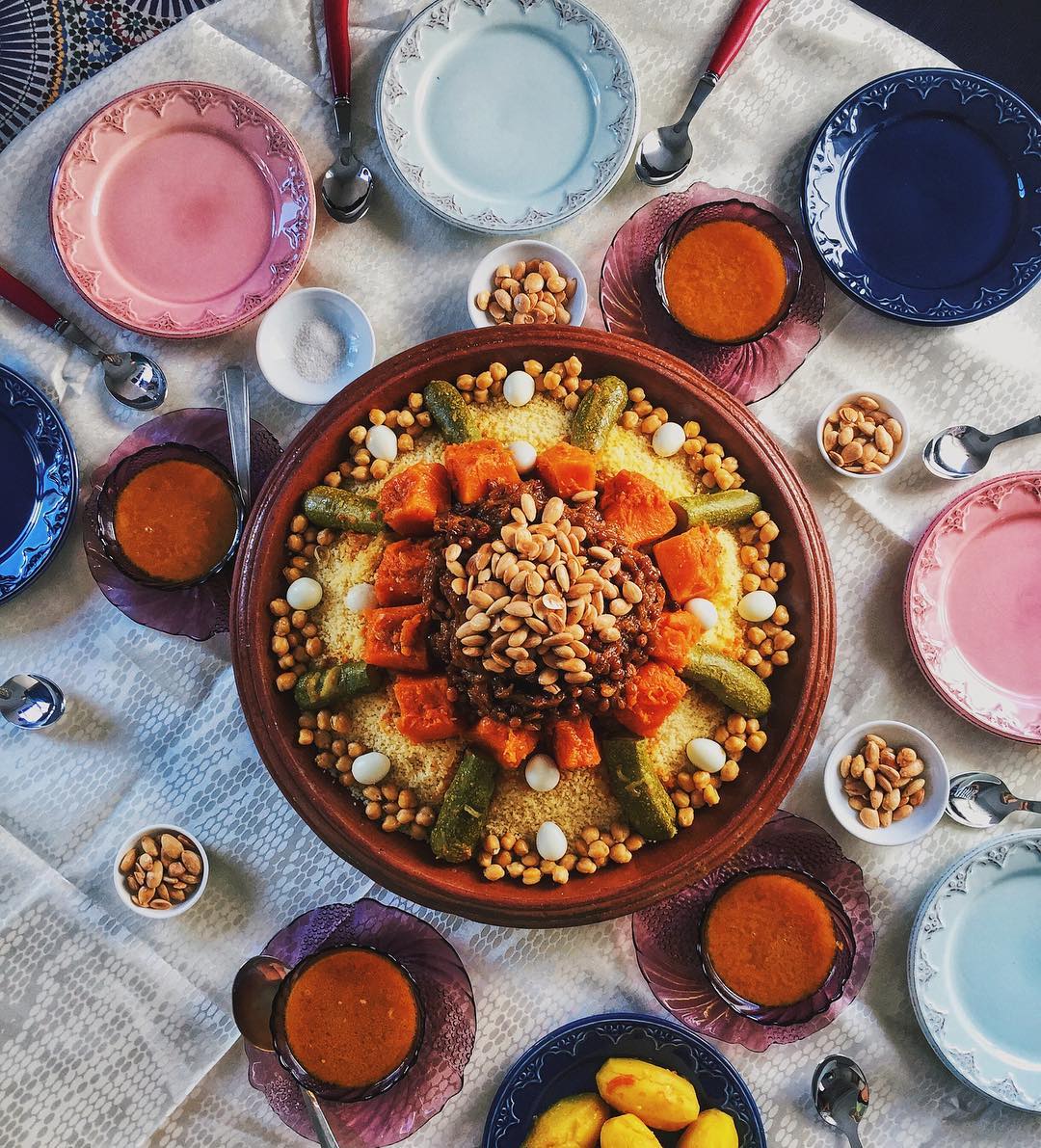 Couscousseksu
🇩🇿 Algeria and 4 moreSteamed semolina granules served with stew or vegetables across North Africa
Main dish, Lunch, Dinner
Couscousseksu
🇩🇿 Algeria and 4 moreSteamed semolina granules served with stew or vegetables across North Africa
Main dish, Lunch, Dinner
 Biryani
🇮🇳 India and 5 moreRice and spiced meat or vegetables layered and cooked together
Main dish, Lunch, Dinner
Biryani
🇮🇳 India and 5 moreRice and spiced meat or vegetables layered and cooked together
Main dish, Lunch, Dinner