Bread
Baked dough of flour and water, leavened or flat
Bread is a universal baked staple made from flour and water, often raised with yeast before cooking. Deeply rooted in Middle Eastern and European traditions, it is eaten daily by hand across meals, served plain, toasted, dipped into broths, or layered into sandwiches.
- Natufian remains in northeastern Jordan reveal bread-making dating back around 14,500 years.
- Gluten proteins form an elastic foam network that captures gas bubbles produced during fermentation.
- Over 99 percent of the acrylamide formed during baking resides within the browned outer crust.
- Traditional long dough fermentation breaks down roughly 90 percent of discomfort-causing FODMAP sugars.
What is Bread?
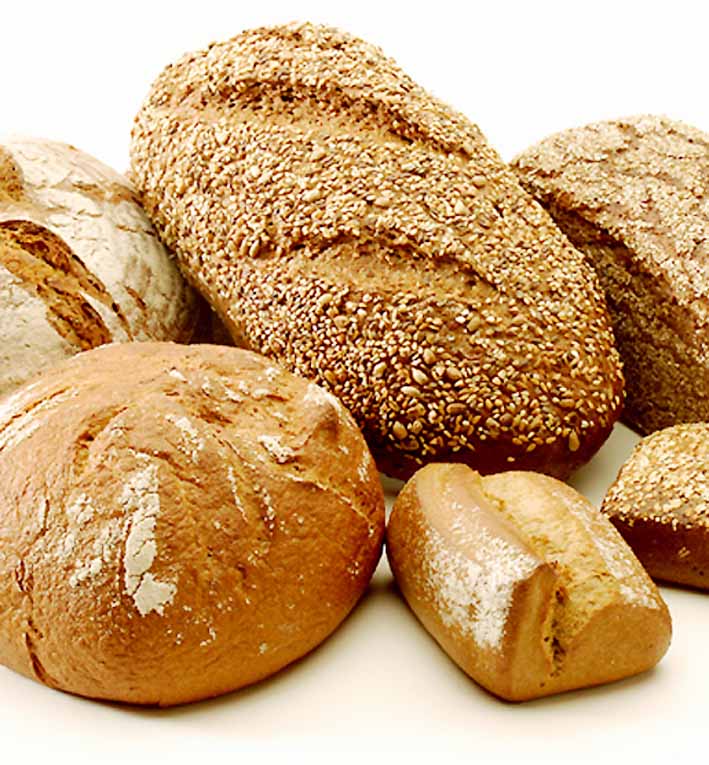
Bread is a foundational baked staple made by mixing cereal flour and water, usually aerated through leavening agents before heat transforms it into a solid form. Its structure consists of a firm, browned outer crust and a soft, spongy interior called the crumb. Inside, networks of glutenin and gliadin proteins trap pockets of carbon dioxide, creating an elastic, edible foam. Depending on the grain and recipe, loaves range from dense and earthy to light, airy, and gently sour. The crust offers a deeper, toasted flavor created by browning reactions under high heat, while the crumb holds moisture and tenderness.
Where does Bread come from?
Early traces of bread preparation date back thirty millennia to Europe and Australia, where prehistoric foragers ground cattail and fern starches on rocks to roast simple flat cakes over flames. Archaeologists identified the oldest known bread remains at a Natufian site in northeastern Jordan, dating to roughly 14,500 years ago. As farming took hold around 10,000 BC, grains became the primary base for loaves. Sumerians in southern Mesopotamia baked early leavened loaves around 6000 BC, sometimes blending dough with ash. Egyptian bakers later refined leavening around 3000 BC by deliberately incorporating yeast.
How is Bread made?
Bakers combine ground grain flour with water, salt, and leavening agents to develop dough. Wheat flour remains favored because gluten proteins give dough elasticity and hold expanding gases. Leavening can come from wild sourdough cultures, cultured baker's yeast, chemical powders such as baking soda, or pressurized air. Formulas calculate ingredients relative to total flour weight, with water commonly making up sixty to seventy-five percent in craft loaves. After rising, the dough is typically baked in an oven, though some traditions steam, shallow fry, or cook flat dough on ungreased pans.


How and when is Bread eaten?
Eaten at virtually any meal, bread serves both as food on its own and as a base for other ingredients. People often consume slices or pieces by hand, warming or toasting them after baking. Bread is frequently dipped into soups, olive oil, and gravy, or spread with butter, sweet preserves, and savory pastes. Slices enclose fillings of cheese, meat, vegetables, and condiments to form sandwiches. Pieces also feature inside other culinary dishes, whether dried into crunchy salad croutons, ground into breadcrumbs for thickening and coating, or softened in sweet and savory baked puddings.
Kinds of Bread
Loaves vary by flour type, fermentation style, and baking method. While common wheat dominates, bakers also turn to ancient grains like spelt, emmer, and einkorn, or blend rye, barley, oats, and maize. Gluten-free varieties rely on flours from rice, nuts, legumes, or cassava, utilizing gums or starches to bind the dough. Unleavened breads, such as matzo, skip aeration entirely. Global cooking techniques produce distinct styles, including steamed Chinese mantou, Indian deep-fried puri, and Mexican flat tortillas heated on dry griddles. Modern industrial bakeries use fast mechanical kneading to shorten fermentation drastically.
What Bread means
Bread holds profound symbolic weight in daily living, religious rites, and secular traditions. In ancient Egypt, Greece, and Rome, mastery of baking arts was celebrated as a hallmark of civilized life. Historic societies treated leavening starters as treasured domestic assets, skimming beer foam or keeping fermenting grape must to start fresh dough. Sacred rituals across multiple traditions incorporate special loaves, from feast-day breads to unleavened flatbreads. In folklore, crusts were claimed to make hair curly, and contemporary research confirms that crusts concentrate dietary fiber and protective antioxidant compounds.
Questions people ask about Bread
What is bread made of?
Bread is fundamentally made from flour and water, seasoned with salt and commonly aerated using leavening agents like baker's yeast or sourdough starter. Doughs may also include sugar, fats, dairy, eggs, seeds, or nuts.
Where does bread come from?
The earliest verified bread crumbs were excavated in Jordan's northeastern desert from a 14,500-year-old Natufian site. Even older plant-grinding stones from Europe and Australia indicate primitive starch flatbreads were roasted over fires 30,000 years ago.
Why do artisanal breads often feel easier to digest?
Longer dough rising times allow yeasts and bacteria to break down up to 90 percent of troublesome FODMAP carbohydrates and phytates, whereas fast-fermented industrial breads leave these compounds intact, potentially causing digestive upset.
How do leavening agents make bread rise?
Fermenting yeast cells or sourdough microbes generate carbon dioxide gas and ethanol vapors inside the dough. The gas becomes trapped by elastic gluten proteins, creating air pockets that expand into a light crumb upon baking.
Good reading and sources
- Encyclopaedia BritannicaArticle
- Wheat for bread and other foodsFAO, Article
- Our 10 best bread recipesThe Guardian, Recipe
- Prehistoric bake-off: Scientists discover oldest evidence of breadBBC, Article
- Chorleywood: The bread that changed BritainBBC, Article
The facts on this page come from the Wikipedia article "Bread", written by its contributors and used under the CC BY-SA 4.0 licence, and from its Wikidata record (CC0). EveryThali rewrote the text in its own words, with AI assistance, and compares every page with the article to make sure no passage is copied. It may be reused under the same CC BY-SA 4.0 licence with a link back.
It may contain mistakes, and it is not dietary or allergy advice: recipes differ from cook to cook. If something is wrong, tell us. Last refreshed 2026-10-04.
More from Jordan
All the food of Jordan PitaVegan
🇪🇬 Egypt and 5 moreRound, leavened flatbread baked from wheat flour, common across the Middle East and Mediterranean
Bread
PitaVegan
🇪🇬 Egypt and 5 moreRound, leavened flatbread baked from wheat flour, common across the Middle East and Mediterranean
Bread
 FattoushVeganفتوش
🇱🇧 Lebanon and 6 moreLevantine salad of toasted pita, mixed greens, and vegetables
Salad or side
FattoushVeganفتوش
🇱🇧 Lebanon and 6 moreLevantine salad of toasted pita, mixed greens, and vegetables
Salad or side
 Manakishمناقيش
🇱🇧 Lebanon and 3 moreLevantine flatbread topped with za'atar, cheese, or meat
Bread, Breakfast, Lunch
Manakishمناقيش
🇱🇧 Lebanon and 3 moreLevantine flatbread topped with za'atar, cheese, or meat
Bread, Breakfast, Lunch
 KnafehVegetarianكنافة
🇵🇸 Palestine and 5 moreShredded pastry layered with cheese and soaked in sweet syrup
Sweet or dessert, Breakfast, Snacks
KnafehVegetarianكنافة
🇵🇸 Palestine and 5 moreShredded pastry layered with cheese and soaked in sweet syrup
Sweet or dessert, Breakfast, Snacks
Its cousins elsewhere
All breads BaguetteVegan
🇫🇷 France and 5 moreLong, thin French bread with a crisp crust and soft interior
Bread, Breakfast, Lunch
BaguetteVegan
🇫🇷 France and 5 moreLong, thin French bread with a crisp crust and soft interior
Bread, Breakfast, Lunch
 BriocheVegetarianune brioche
🇫🇷 FranceFrench bread made with eggs and butter, often shaped in rounds or loaves
Bread, Breakfast, Snacks
BriocheVegetarianune brioche
🇫🇷 FranceFrench bread made with eggs and butter, often shaped in rounds or loaves
Bread, Breakfast, Snacks
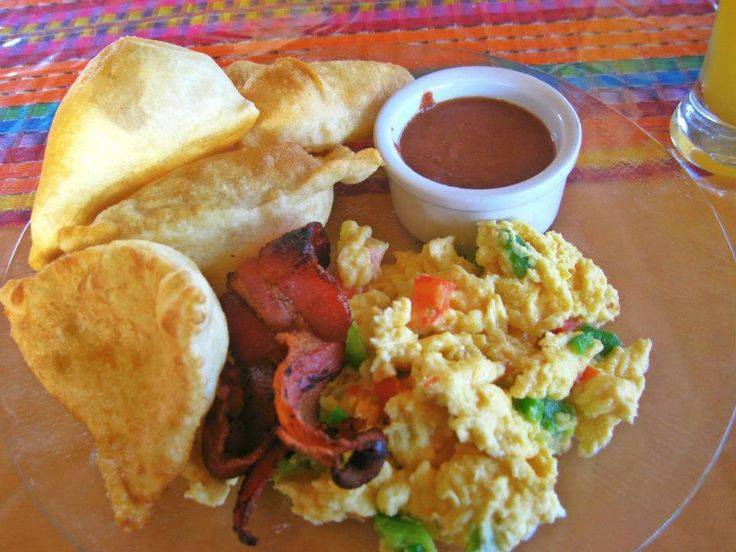 Fry jackVegetarian
🇧🇿 BelizeDeep-fried breakfast dough from Belize, served plain or with sweet or savoury toppings
Bread, Breakfast
Fry jackVegetarian
🇧🇿 BelizeDeep-fried breakfast dough from Belize, served plain or with sweet or savoury toppings
Bread, Breakfast
 Bagel
🇵🇱 Poland and 2 moreRing-shaped bread roll, boiled then baked for a dense, chewy texture
Bread, Breakfast, Lunch
Bagel
🇵🇱 Poland and 2 moreRing-shaped bread roll, boiled then baked for a dense, chewy texture
Bread, Breakfast, Lunch