
Manakish
In its own language: مناقيش
Levantine flatbread topped with za'atar, cheese, or meat
Manakish is a flatbread from the Levant, especially Lebanon, topped with za'atar (a mix of herbs and spices), cheese, or ground meat. It is usually eaten for breakfast or lunch, sliced or folded, and baked in traditional ovens such as the saj or taboon.
- Topped with za'atar, cheese, or ground meat
- Baked in traditional ovens like the saj or taboon
- Recognized by UNESCO as Lebanese cultural heritage
- Popular for breakfast and lunch across the Levant
What is Manakish?
Manakish is a round flatbread from the Levant, made by pressing dough flat and adding toppings before baking. The most common topping is za'atar, a blend of dried thyme, oregano or marjoram, sesame seeds, salt, and often sumac, mixed with olive oil. Other popular toppings include cheeses like akkawi or kashkaval, ground meat such as lamb, and sometimes vegetables, eggs, or fermented yogurt mixtures. The bread can be sliced or folded and is often eaten warm. Its surface is dimpled to hold the toppings in place.
Where does Manakish come from?
Manakish comes from the Levant, with strong ties to Lebanon, Syria, Palestine, and Jordan. Its name comes from an Arabic word meaning 'to engrave,' referring to the way the dough is indented for toppings. The bread became common after the spread of baker's ovens, which allowed dough to be baked on a hot surface. Traditionally, women would bake manakish in communal ovens in the morning, making both daily bread and topped versions for breakfast. In 2023, UNESCO recognized manakish as part of Lebanon's cultural heritage.
How is Manakish made?
To make manakish, dough is rolled out and pressed with fingertips to create small dips. Za'atar mixed with olive oil, cheese, or ground meat is spread on top. The bread is then baked in an oven, often a saj (a domed griddle) or a taboon (a clay oven). Some versions use leavened or unleavened dough. The bread is ready when the crust is golden and the toppings are cooked through. It can be served sliced or folded.


How and when is Manakish eaten?
Manakish is usually eaten for breakfast or lunch, sometimes as a snack. It is common to serve it with vegetables, pickles, yogurt, or mint tea. Za'atar manakish is especially popular in the morning, while meat-topped versions are often eaten at lunch. The bread can be part of a mezze spread or enjoyed on its own. In many places, it is sold by bakeries and street vendors.
Kinds of Manakish
Classic manakish toppings include za'atar, cheese, and ground meat. In Jerusalem, egg-topped versions are known as ikras beid, sometimes with sujuk sausage. In Gaza, chili and onions are popular. Some versions use kashk, a fermented yogurt and wheat mixture, or leafy greens like spinach and chard. Cheese manakish may also include za'atar for extra flavor. Each region has its own preferred toppings and methods.
What Manakish means
Manakish is a daily staple in Levantine households and bakeries. Traditionally, it was made in communal ovens, bringing neighbors together each morning. Its preparation and sharing are seen as a symbol of hospitality and community. In 2023, UNESCO listed manakish as an important part of Lebanon's culinary heritage, highlighting its role in local identity and tradition.
Questions people ask about Manakish
What is manakish made of?
Manakish is made from dough that is flattened and topped with za'atar (herbs and spices), cheese, or ground meat, then baked.
Where does manakish come from?
Manakish originates from the Levant, especially Lebanon, and is also common in Syria, Palestine, and Jordan.
When is manakish usually eaten?
It is most often eaten for breakfast or lunch, sometimes as a snack or as part of a mezze.
What are the classic toppings for manakish?
The most popular toppings are za'atar mixed with olive oil, cheeses like akkawi or kashkaval, and ground lamb with tomato and oil.
How is manakish traditionally baked?
It is traditionally baked in communal ovens, or on a saj or taboon, which are types of griddles and clay ovens.
Good reading and sources
- Al-Man’ouché, an emblematic culinary practice in LebanonUNESCO, Article
- Manousheh: the Lebanese breakfast pizza that stole my heartThe Guardian, Article
The facts on this page come from the Wikipedia article "Manakish", written by its contributors and used under the CC BY-SA 4.0 licence, and from its Wikidata record (CC0). Thali rewrote the text in its own words, with AI assistance, and compares every page with the article to make sure no passage is copied. It may be reused under the same CC BY-SA 4.0 licence with a link back.
It may contain mistakes, and it is not dietary or allergy advice: recipes differ from cook to cook. If something is wrong, tell us. Last refreshed 2026-10-03.
More from Lebanon
All the food of Lebanon Moussakaμουσακάς
🇬🇷 Greece and 5 moreBaked casserole of eggplant or potato, often layered with meat and sauce
Main dish, Lunch, Dinner
Moussakaμουσακάς
🇬🇷 Greece and 5 moreBaked casserole of eggplant or potato, often layered with meat and sauce
Main dish, Lunch, Dinner
 PitaVegan
🇪🇬 Egypt and 5 moreRound, leavened flatbread baked from wheat flour, common across the Middle East and Mediterranean
Bread
PitaVegan
🇪🇬 Egypt and 5 moreRound, leavened flatbread baked from wheat flour, common across the Middle East and Mediterranean
Bread
 Kibbehكبة
🇸🇾 Syria and 5 moreSpiced ground meat and bulgur shaped, stuffed, and fried, baked or served raw
Main dish, Lunch, Dinner
Kibbehكبة
🇸🇾 Syria and 5 moreSpiced ground meat and bulgur shaped, stuffed, and fried, baked or served raw
Main dish, Lunch, Dinner
 LahmacunMeat
🇸🇾 Syria and 3 moreThin flatbread baked with a topping of minced meat, vegetables and herbs
Main dish, Lunch, Dinner
LahmacunMeat
🇸🇾 Syria and 3 moreThin flatbread baked with a topping of minced meat, vegetables and herbs
Main dish, Lunch, Dinner
Its cousins elsewhere
All breads Bruschetta
🇮🇹 Italy and 1 moreGrilled bread rubbed with garlic and olive oil, often topped with tomato or other ingredients
Bread, Snacks, Tea time
Bruschetta
🇮🇹 Italy and 1 moreGrilled bread rubbed with garlic and olive oil, often topped with tomato or other ingredients
Bread, Snacks, Tea time
 Babkaעוגת שמרים
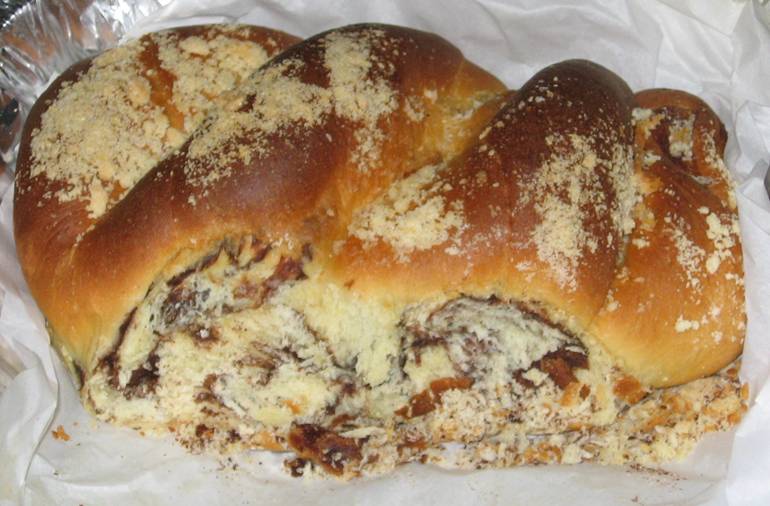
🇵🇱 Poland and 4 moreSweet braided loaf with rich fillings like chocolate or cinnamon
Sweet or dessert, Breakfast, Tea time
Babkaעוגת שמרים
🇵🇱 Poland and 4 moreSweet braided loaf with rich fillings like chocolate or cinnamon
Sweet or dessert, Breakfast, Tea time
 Crostini
🇮🇹 ItalySmall slices of toasted bread topped with cheese, meats, or vegetables
Bread, Snacks
Crostini
🇮🇹 ItalySmall slices of toasted bread topped with cheese, meats, or vegetables
Bread, Snacks
 FocacciaVegetarian
🇮🇹 Italy and 1 moreItalian flatbread baked with olive oil and often herbs or salt
Bread, Breakfast, Snacks
FocacciaVegetarian
🇮🇹 Italy and 1 moreItalian flatbread baked with olive oil and often herbs or salt
Bread, Breakfast, Snacks