
Carniolan sausage
In its own language: kranjska klobasa
A smoked pork sausage from Slovenia, often served in pairs
Carniolan sausage is a traditional Slovenian pork sausage, made with pork, bacon, garlic, and spices, then smoked and cooked. It comes from the Carniola region and is typically served whole, sometimes with bread, mustard, or horseradish. The sausage is also popular in Austria, Australia, and New Zealand, where cheese-filled versions are common.
- Made with at least 75% pork and up to 20% bacon
- Linked in pairs using a skewer
- Granted EU protected geographical indication in 2015
- Popular cheese-filled version called Käsekrainer
- First mentioned in cookbooks in the late 19th and early 20th centuries
What is Carniolan sausage?
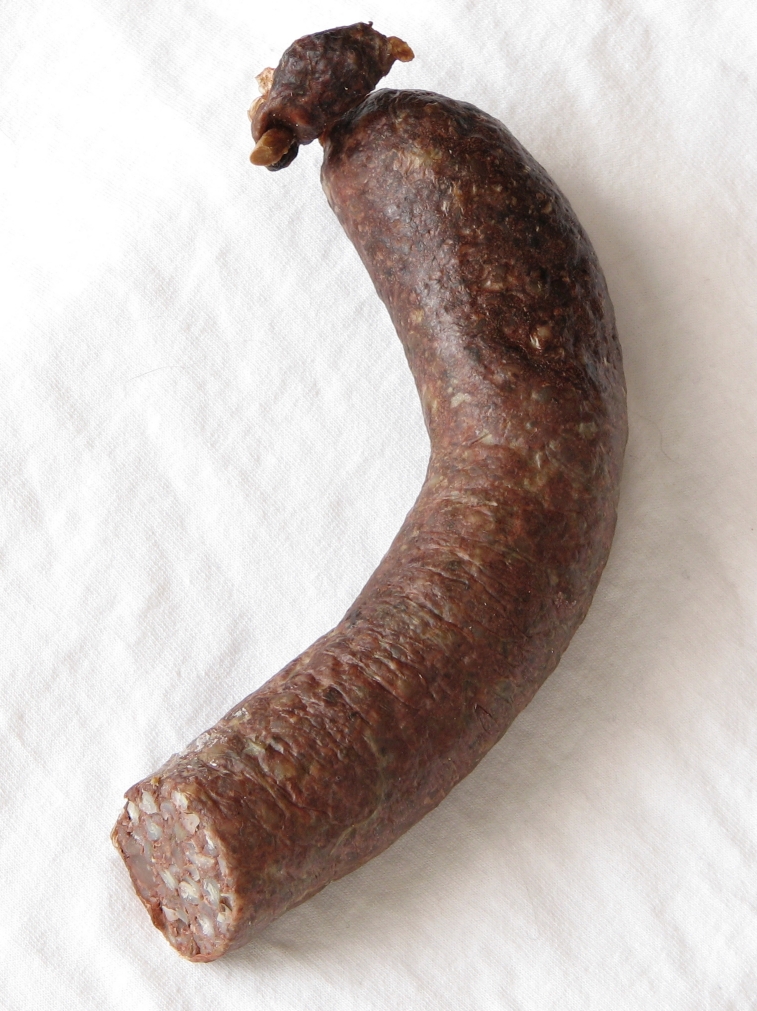
Carniolan sausage is a compact, smoked sausage made mostly from pork, with some bacon mixed in. Garlic and black pepper add flavor, while sea salt from Sečovlje and a small amount of saltpetre are used for seasoning and curing. The meat and bacon are cut into small pieces, then stuffed into pork casings. Each sausage is about 12 to 16 cm long and usually comes in pairs, joined by a skewer. The result is a juicy, savory sausage with a firm bite and a smoky aroma.
Where does Carniolan sausage come from?
This sausage traces its roots to the Carniola region, once a duchy in what is now Slovenia. The name 'kranjska klobasa' reflects this origin. Written mentions appear in a German cookbook from the late 1800s and in a Slovene cookbook from 1912. Over time, it became a symbol of Slovenian food culture and spread to neighboring countries and beyond through migration.
How is Carniolan sausage made?
To make Carniolan sausage, pork and bacon are chopped into small cubes and mixed with garlic, black pepper, sea salt, saltpetre, and a little water. The blend is packed into natural pork casings, forming sausages about the thickness of a thumb. Sausages are linked in pairs and then smoked and cooked at a controlled temperature to preserve their texture and flavor.

How and when is Carniolan sausage eaten?
Carniolan sausage is usually served whole, often with bread, mustard, or horseradish. In Slovenia, it is a common everyday food, eaten as a snack or part of a meal. In Austria, it appears at sausage stands, sometimes as a cheese-filled version in a bun. In Australia and New Zealand, the cheese kransky is a popular takeaway item, sometimes wrapped in pastry.
Kinds of Carniolan sausage
The Käsekrainer is a well-known variant, made by adding cubes of cheese to the sausage mix. This version became popular in Austria in the 1980s and is often grilled, baked, or boiled. In Australia and New Zealand, cheese kransky is widely enjoyed, sometimes with added chili or pastry. Each region adapts the sausage to local tastes and serving styles.
What Carniolan sausage means
Carniolan sausage holds a special place in Slovenian identity and food heritage. In 2015, it was granted protected geographical indication status in the European Union, recognizing its traditional roots and unique recipe. The sausage is a point of pride for Slovenians and features in discussions about national culture and cuisine.
Questions people ask about Carniolan sausage
What is Carniolan sausage made of?
It is made mainly from pork and bacon, with garlic, sea salt, black pepper, saltpetre, and a little water. The mixture is stuffed into pork casings and smoked.
Where does Carniolan sausage come from?
Carniolan sausage comes from the Carniola region in Slovenia. It has become popular in Austria, Australia, and New Zealand as well.
Are there any variations of Carniolan sausage?
Yes, the Käsekrainer is a variation with cheese added. In Australia and New Zealand, cheese kransky is popular, sometimes with chili or wrapped in pastry.
How is Carniolan sausage typically served?
It is often served whole, with bread, mustard, or horseradish. In Austria, it may be put in a bun as a hot dog, and in Australia, cheese kransky is a common takeaway food.
Does Carniolan sausage have any special status?
Yes, in 2015, it was registered as a protected geographical indication in the European Union, which helps preserve its traditional recipe and origin.
Good reading and sources
- Carniolan sausage on WikipediaEncyclopedia
- More photos on Wikimedia CommonsPhotos
- Wikidata recordOpen data
The facts on this page come from the Wikipedia article "Carniolan sausage", written by its contributors and used under the CC BY-SA 4.0 licence, and from its Wikidata record (CC0). Thali rewrote the text in its own words, with AI assistance, and compares every page with the article to make sure no passage is copied. It may be reused under the same CC BY-SA 4.0 licence with a link back.
It may contain mistakes, and it is not dietary or allergy advice: recipes differ from cook to cook. If something is wrong, tell us. Last refreshed 2026-10-03.
More from Slovenia
All the food of Slovenia ProsciuttoMeat
🇮🇹 Italy and 5 moreItalian dry-cured ham, sliced thin and served uncooked
Sausage or cured food, Snacks, Lunch
ProsciuttoMeat
🇮🇹 Italy and 5 moreItalian dry-cured ham, sliced thin and served uncooked
Sausage or cured food, Snacks, Lunch
 KielbasaMeat
🇵🇱 Poland and 5 moreA family of seasoned sausages from Poland and Eastern Europe
Sausage or cured food, Lunch, Dinner
KielbasaMeat
🇵🇱 Poland and 5 moreA family of seasoned sausages from Poland and Eastern Europe
Sausage or cured food, Lunch, Dinner
 KaszankaMeat
🇩🇪 Germany and 5 moreBlood sausage with buckwheat or barley, pork offal and spices, stuffed in pig intestine
Main dish, Lunch, Dinner
KaszankaMeat
🇩🇪 Germany and 5 moreBlood sausage with buckwheat or barley, pork offal and spices, stuffed in pig intestine
Main dish, Lunch, Dinner
 PolentaVegan
🇮🇹 Italy and 5 moreBoiled cornmeal porridge from northern Italy, served soft or set and sliced
Main dish
PolentaVegan
🇮🇹 Italy and 5 moreBoiled cornmeal porridge from northern Italy, served soft or set and sliced
Main dish
Its cousins elsewhere
All sausages and cured foods Chả lụaMeat
🇻🇳 VietnamVietnamese pork sausage steamed in banana leaves
Sausage or cured food
Chả lụaMeat
🇻🇳 VietnamVietnamese pork sausage steamed in banana leaves
Sausage or cured food
 Nem chuaMeat
🇻🇳 Vietnam and 2 moreFermented pork, garlic and chili, wrapped in leaves and eaten cold
Sausage or cured food, Snacks
Nem chuaMeat
🇻🇳 Vietnam and 2 moreFermented pork, garlic and chili, wrapped in leaves and eaten cold
Sausage or cured food, Snacks
 TocinoMeat
🇵🇭 Philippines and 5 moreCured or fried pork enjoyed in Spain, the Philippines, and the Caribbean
Main dish, Breakfast, Lunch
TocinoMeat
🇵🇭 Philippines and 5 moreCured or fried pork enjoyed in Spain, the Philippines, and the Caribbean
Main dish, Breakfast, Lunch
 BoereworsMeat
🇿🇦 South Africa and 4 moreSouthern African sausage made from coarsely ground meat and spices
Sausage or cured food, Lunch, Dinner
BoereworsMeat
🇿🇦 South Africa and 4 moreSouthern African sausage made from coarsely ground meat and spices
Sausage or cured food, Lunch, Dinner