
Cendol
In its own language: ꦕꦺꦤ꧀ꦝꦺꦴꦭ꧀
Green rice flour jelly with coconut milk, palm sugar syrup and ice
Cendol is a sweet iced dessert from Indonesia and Southeast Asia, made with soft, green rice flour jelly strands, coconut milk, palm sugar syrup, and shaved ice. It is widely sold by street vendors and at food courts, especially in hot weather, and is enjoyed in many countries with local variations and toppings.
- Made with green jelly from rice flour and pandan
- Served cold with coconut milk, palm sugar syrup and ice
- Popular street dessert in Indonesia and Southeast Asia
- Often topped with jackfruit, beans or durian
- Known by many names across the region
What is Cendol?
Cendol is a chilled dessert made from soft, green jelly strands served in a bowl or glass with coconut milk and palm sugar syrup, poured over a mound of shaved ice. The jelly is made from rice flour or sometimes mung bean or sago flour, and gets its bright green colour and aroma from pandan leaves, a tropical plant used as a flavouring. The coconut milk gives a creamy base, while the palm sugar syrup adds a deep, caramel-like sweetness. Sometimes, toppings like diced jackfruit, sweetened red beans, or even durian are added. The dessert is refreshing and sweet, with a mix of creamy, chewy and icy textures.
Where does Cendol come from?
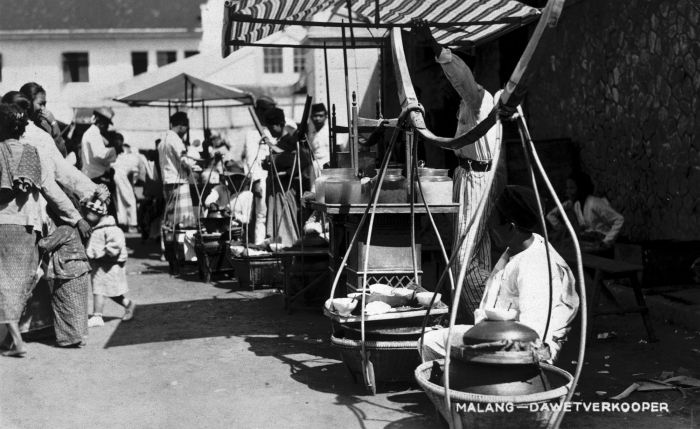
Cendol has deep roots in Southeast Asian food traditions, with its main ingredients—rice flour, coconut milk, palm sugar and pandan—used for centuries across the region. The dessert appears in many countries under different names, reflecting a shared heritage rather than a single origin. Written records from the 1800s in Indonesia and Malaysia describe cendol or similar preparations, and old cookbooks show it was already established by then. Some sources link its history to Indian and Chinese influences, and in Indonesia, a related drink called dawet is mentioned in twelfth-century texts. The method of making jelly strands by pressing dough through holes is common across the region.
How is Cendol made?
To make cendol, rice flour (sometimes mixed with sago or mung bean flour) is combined with water and pandan juice to form a dough, which is then cooked until thick. This dough is pressed through a sieve or special mold into cold water, forming the signature green, worm-like jelly strands. The jelly is drained and placed in a bowl or glass. Shaved ice is added on top, followed by a generous amount of coconut milk and a drizzle of palm sugar syrup. Some versions include extra toppings such as jackfruit or sweet beans. The dessert is served cold and eaten with a spoon or straw.


![endol (pronounced [tʃɛndɒl]) is a traditional dessert originating from South East Asia which is still popular in Indonesia [1], Malaysia[2], Singapore, Vietnam, Philippines and Southern Thailand (where it is called lortc](https://thumb.wikimedia.org/wikipedia/commons/thumb/c/cf/Cendol.jpg/960px-Cendol.jpg)
How and when is Cendol eaten?
Cendol is most often enjoyed as a snack or dessert, especially in hot weather. It is sold by street vendors, at markets, and in food courts throughout Southeast Asia. People often eat it in the afternoon or as a treat during festivals and celebrations. The dessert is served in a bowl or tall glass, and is meant to be eaten immediately so the ice stays cold and the flavours remain distinct. In some places, cendol is part of religious or traditional ceremonies, and it is common to see people sharing it at gatherings.
Kinds of Cendol
Different countries and regions have their own versions of cendol. In Indonesia, it is called es cendol in West Java and dawet in Central and East Java. In Vietnam, bánh lọt is often included in sweet drinks called chè, and savoury versions also exist. In Thailand, lot chong is sometimes served with local palm sugar poured separately for a stronger caramel taste. Toppings can vary: jackfruit, sweetened red beans, or durian are common additions. The jelly is usually green, but other colours and even fried or savoury forms can be found.
What Cendol means
Cendol is woven into daily life and festive occasions across Southeast Asia. It is a symbol of shared culinary heritage, with each country and community adding its own touch. The dessert is especially popular during festivals, religious observances, and traditional ceremonies. In Thailand, it has even been linked to Hindu cosmology in old recipes. In cities, cendol is part of social life, enjoyed by people of all ages at street stalls and markets. Its presence in old dictionaries and cookbooks shows its long-standing role in the region’s food culture.
Questions people ask about Cendol
What is cendol made of?
Cendol is made from green jelly strands of rice flour and pandan, served with coconut milk, palm sugar syrup and shaved ice. Sometimes, toppings like jackfruit or sweetened beans are added.
Where does cendol come from?
Cendol comes from Indonesia and is found across Southeast Asia, including Malaysia, Vietnam, Thailand, Singapore and Cambodia. It has a long history in the region and is known by different names.
How is cendol served?
Cendol is served cold in a bowl or glass, with the green jelly, coconut milk, palm sugar syrup and lots of shaved ice. It is eaten with a spoon or straw, often as a snack or dessert.
Is cendol vegan?
Yes, cendol is vegan. Its main ingredients are rice flour, pandan, coconut milk, palm sugar and ice. Some toppings may vary, but the basic dessert contains no animal products.
Are there different versions of cendol?
Yes, cendol has many regional versions. The jelly can be made from rice, sago or mung bean flour, and toppings like jackfruit, sweet beans or durian are common. The dessert is known by different names in each country.
Good reading and sources
The facts on this page come from the Wikipedia article "Cendol", written by its contributors and used under the CC BY-SA 4.0 licence, and from its Wikidata record (CC0). Thali rewrote the text in its own words, with AI assistance, and compares every page with the article to make sure no passage is copied. It may be reused under the same CC BY-SA 4.0 licence with a link back.
It may contain mistakes, and it is not dietary or allergy advice: recipes differ from cook to cook. If something is wrong, tell us. Last refreshed 2026-10-03.
More from Indonesia
All the food of Indonesia CoffeeVegan
🇾🇪 Yemen and 5 moreA dark, bitter drink made by brewing roasted coffee beans
Drink, Breakfast, Snacks
CoffeeVegan
🇾🇪 Yemen and 5 moreA dark, bitter drink made by brewing roasted coffee beans
Drink, Breakfast, Snacks
 Palm wineVegan
🇳🇬 Nigeria and 5 moreA lightly alcoholic drink made by fermenting the sap of palm trees
Drink
Palm wineVegan
🇳🇬 Nigeria and 5 moreA lightly alcoholic drink made by fermenting the sap of palm trees
Drink
 Lei chaVegan擂茶
🇨🇳 China and 3 moreA Hakka tea-based drink or soup made with ground tea, nuts, seeds and grains
Drink
Lei chaVegan擂茶
🇨🇳 China and 3 moreA Hakka tea-based drink or soup made with ground tea, nuts, seeds and grains
Drink
 BreadfruitVegan
🇵🇭 Philippines and 4 moreLarge tropical fruit cooked as a starchy staple in many island cuisines
Main dish, Lunch, Dinner
BreadfruitVegan
🇵🇭 Philippines and 4 moreLarge tropical fruit cooked as a starchy staple in many island cuisines
Main dish, Lunch, Dinner
Its cousins elsewhere
All drinks Mojito
🇨🇺 Cuba and 5 moreCuban cocktail of white rum, lime, mint, sugar and soda water over ice
Drink
Mojito
🇨🇺 Cuba and 5 moreCuban cocktail of white rum, lime, mint, sugar and soda water over ice
Drink
 KavaVegan
🇻🇺 Vanuatu and 4 moreA traditional Pacific drink made from the root of the kava plant
Drink
KavaVegan
🇻🇺 Vanuatu and 4 moreA traditional Pacific drink made from the root of the kava plant
Drink
 Iced teaVegan
🇺🇸 United States and 5 moreChilled tea served over ice, sometimes sweetened or flavored with fruit
Drink, Lunch, Dinner
Iced teaVegan
🇺🇸 United States and 5 moreChilled tea served over ice, sometimes sweetened or flavored with fruit
Drink, Lunch, Dinner
 CaipirinhaVegan
🇧🇷 BrazilBrazil’s classic cocktail of cachaça, lime, sugar and ice
Drink, Snacks, Dinner
CaipirinhaVegan
🇧🇷 BrazilBrazil’s classic cocktail of cachaça, lime, sugar and ice
Drink, Snacks, Dinner