
Chana masala
Chickpeas simmered in a spiced tomato and onion sauce
Chana masala is a chickpea curry from the Indian subcontinent, especially North India and Pakistan. It features chickpeas cooked in a sauce of tomatoes, onions, garlic, ginger, and a blend of spices, and is often served with breads like bhatura, puri, or kulcha. This dish is a staple in everyday meals.
- Main ingredient is chickpeas cooked in a spiced tomato sauce
- A staple dish in North Indian and Pakistani cuisine
- Often served with breads like bhatura, puri, or kulcha
- Garnished with cilantro and lemon or lime wedges
What is Chana masala?
Chana masala is a curry made with chickpeas as the main ingredient. The chickpeas are cooked in a sauce built from onions, tomatoes, garlic, ginger, and chili peppers, with a mix of spices such as coriander, cumin, turmeric, garam masala, and amchoor (dried mango powder). The finished dish is thick, with a reddish-brown sauce that clings to the chickpeas. It is sometimes topped with fresh cilantro and served with lemon or lime wedges for a tangy finish.
Where does Chana masala come from?
Chana masala comes from the Indian subcontinent and is especially common in North India. It is also a staple in Pakistani cooking. The dish has become a regular part of everyday meals in these regions, where chickpeas are a common and affordable source of protein. Over time, it has spread to other parts of South Asia and beyond, but its roots remain in the everyday kitchens of North India.
How is Chana masala made?
To make chana masala, dried chickpeas are soaked in water overnight to soften them. After draining and rinsing, the chickpeas are cooked with a base of sautéed onions, garlic, ginger, and chili peppers. Chopped tomatoes are added to create a rich sauce, and a blend of spices such as coriander, cumin, turmeric, garam masala, and amchoor is stirred in. The mixture is simmered until the chickpeas are tender and the sauce is thick.

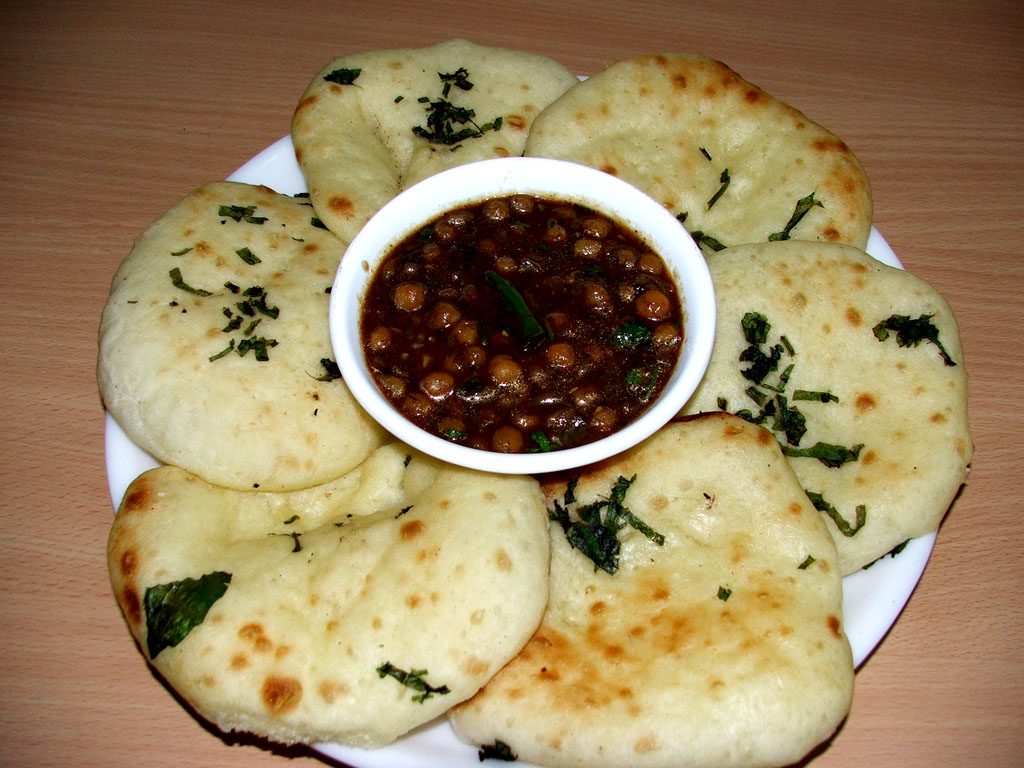
How and when is Chana masala eaten?
Chana masala is usually served for lunch or dinner. It is commonly paired with breads such as bhatura (a deep-fried bread), puri (a small fried bread), or kulcha (a type of flatbread). The combination of chana masala and bhatura is known as chole bhature. It may be garnished with chopped cilantro and served with lemon or lime wedges. The dish is enjoyed both at home and in restaurants.
Kinds of Chana masala
While the basic preparation remains similar, some versions of chana masala use different spice blends or add extra ingredients like amchoor for a tangy flavor. In some regions, the dish may be made spicier or milder to suit local tastes. The way it is served can also vary, with different types of bread or garnishes.
What Chana masala means
Chana masala is a staple food in North India and Pakistan, eaten regularly as part of everyday meals. It is often found in home kitchens and is a popular choice in restaurants and street stalls. The combination with bhatura is especially well-known and enjoyed as a hearty meal.
Questions people ask about Chana masala
What is chana masala made of?
Chana masala is made from chickpeas cooked in a sauce of onions, tomatoes, garlic, ginger, chili peppers, and a blend of spices such as coriander, cumin, turmeric, garam masala, and amchoor.
Where does chana masala come from?
Chana masala originates from the Indian subcontinent, especially North India, and is also a staple in Pakistani cuisine.
How is chana masala usually served?
It is commonly served with breads like bhatura, puri, or kulcha, and may be garnished with cilantro and lemon or lime wedges.
Is chana masala vegan?
Yes, chana masala is vegan, as it contains no animal products and is made mainly from chickpeas, vegetables, and spices.
What meals is chana masala eaten at?
Chana masala is typically eaten for lunch or dinner as a main dish.
Good reading and sources
The facts on this page come from the Wikipedia article "Chana masala", written by its contributors and used under the CC BY-SA 4.0 licence, and from its Wikidata record (CC0). Thali rewrote the text in its own words, with AI assistance, and compares every page with the article to make sure no passage is copied. It may be reused under the same CC BY-SA 4.0 licence with a link back.
It may contain mistakes, and it is not dietary or allergy advice: recipes differ from cook to cook. If something is wrong, tell us. Last refreshed 2026-10-03.
More from India
All the food of India Kebabكَبَاب
🇹🇷 Turkey and 5 moreGrilled or roasted meat, often on skewers, found across the Middle East and beyond
Main dish, Lunch, Dinner
Kebabكَبَاب
🇹🇷 Turkey and 5 moreGrilled or roasted meat, often on skewers, found across the Middle East and beyond
Main dish, Lunch, Dinner
 Biryani
🇮🇳 India and 5 moreRice and spiced meat or vegetables layered and cooked together
Main dish, Lunch, Dinner
Biryani
🇮🇳 India and 5 moreRice and spiced meat or vegetables layered and cooked together
Main dish, Lunch, Dinner
 French toast
🇫🇷 France and 5 moreBread soaked in egg and milk, pan-fried and served sweet or savoury
Main dish, Breakfast, Snacks
French toast
🇫🇷 France and 5 moreBread soaked in egg and milk, pan-fried and served sweet or savoury
Main dish, Breakfast, Snacks
 Fish and chipsFish or seafood
🇬🇧 United Kingdom and 8 moreBattered fried fish served hot with thick-cut chips
Main dish, Lunch, Dinner
Fish and chipsFish or seafood
🇬🇧 United Kingdom and 8 moreBattered fried fish served hot with thick-cut chips
Main dish, Lunch, Dinner
Its cousins elsewhere
All main dishes ShiroVegan
🇪🇹 Ethiopia and 1 moreChickpea or broad bean stew, a staple in Ethiopian and Eritrean meals
Stew or curry, Lunch, Dinner
ShiroVegan
🇪🇹 Ethiopia and 1 moreChickpea or broad bean stew, a staple in Ethiopian and Eritrean meals
Stew or curry, Lunch, Dinner
 Chicken tikka masalaMeat
🇬🇧 United Kingdom and 4 moreRoasted marinated chicken in a creamy, spiced tomato-based sauce
Main dish, Lunch, Dinner
Chicken tikka masalaMeat
🇬🇧 United Kingdom and 4 moreRoasted marinated chicken in a creamy, spiced tomato-based sauce
Main dish, Lunch, Dinner
 Chili con carneMeat
🇲🇽 Mexico and 1 moreA spicy stew of meat and chili peppers from Mexico and the United States
Main dish, Lunch, Dinner
Chili con carneMeat
🇲🇽 Mexico and 1 moreA spicy stew of meat and chili peppers from Mexico and the United States
Main dish, Lunch, Dinner
 Moqueca
🇧🇷 Brazil and 1 moreBrazilian seafood stew simmered with tomatoes, onions, lime and coriander
Stew or curry, Lunch, Dinner
Moqueca
🇧🇷 Brazil and 1 moreBrazilian seafood stew simmered with tomatoes, onions, lime and coriander
Stew or curry, Lunch, Dinner