
Shiro
Chickpea or broad bean stew, a staple in Ethiopian and Eritrean meals
Shiro is a thick stew from Ethiopia and Eritrea, made mainly from powdered chickpeas or broad beans, onions, and garlic. It is a key part of daily meals and is often served for lunch or dinner atop injera, a sour flatbread. Shiro is especially enjoyed during fasting periods and religious occasions.
- Made from powdered chickpeas or broad beans
- A mainstay of Ethiopian and Eritrean cuisine
- Served atop injera or kitcha flatbread
- Popular during Lent, Ramadan, and fasting seasons
- Vegan by default, but meat and butter versions exist
What is Shiro?
Shiro is a smooth, thick stew made from powdered chickpeas or broad beans. The base is flavored with minced onions and garlic, and sometimes ginger, tomatoes, or chili peppers are added for extra depth. The finished dish is usually a rich, orange or brown color, with a creamy texture. Shiro is most often served on top of injera, a spongy, sour flatbread, or kitcha, a plain, unleavened bread. Its taste is earthy and savory, with a gentle heat if chili is included.
Where does Shiro come from?
Shiro comes from northern Ethiopia and southern Eritrea, where it is a staple in both cuisines. Over time, it has become an essential part of daily meals and special occasions in these countries. While its exact beginnings are not detailed, shiro's use of local legumes and spices reflects the region's agricultural traditions. The dish is closely tied to fasting periods in the Ethiopian Orthodox and Muslim communities, making it a common feature during Lent and Ramadan.
How is Shiro made?
To make shiro, chickpeas or broad beans are first roasted and ground into a fine flour. This flour is mixed with water to form the base of the stew. Onions, garlic, and sometimes ginger are sautéed separately, then combined with the legume mixture. Tomatoes and chili peppers may be added depending on the region. The stew is simmered until thick and smooth. In some versions, oil or butter is used for richness, and the finished shiro may be brought to the table bubbling hot in a small clay pot.

How and when is Shiro eaten?
Shiro is eaten for lunch or dinner, often as the main dish. It is traditionally served on injera, which is torn and used to scoop up the stew by hand. Sometimes, shiro is mixed with pieces of injera or taita and eaten with a spoon, a version called shiro fit-fit. During fasting periods, the vegan form is preferred, but on other days, versions with spiced butter or meat may appear. Shiro is a communal food, shared from a large platter.
Kinds of Shiro
There are several types of shiro. Tegabino shiro uses a mix of spiced legumes and is served bubbling hot in a small pot. Bozena shiro includes meat, while shiro fit-fit is mixed with torn injera. Some regions add ginger, tomatoes, or chili peppers, and the choice of bread—injera or kitcha—can vary. The dish can be made with different legumes such as field peas or fava beans.
What Shiro means
Shiro holds a special place in Ethiopian and Eritrean life, eaten both daily and during important religious periods. It is especially popular during Lent and Ramadan, when animal products are avoided. The dish is valued for being filling, nutritious, and easy to prepare in large quantities. Shiro is often associated with hospitality and togetherness, as it is shared from a communal plate.
When Shiro is on the table
Questions people ask about Shiro
What is shiro made of?
Shiro is made from powdered chickpeas or broad beans, with onions, garlic, and sometimes ginger, tomatoes, or chili peppers.
Where does shiro come from?
Shiro originates from northern Ethiopia and southern Eritrea, and is a staple in both cuisines.
How is shiro usually served?
Shiro is most often served on top of injera, a spongy flatbread, or kitcha, an unleavened bread.
Is shiro vegan?
Yes, shiro is vegan by default, but some versions include spiced butter or meat.
When is shiro eaten?
Shiro is eaten for lunch or dinner and is especially popular during religious fasting periods such as Lent and Ramadan.
Good reading and sources
The facts on this page come from the Wikipedia article "Shiro (food)", written by its contributors and used under the CC BY-SA 4.0 licence, and from its Wikidata record (CC0). Thali rewrote the text in its own words, with AI assistance, and compares every page with the article to make sure no passage is copied. It may be reused under the same CC BY-SA 4.0 licence with a link back.
It may contain mistakes, and it is not dietary or allergy advice: recipes differ from cook to cook. If something is wrong, tell us. Last refreshed 2026-10-03.
More from Ethiopia
All the food of Ethiopia HilbetVeganሕልበት
🇪🇷 Eritrea and 1 moreCreamy vegan dip of fava beans, lentils and spices from Eritrea and Ethiopia
Main dish, Lunch, Dinner
HilbetVeganሕልበት
🇪🇷 Eritrea and 1 moreCreamy vegan dip of fava beans, lentils and spices from Eritrea and Ethiopia
Main dish, Lunch, Dinner
 KochoVeganቆጮ
🇪🇹 EthiopiaFermented flatbread made from the enset plant in Ethiopia
Bread, Lunch, Dinner
KochoVeganቆጮ
🇪🇹 EthiopiaFermented flatbread made from the enset plant in Ethiopia
Bread, Lunch, Dinner
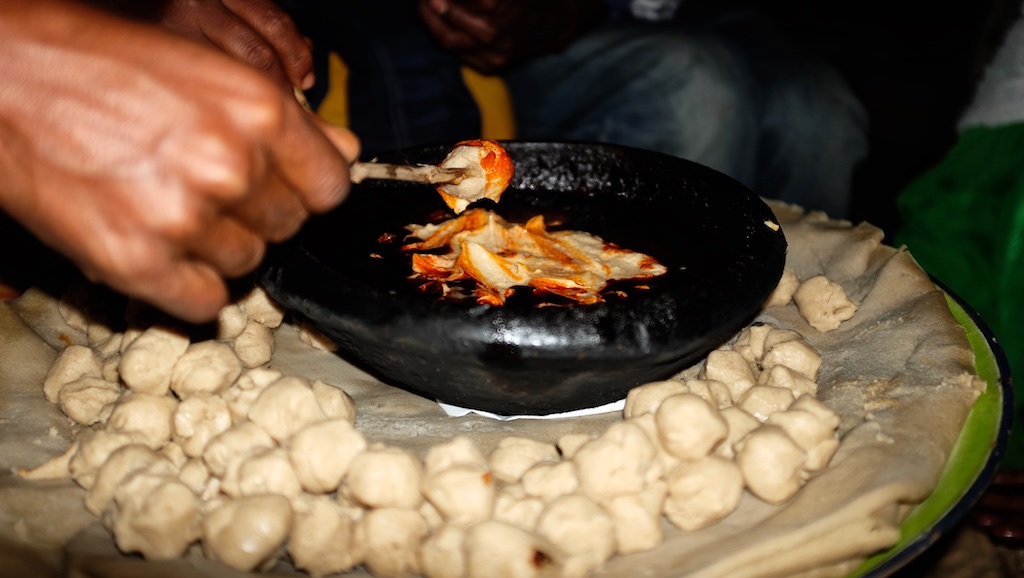 TihloMeatጥሕሎ
🇪🇹 EthiopiaBarley dough balls served with spicy meat stew from Tigray, Ethiopia
Main dish, Snacks, Lunch
TihloMeatጥሕሎ
🇪🇹 EthiopiaBarley dough balls served with spicy meat stew from Tigray, Ethiopia
Main dish, Snacks, Lunch
Its cousins elsewhere
All stews and curries Chana masalaVegan
🇮🇳 India and 1 moreChickpeas simmered in a spiced tomato and onion sauce
Main dish, Lunch, Dinner
Chana masalaVegan
🇮🇳 India and 1 moreChickpeas simmered in a spiced tomato and onion sauce
Main dish, Lunch, Dinner
 Chicken tikka masalaMeat
🇬🇧 United Kingdom and 4 moreRoasted marinated chicken in a creamy, spiced tomato-based sauce
Main dish, Lunch, Dinner
Chicken tikka masalaMeat
🇬🇧 United Kingdom and 4 moreRoasted marinated chicken in a creamy, spiced tomato-based sauce
Main dish, Lunch, Dinner
 GoulashMeatgulyás
🇭🇺 Hungary and 5 moreA paprika-spiced meat and vegetable soup from Hungary
Soup, Lunch, Dinner
GoulashMeatgulyás
🇭🇺 Hungary and 5 moreA paprika-spiced meat and vegetable soup from Hungary
Soup, Lunch, Dinner
 RajmaVegetarian
🇮🇳 India and 2 moreKidney beans stewed with spices, often served with rice in North India and Nepal
Main dish, Lunch, Dinner
RajmaVegetarian
🇮🇳 India and 2 moreKidney beans stewed with spices, often served with rice in North India and Nepal
Main dish, Lunch, Dinner