
Chipa
Cheese-flavored rolls made with cassava starch, eaten as a snack or breakfast
Chipa is a small, baked roll with cheese, popular as a snack and breakfast food in Paraguay and northeastern Argentina. Made mainly from cassava starch, cheese, eggs, and fat, it is sold warm by street vendors and at religious festivals. Its roots go back to the Guaraní people of Asunción in the 18th century.
- Chipa is a cheese bread made mainly with cassava starch
- It is sold warm by street vendors and on buses
- The recipe dates back to the 18th century and Guaraní people
- No yeast is used, so it keeps well in hot climates
- There are over 70 known varieties of chipa
What is Chipa?
Chipa is a small, round or donut-shaped bread roll with a golden crust and a chewy, dense inside. Its main ingredients are cassava starch, cheese (often Paraguay cheese), eggs, milk, fat, and sometimes corn starch. The rolls have a savory, cheesy flavor and are slightly crisp on the outside. Chipa is usually eaten warm, often straight from a basket lined with cloth, and is a common sight at street stalls and on buses in Paraguay and parts of Argentina. It keeps well for several days, even in warm climates, because it does not use yeast.
Where does Chipa come from?
Chipa traces its origins to the Guaraní people of Asunción in the 18th century. Early forms of this bread, called 'mbujape', were made with cassava or corn flour and animal fat, cooked in banana leaves. The arrival of Spanish settlers brought new ingredients like cheese, eggs, and milk, which were blended with native staples. Over time, this fusion created the chipa known today. The bread became a staple in the region, especially in Paraguay and northeastern Argentina, and is linked to the broader history of Spanish and Cario-Guaraní culinary traditions.
How is Chipa made?
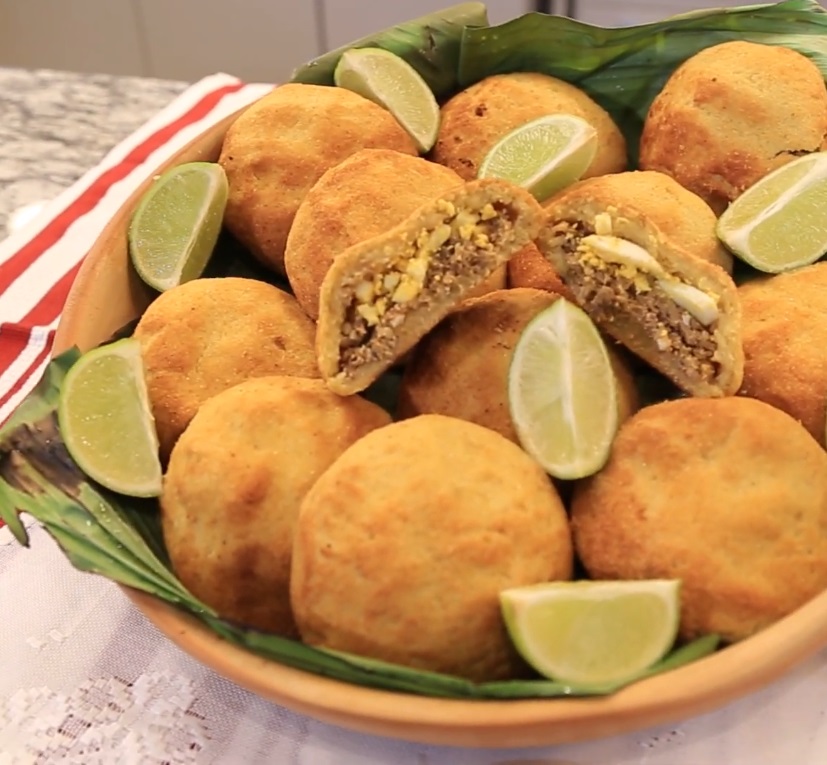
To make chipa, cassava starch is mixed with cheese, eggs, milk, and fat (such as pork fat, margarine, or lard). Corn starch may also be added. The dough is shaped into small rings or balls, then baked until golden. No yeast is used, so the rolls are dense rather than fluffy. Some versions include anise seeds or liquor for extra flavor. Chipa can also be cooked around a stick over embers, giving it a hollow texture, or filled with seasoned meat in certain varieties.


How and when is Chipa eaten?
Chipa is enjoyed at breakfast or as a snack throughout the day. It is commonly sold by street vendors, who keep it warm in baskets wrapped in cloth. People eat it on the go, at home, or during religious festivals, often with tea, coffee, or mate cocido (a local infusion). The bread is also served at gatherings and celebrations, and its long shelf life makes it a practical choice for travel or picnics.
Kinds of Chipa
There are many types of chipa. Chipa aramirõ is the classic cheese and cassava starch version. Chipa mestiza mixes corn flour with cassava starch. Chipa caburé or mbocá is baked on a stick over fire, while chipa so'o is filled with seasoned meat. Other kinds include chipa manduví (with peanuts), chipa guasu (a large corn cake), and chipa pirú, which is thin and crisp. In Bolivia, a similar bread is called cuñapé.
What Chipa means
Chipa is a symbol of Paraguayan food culture and is tied to religious and festive occasions. It is a common offering at popular celebrations and is part of everyday life in Paraguay and parts of Argentina. The bread is often associated with street vendors and is considered a comfort food. There are more than 70 recognized varieties, reflecting its deep roots and importance in the region's culinary traditions.
Questions people ask about Chipa
What is chipa made of?
Chipa is made from cassava starch, cheese (often Paraguay cheese), eggs, milk, fat, and sometimes corn starch. Some versions may include anise seeds or be filled with meat.
Where does chipa come from?
Chipa originated with the Guaraní people in Asunción, Paraguay, in the 18th century. It is now popular in Paraguay and northeastern Argentina.
How is chipa usually eaten?
Chipa is eaten as a snack or breakfast food, often bought warm from street vendors or at festivals. It is commonly enjoyed with tea, coffee, or mate cocido.
Are there different types of chipa?
Yes, there are many varieties, including chipa aramirõ (classic), chipa mestiza (with corn flour), chipa caburé (baked on a stick), and chipa so'o (filled with meat).
Does chipa contain meat?
Most chipa is vegetarian, but some versions, such as chipa so'o, are filled with seasoned meat.
Good reading and sources
The facts on this page come from the Wikipedia article "Chipa", written by its contributors and used under the CC BY-SA 4.0 licence, and from its Wikidata record (CC0). Thali rewrote the text in its own words, with AI assistance, and compares every page with the article to make sure no passage is copied. It may be reused under the same CC BY-SA 4.0 licence with a link back.
It may contain mistakes, and it is not dietary or allergy advice: recipes differ from cook to cook. If something is wrong, tell us. Last refreshed 2026-10-03.
More from Paraguay
All the food of Paraguay MateVegan
🇵🇾 Paraguay and 3 moreHot infusion of yerba mate leaves, drunk with a metal straw from a gourd
Drink
MateVegan
🇵🇾 Paraguay and 3 moreHot infusion of yerba mate leaves, drunk with a metal straw from a gourd
Drink
 BarbacoaMeat
🇲🇽 Mexico and 3 moreMeat slow-cooked in a pit lined with agave or banana leaves
Main dish, Lunch, Dinner
BarbacoaMeat
🇲🇽 Mexico and 3 moreMeat slow-cooked in a pit lined with agave or banana leaves
Main dish, Lunch, Dinner
 ChunchulloMeat
🇦🇷 Argentina and 5 moreBraided and roasted small intestine, a grill favorite in Latin America
Main dish, Lunch, Dinner
ChunchulloMeat
🇦🇷 Argentina and 5 moreBraided and roasted small intestine, a grill favorite in Latin America
Main dish, Lunch, Dinner
 Gnocchi
🇮🇹 Italy and 5 moreSoft dumplings of dough, often made with potato, flour and egg
Dumpling, Lunch, Dinner
Gnocchi
🇮🇹 Italy and 5 moreSoft dumplings of dough, often made with potato, flour and egg
Dumpling, Lunch, Dinner
Its cousins elsewhere
All breads BriocheVegetarianune brioche
🇫🇷 FranceFrench bread made with eggs and butter, often shaped in rounds or loaves
Bread, Breakfast, Snacks
BriocheVegetarianune brioche
🇫🇷 FranceFrench bread made with eggs and butter, often shaped in rounds or loaves
Bread, Breakfast, Snacks
 Cornbread
🇺🇸 United StatesA quick bread made from cornmeal, central to Southern U.S. and Native American cooking
Bread, Breakfast, Lunch
Cornbread
🇺🇸 United StatesA quick bread made from cornmeal, central to Southern U.S. and Native American cooking
Bread, Breakfast, Lunch
 AnpanVegetarianあんパン
🇯🇵 JapanJapanese sweet roll filled with red bean paste or other fillings
Sweet or dessert, Snacks, Tea time
AnpanVegetarianあんパン
🇯🇵 JapanJapanese sweet roll filled with red bean paste or other fillings
Sweet or dessert, Snacks, Tea time