
Chipsi mayai
A Tanzanian street omelette made with French fries and eggs
Chipsi mayai is a popular street food from Tanzania, made by frying French fries and beaten eggs together to form an omelette. It is found everywhere in the country, from city food stands to small village stalls, and is often served with kachumbari (a fresh tomato and onion salad) or pili-pili, a type of hot sauce.
- Invented in Dar es Salaam in the 1980s
- Known as Tanzania's unofficial national dish
- Made with French fries and eggs fried together
- Often served with kachumbari or pili-pili hot sauce
What is Chipsi mayai?
Chipsi mayai is a Tanzanian omelette that combines French fries and eggs, sometimes with onions or bell peppers mixed in. The fries are cooked in oil, then eggs are beaten and poured over them in a pan, creating a thick, golden omelette. The result is a hearty, filling dish with a crisp edge from the fried potatoes and a soft, eggy center. It is usually served hot, cut into wedges, and may be accompanied by kachumbari, a salad of tomato and onion, or a spicy pili-pili sauce.
Where does Chipsi mayai come from?
Chipsi mayai was created in the 1980s on the streets of Dar es Salaam, Tanzania’s largest city. It quickly spread to every region of the country, becoming a staple at both urban and rural food stands. Today, it is widely recognized as Tanzania’s unofficial national dish, eaten by people from all walks of life. Its name comes from Swahili, meaning 'chips and eggs', reflecting its simple ingredients.
How is Chipsi mayai made?
To make chipsi mayai, French fries are first prepared by frying sliced potatoes in oil until golden and crisp. Beaten eggs are then poured over the fries in the same pan, sometimes with chopped onions or bell peppers added for extra flavor. The mixture is cooked until the eggs set, forming a thick omelette. It is typically made to order at food stands, ensuring it is served hot and fresh.
How and when is Chipsi mayai eaten?
Chipsi mayai is eaten throughout Tanzania at any time of day, often as a quick lunch, dinner, or filling snack. It is commonly sold at roadside stalls and small eateries, where it is cooked to order and served hot. Many people enjoy it with kachumbari, a fresh tomato and onion salad, or with pili-pili, a spicy hot sauce. The dish is usually eaten with a fork or by hand, sometimes wrapped in paper for takeaway.
Kinds of Chipsi mayai
While the classic version uses only fries and eggs, some cooks add onions, bell peppers, or other vegetables to the mixture. The accompaniments can also vary, with different types of hot sauces or salads served on the side. The basic method remains the same across Tanzania, but each vendor may have their own twist on the recipe.
What Chipsi mayai means
Chipsi mayai holds a special place in Tanzanian daily life as a beloved street food. Its popularity cuts across regions and social groups, making it a symbol of everyday eating in the country. The dish is often associated with quick, affordable meals and is a common sight at food stands in both cities and villages. It is not tied to any particular festival or religious occasion, but is enjoyed as a regular part of the local diet.
Questions people ask about Chipsi mayai
What is chipsi mayai made of?
Chipsi mayai is made by frying French fries and beaten eggs together in a pan. Sometimes onions or bell peppers are added for extra flavor.
Where does chipsi mayai come from?
Chipsi mayai was invented in the 1980s in Dar es Salaam, Tanzania, and is now found all over the country.
How is chipsi mayai usually served?
It is served hot, often with kachumbari (a tomato and onion salad) or pili-pili, a type of hot sauce.
Is chipsi mayai vegetarian?
Yes, chipsi mayai is vegetarian as it contains eggs, potatoes, oil, and sometimes vegetables like onions or bell peppers.
When do people eat chipsi mayai?
People in Tanzania eat chipsi mayai as a lunch, dinner, or snack, and it is available throughout the day at food stands.
Good reading and sources
The facts on this page come from the Wikipedia article "Chipsi mayai", written by its contributors and used under the CC BY-SA 4.0 licence, and from its Wikidata record (CC0). Thali rewrote the text in its own words, with AI assistance, and compares every page with the article to make sure no passage is copied. It may be reused under the same CC BY-SA 4.0 licence with a link back.
It may contain mistakes, and it is not dietary or allergy advice: recipes differ from cook to cook. If something is wrong, tell us. Last refreshed 2026-10-03.
More from Tanzania
All the food of Tanzania ChapatiVeganचपाती
🇮🇳 India and 4 moreUnleavened flatbread cooked on a griddle and served hot with meals
Bread, Breakfast, Lunch
ChapatiVeganचपाती
🇮🇳 India and 4 moreUnleavened flatbread cooked on a griddle and served hot with meals
Bread, Breakfast, Lunch
 MtoriMeat
🇹🇿 TanzaniaTanzanian stew of mashed green bananas and meat
Stew or curry, Breakfast, Lunch
MtoriMeat
🇹🇿 TanzaniaTanzanian stew of mashed green bananas and meat
Stew or curry, Breakfast, Lunch
 MatokeVegan
🇺🇬 Uganda and 4 moreSteamed and mashed green bananas, a staple meal in East Africa
Main dish, Breakfast, Lunch
MatokeVegan
🇺🇬 Uganda and 4 moreSteamed and mashed green bananas, a staple meal in East Africa
Main dish, Breakfast, Lunch
 Nyama chomaMeat
🇰🇪 Kenya and 1 moreGoat or beef grilled over coals and shared at gatherings in Kenya and Tanzania
Main dish, Lunch, Dinner
Nyama chomaMeat
🇰🇪 Kenya and 1 moreGoat or beef grilled over coals and shared at gatherings in Kenya and Tanzania
Main dish, Lunch, Dinner
Its cousins elsewhere
All main dishes GoulashMeatgulyás
🇭🇺 Hungary and 5 moreA paprika-spiced meat and vegetable soup from Hungary
Soup, Lunch, Dinner
GoulashMeatgulyás
🇭🇺 Hungary and 5 moreA paprika-spiced meat and vegetable soup from Hungary
Soup, Lunch, Dinner
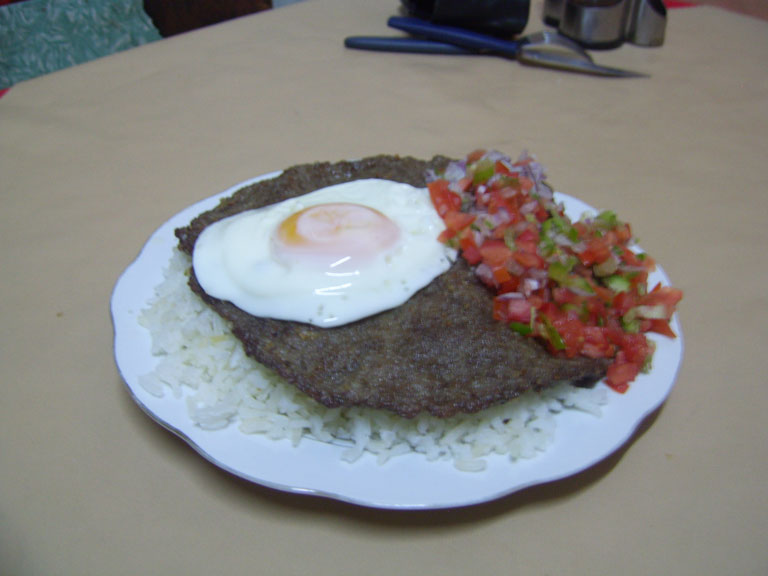 SilpanchoMeatSillp'anchu
🇧🇴 BoliviaLayered Bolivian meal with rice, potatoes, breaded meat, and fried eggs
Main dish, Lunch, Dinner
SilpanchoMeatSillp'anchu
🇧🇴 BoliviaLayered Bolivian meal with rice, potatoes, breaded meat, and fried eggs
Main dish, Lunch, Dinner
 Börek
🇹🇷 Turkey and 5 moreFlaky pastry filled with cheese, meat or vegetables, baked or fried
Pie or savoury pastry, Breakfast, Lunch
Börek
🇹🇷 Turkey and 5 moreFlaky pastry filled with cheese, meat or vegetables, baked or fried
Pie or savoury pastry, Breakfast, Lunch
 Potato pancakeVegetarian
🇧🇾 Belarus and 5 moreShallow-fried pancakes made from grated or mashed potato, common across Europe
Main dish, Lunch, Dinner
Potato pancakeVegetarian
🇧🇾 Belarus and 5 moreShallow-fried pancakes made from grated or mashed potato, common across Europe
Main dish, Lunch, Dinner