
Curry mee
Malaysian noodle soup with coconut milk and curry spices
Curry mee is a Malaysian noodle soup made with yellow noodles or rice vermicelli in a broth flavored with curry spices and coconut milk. Toppings can include tofu puffs, bean sprouts, chicken, seafood, and sambal. It is enjoyed across Malaysia, especially in Penang, and is also known as curry laksa in some regions.
- Curry mee is a signature noodle soup of Malaysia
- Penang is famous for its versions, including white curry mee
- Toppings range from tofu puffs to seafood and chicken
- Known as curry laksa in some Malaysian regions
- Instant noodle versions and creative twists exist
What is Curry mee?
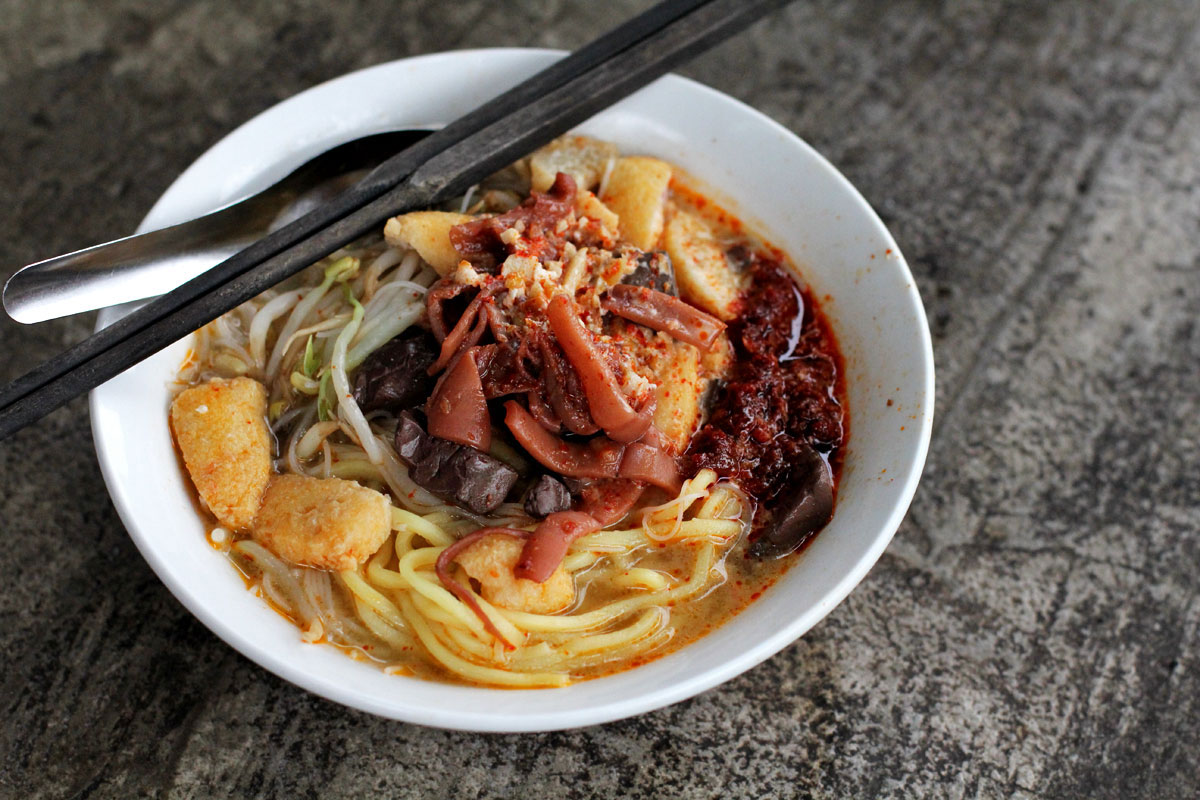
Curry mee is a noodle soup from Malaysia, known for its rich broth made with coconut milk and curry spices. The soup base is usually paired with yellow wheat noodles or thin rice vermicelli. Common toppings include tofu puffs, bean sprouts, chicken, prawns, and sambal, a spicy chili paste. Some versions add seafood like cockles or cuttlefish, and in Chinese-style preparations, pork products may be included. The dish is often garnished with fresh herbs and sometimes boiled eggs or fried bean curd. The result is a warming, aromatic soup with a balance of creamy, spicy, and savory flavors.
Where does Curry mee come from?
Curry mee is closely linked to Malaysian Chinese communities and is widely eaten in Malaysia. The dish is especially popular in Penang, where it is a staple for many locals. Over time, the name 'curry mee' has overlapped with 'curry laksa' in some regions, and similar coconut-based noodle soups are found in Singapore. The soup has been adapted to suit different dietary needs, with pork-free versions for Muslim customers. In Indonesia, a related dish called mie kari is found in Bandung, where it is made with beef and other local ingredients.
How is Curry mee made?
To make curry mee, noodles are cooked and placed in a bowl, then covered with a broth made from coconut milk and curry spices. Sambal or chili paste is often added for heat. The soup is topped with a variety of ingredients such as tofu puffs, bean sprouts, chicken, prawns, and sometimes seafood or pork, depending on the cook's background and diners' preferences. Herbs and sometimes boiled eggs or fried bean curd are added as garnish. Some versions use a thicker, drier sauce instead of a soup, especially in places like Ipoh.

How and when is Curry mee eaten?
Curry mee is usually served for lunch or dinner, either at home or in food stalls and restaurants. It is eaten as a main meal, often with chopsticks and a spoon to handle the noodles and broth. The dish is enjoyed by people from different backgrounds, and toppings can be chosen to suit personal taste or dietary rules. In Penang and George Town, it is a common everyday food, while in other cities, local versions may be more popular. Instant noodle versions are also available for convenience.
Kinds of Curry mee
Penang offers two main types: one with a chicken-based spicy broth, and another called white curry mee, which has a lighter coconut soup. In Ipoh, a dry version is made where the noodles are coated in a thick curry sauce rather than served in soup. Some modern takes include instant noodles flavored like curry mee, and even unusual combinations such as adding chocolate or Milo powder, which have appeared on social media. In Indonesia, mie kari uses beef and is similar to lontong kari but swaps rice cakes for noodles.
What Curry mee means
Curry mee is a beloved dish in Malaysia, especially in Penang, where some stalls have served it for decades and become local landmarks. It is seen as a staple of Malaysian Chinese cuisine but is enjoyed by many across the country. The dish adapts to local customs, with halal versions for Muslim diners. Its presence in instant noodle form and creative social media trends shows its lasting popularity and cultural flexibility.
Questions people ask about Curry mee
What is curry mee made of?
Curry mee is made with noodles, coconut milk, curry spices, and toppings like tofu puffs, bean sprouts, chicken, prawns, and sambal. Some versions also include seafood or pork products.
Where does curry mee come from?
Curry mee comes from Malaysia, where it is especially popular among Malaysian Chinese communities. Penang is particularly known for its versions of the dish.
Are there different types of curry mee?
Yes, there are several types. Penang has both spicy chicken-based and lighter coconut-based versions. Ipoh is known for a dry style, and Indonesia has a beef-based mie kari.
Is curry mee always spicy?
Curry mee usually has a spicy broth, but the level of heat can be adjusted by adding more or less sambal or chili paste.
Is curry mee suitable for vegetarians?
Some versions can be made vegetarian by leaving out meat and seafood and focusing on tofu, vegetables, and herbs, but many traditional recipes include animal products.
Good reading and sources
The facts on this page come from the Wikipedia article "Curry mee", written by its contributors and used under the CC BY-SA 4.0 licence, and from its Wikidata record (CC0). Thali rewrote the text in its own words, with AI assistance, and compares every page with the article to make sure no passage is copied. It may be reused under the same CC BY-SA 4.0 licence with a link back.
It may contain mistakes, and it is not dietary or allergy advice: recipes differ from cook to cook. If something is wrong, tell us. Last refreshed 2026-10-03.
More from Malaysia
All the food of Malaysia Biryani
🇮🇳 India and 5 moreRice and spiced meat or vegetables layered and cooked together
Main dish, Lunch, Dinner
Biryani
🇮🇳 India and 5 moreRice and spiced meat or vegetables layered and cooked together
Main dish, Lunch, Dinner
 Roti canaiரொட்டி சென்னை
🇲🇾 Malaysia and 5 moreUnleavened flatbread tossed thin and cooked until crisp, served with curry or dal
Bread, Breakfast, Snacks
Roti canaiரொட்டி சென்னை
🇲🇾 Malaysia and 5 moreUnleavened flatbread tossed thin and cooked until crisp, served with curry or dal
Bread, Breakfast, Snacks
 Lei chaVegan擂茶
🇨🇳 China and 3 moreA Hakka tea-based drink or soup made with ground tea, nuts, seeds and grains
Drink
Lei chaVegan擂茶
🇨🇳 China and 3 moreA Hakka tea-based drink or soup made with ground tea, nuts, seeds and grains
Drink
Its cousins elsewhere
All noodles and pasta RechtaMeatرشتة
🇩🇿 Algeria and 1 moreAlgerian handmade noodles served with chicken and vegetables in a spiced sauce
Main dish, Lunch, Dinner
RechtaMeatرشتة
🇩🇿 Algeria and 1 moreAlgerian handmade noodles served with chicken and vegetables in a spiced sauce
Main dish, Lunch, Dinner
 FideuàFish or seafood
🇪🇸 SpainSeafood and noodle dish from the Valencian coast, cooked in a wide shallow pan
Main dish, Lunch, Dinner
FideuàFish or seafood
🇪🇸 SpainSeafood and noodle dish from the Valencian coast, cooked in a wide shallow pan
Main dish, Lunch, Dinner
 Pasta
🇮🇹 Italy and 1 moreUnleavened dough shaped and cooked, a staple of Italian cuisine
Main dish, Lunch, Dinner
Pasta
🇮🇹 Italy and 1 moreUnleavened dough shaped and cooked, a staple of Italian cuisine
Main dish, Lunch, Dinner
 SpaghettiVegan
🇮🇹 Italy and 2 moreLong, thin pasta strands made from durum wheat and water
Noodle or pasta dish, Lunch, Dinner
SpaghettiVegan
🇮🇹 Italy and 2 moreLong, thin pasta strands made from durum wheat and water
Noodle or pasta dish, Lunch, Dinner