
Flaki
Polish soup made with strips of beef tripe in a spiced broth
Flaki is a traditional Polish soup featuring thin strips of beef tripe simmered in a seasoned broth. Known as one of Poland’s most notable dishes, it often includes vegetables and spices, and is sometimes served with meatballs or in a bread bowl. Flaki is especially popular at weddings and in restaurants across Poland.
- Flaki has been eaten in Poland since at least the 14th century
- Its main ingredient is thin strips of beef tripe
- It is a traditional wedding dish in Poland
- Warsaw-style flaki includes meatballs
- Ready-made flaki is sold in cans and jars across Poland
What is Flaki?
Flaki is a soup from Poland made with thin, cleaned strips of beef tripe. The tripe is cooked in a broth with beef, carrots, parsley, and a mix of spices such as bay leaf, allspice, black pepper, nutmeg, sweet paprika, and marjoram. The soup is hearty and aromatic, with a savory, slightly peppery taste. It is often served hot, sometimes in a bowl made from sourdough bread, and eaten with a bread roll on the side. The dish is known for its rich flavor and chewy texture from the tripe.
Where does Flaki come from?
Flaki has been eaten in Poland since at least the 14th century. It was a favorite of King Władysław II Jagiełło. The name comes from the Polish word for 'guts', and is related to German and Croatian words for tripe. Over centuries, flaki became a staple in Polish cuisine, alongside other iconic dishes like bigos and pierogi. Its long history and popularity have made it a symbol of traditional Polish cooking.
How is Flaki made?
To make flaki, beef tripe is thoroughly cleaned and sliced into thin strips. The tripe is simmered with beef, carrots, parsley, and spices such as bay leaf, allspice, marjoram, and black pepper. Some versions add tomato concentrate or skip the roux. In Warsaw-style flaki, meatballs are included. Ready-made versions, sometimes using pork tripe or poultry stomach, are widely sold in cans or jars. The soup is usually served hot, often with bread.
How and when is Flaki eaten?
Flaki is eaten mainly at lunch or dinner, and is a common choice for festive occasions like weddings, where it is served as one of the hot dishes. It is typically enjoyed with fresh bread or a bread roll, and in some restaurants, it comes in a carved-out loaf of sourdough bread. The soup is available in many Polish restaurants and is also sold ready-made in stores, making it accessible for everyday meals.
Kinds of Flaki
Regional and modern versions of flaki include Warsaw-style, which features meatballs, and Zamość-style, which is less spicy. Poultry flaki uses fowl stomach instead of beef tripe. Ready-made flaki can be found in cans or jars, sometimes using pork tripe. Some recipes add tomato concentrate, while others keep the broth clear. These variations reflect local tastes and convenience.
What Flaki means
Flaki is considered one of Poland’s most iconic soups, often mentioned alongside bigos and pierogi. Its presence at weddings highlights its role in Polish celebrations. The dish is widely available in restaurants and stores, and is recognized as a symbol of traditional Polish cuisine. Serving flaki in a bread bowl is a popular custom in restaurants.
Questions people ask about Flaki
What is flaki made of?
Flaki is made from thin strips of beef tripe cooked in a broth with beef, carrots, parsley, and spices such as bay leaf, allspice, marjoram, and black pepper.
Where does flaki come from?
Flaki is a traditional soup from Poland and has been eaten there since at least the 14th century.
How is flaki usually served?
Flaki is served hot, often with fresh bread or a bread roll, and sometimes in a bowl made from sourdough bread.
Are there different kinds of flaki?
Yes, regional versions include Warsaw-style with meatballs, Zamość-style with a milder broth, and poultry flaki made with fowl stomach.
Is flaki eaten on special occasions?
Flaki is a popular dish at Polish weddings and is also enjoyed as an everyday meal.
Good reading and sources
The facts on this page come from the Wikipedia article "Flaki", written by its contributors and used under the CC BY-SA 4.0 licence, and from its Wikidata record (CC0). Thali rewrote the text in its own words, with AI assistance, and compares every page with the article to make sure no passage is copied. It may be reused under the same CC BY-SA 4.0 licence with a link back.
It may contain mistakes, and it is not dietary or allergy advice: recipes differ from cook to cook. If something is wrong, tell us. Last refreshed 2026-10-03.
More from Poland
All the food of Poland Borscht
🇺🇦 Ukraine and 5 moreA sour soup of beetroot and vegetables, served hot or cold across Eastern Europe
Soup, Lunch, Dinner
Borscht
🇺🇦 Ukraine and 5 moreA sour soup of beetroot and vegetables, served hot or cold across Eastern Europe
Soup, Lunch, Dinner
 BigosMeat
🇵🇱 Poland and 5 morePolish stew of mixed meats, sauerkraut and cabbage, simmered with spices
Stew or curry, Breakfast, Dinner
BigosMeat
🇵🇱 Poland and 5 morePolish stew of mixed meats, sauerkraut and cabbage, simmered with spices
Stew or curry, Breakfast, Dinner
 Sour rye soup
🇵🇱 Poland and 3 moreA tangy soup made from fermented cereals, common in Central and Eastern Europe
Soup, Lunch, Dinner
Sour rye soup
🇵🇱 Poland and 3 moreA tangy soup made from fermented cereals, common in Central and Eastern Europe
Soup, Lunch, Dinner
 Cabbage soup
🇷🇺 Russia and 4 moreA hot soup made with cabbage or sauerkraut, common in Eastern and Central Europe
Soup, Lunch, Dinner
Cabbage soup
🇷🇺 Russia and 4 moreA hot soup made with cabbage or sauerkraut, common in Eastern and Central Europe
Soup, Lunch, Dinner
Its cousins elsewhere
All soups SuaasatMeat
🇬🇱 GreenlandGreenlandic soup made with seal, whale, caribou or seabird meat
Soup, Lunch, Dinner
SuaasatMeat
🇬🇱 GreenlandGreenlandic soup made with seal, whale, caribou or seabird meat
Soup, Lunch, Dinner
 Shchiщи
🇷🇺 Russia and 1 moreRussian cabbage soup, made with fresh or fermented cabbage
Soup, Lunch, Dinner
Shchiщи
🇷🇺 Russia and 1 moreRussian cabbage soup, made with fresh or fermented cabbage
Soup, Lunch, Dinner
 UkhaFish or seafoodуха
🇷🇺 Russia and 1 moreClear Russian fish soup with root vegetables and herbs
Soup
UkhaFish or seafoodуха
🇷🇺 Russia and 1 moreClear Russian fish soup with root vegetables and herbs
Soup
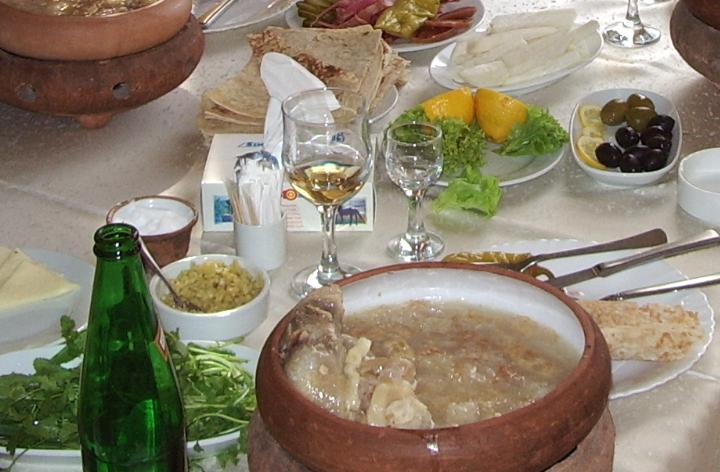 KhashMeatխաշ
🇦🇲 Armenia and 5 moreA rich stew of slow-cooked cow or sheep parts, eaten across the Caucasus and Middle East
Stew or curry, Breakfast
KhashMeatխաշ
🇦🇲 Armenia and 5 moreA rich stew of slow-cooked cow or sheep parts, eaten across the Caucasus and Middle East
Stew or curry, Breakfast