
Borscht
A sour soup of beetroot and vegetables, served hot or cold across Eastern Europe
Borscht is a sour soup, most often made with beetroot, meat or bone stock, and a mix of vegetables such as cabbage, potatoes, carrots, and onions. Originating in Ukraine, it is now found throughout Eastern and Central Europe, with each region offering its own version. Borscht can be served hot or cold and is often garnished with sour cream or dill.
- Borscht gets its red color from beetroot
- It can be served hot or cold
- UNESCO recognized Ukrainian borscht cooking as heritage in 2022
- Borscht is eaten for Christmas Eve in Poland and Passover by Jews
- There are vegetarian, meat, and fish versions
What is Borscht?
Borscht is a soup with a tangy, sweet-sour flavor, most recognized by its deep red color from beetroot. The base is usually a meat or bone stock, but vegetarian versions are common. Alongside beetroots, it often contains cabbage, potatoes, carrots, onions, and sometimes tomatoes or beans. The soup may be thick and hearty or clear and light, depending on the style. It is typically finished with a dollop of sour cream and a sprinkle of dill, and may be served hot or cold. The taste is earthy and slightly tart, with a gentle sweetness from the beets.
Where does Borscht come from?
Borscht's roots go back to an ancient soup made from pickled hogweed, a wild plant, which gave the dish its Slavic name. Over centuries, the soup evolved, with the Ukrainian beet-based version becoming the most widespread. Today, borscht is found throughout Eastern and Central Europe, with each country and region adapting it to local tastes and customs. UNESCO recognized the culture of Ukrainian borscht cooking as an Intangible Cultural Heritage in 2022, noting its significance across several countries.
How is Borscht made?
To make borscht, a stock is prepared from beef, pork, poultry, or bones, though vegetarian and fish versions exist. Vegetables such as beetroots, cabbage, potatoes, carrots, and onions are sautéed separately, often in animal fat or oil, then combined with the stock. The soup is flavored with herbs like dill, bay leaf, and garlic, and gets its signature sourness from fermented beet juice, vinegar, or lemon juice. Some recipes add tomato, beans, or smoked meats. The soup is simmered until the flavors meld, and is usually served with sour cream.


How and when is Borscht eaten?
Borscht is eaten at lunch or dinner, either as a main course or a starter. It is often served with sour cream, hard-boiled eggs, or potatoes, and sometimes with bread or filled dumplings such as uszka or pampushky. In Poland, clear borscht is served at Christmas Eve, while Jewish communities may prepare it for Passover. The soup can be enjoyed hot in winter or cold in summer, making it a year-round dish. Customs and accompaniments vary by region and occasion.
Kinds of Borscht
There are many regional and cultural versions of borscht. Ukrainian borscht varies by oblast, with differences in stock, vegetables, and garnishes. Polish barszcz is often a clear, ruby-red broth, sometimes served with dumplings or pastries. Jewish borscht comes in meat and dairy forms, and may be sweet or tart. Russian styles include borscht with meatballs or fish, and vegetarian Lenten versions. There are also green and white borschts, made with sorrel or rye, and cold versions for summer.
What Borscht means
Borscht holds a special place in the cultures of Ukraine, Poland, Russia, and Jewish communities, among others. It is a symbol of hospitality in Ukraine and features in wedding traditions. The soup is tied to religious observances, such as Christmas Eve in Poland and Passover for Jews. In 2022, UNESCO listed Ukrainian borscht cooking as a cultural heritage in need of safeguarding. Borscht is a dish of pride and identity for many, with each group claiming its own version.
When Borscht is on the table
Questions people ask about Borscht
What is borscht made of?
Borscht is made with beetroot, cabbage, potatoes, carrots, onions, and often meat or bone stock. It is flavored with herbs and has a sour taste from fermented beet juice, vinegar, or lemon juice. Vegetarian and fish versions are also common.
Where does borscht come from?
Borscht originated in Ukraine and spread throughout Eastern and Central Europe. Each region has its own version, and it is now found in countries like Russia, Poland, Lithuania, Belarus, Romania, and Moldova.
Is borscht always red and made with beets?
While the most famous borscht is red from beetroot, there are also green borscht made with sorrel and white borscht made with rye. Some versions do not use beets at all.
How is borscht usually served?
Borscht can be served hot or cold, often with sour cream and dill. It may come with bread, potatoes, or dumplings, and is eaten at lunch or dinner.
Is borscht a vegetarian dish?
Borscht can be vegetarian, made with vegetable or mushroom broth, but many versions use meat or bone stock. There are also fish-based and vegan varieties.
Good reading and sources
- Encyclopaedia BritannicaArticle
- James Meek embarks on a journey to find out the origins of the Soviet dish borshchThe Guardian, Article
- П'ять цікавих фактів про борщ, яких ви не зналиBBC, Article
- Culture of Ukrainian borscht cookingUNESCO, Article
The facts on this page come from the Wikipedia article "Borscht", written by its contributors and used under the CC BY-SA 4.0 licence, and from its Wikidata record (CC0). Thali rewrote the text in its own words, with AI assistance, and compares every page with the article to make sure no passage is copied. It may be reused under the same CC BY-SA 4.0 licence with a link back.
It may contain mistakes, and it is not dietary or allergy advice: recipes differ from cook to cook. If something is wrong, tell us. Last refreshed 2026-10-03.
More from Ukraine
All the food of Ukraine Shchiщи
🇷🇺 Russia and 1 moreRussian cabbage soup, made with fresh or fermented cabbage
Soup, Lunch, Dinner
Shchiщи
🇷🇺 Russia and 1 moreRussian cabbage soup, made with fresh or fermented cabbage
Soup, Lunch, Dinner
 Rassolnikрассольник
🇷🇺 Russia and 3 moreRussian soup with pickled cucumber brine, barley, and kidneys
Soup, Lunch, Dinner
Rassolnikрассольник
🇷🇺 Russia and 3 moreRussian soup with pickled cucumber brine, barley, and kidneys
Soup, Lunch, Dinner
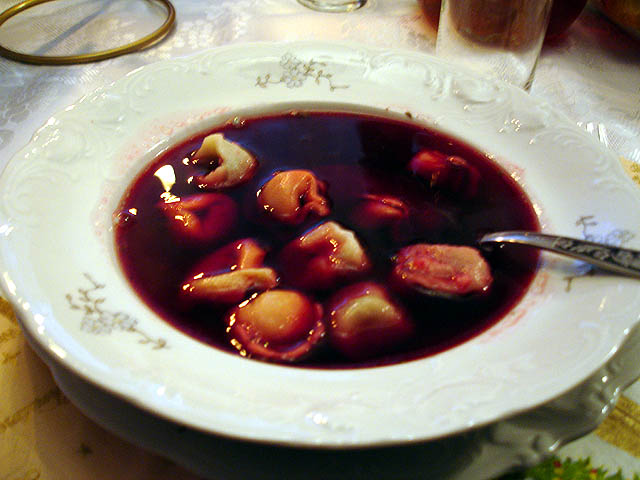 Uszka
🇵🇱 Poland and 2 moreSmall twisted dumplings filled with mushrooms or meat, often served in borscht
Dumpling, Dinner
Uszka
🇵🇱 Poland and 2 moreSmall twisted dumplings filled with mushrooms or meat, often served in borscht
Dumpling, Dinner
 VodkaVeganwódka
🇷🇺 Russia and 5 moreA clear spirit distilled from grains or potatoes, known for its neutral taste
Drink
VodkaVeganwódka
🇷🇺 Russia and 5 moreA clear spirit distilled from grains or potatoes, known for its neutral taste
Drink
Its cousins elsewhere
All soups Caldo de polloMeat
🇲🇽 MexicoMexican chicken soup with large pieces of meat and vegetables
Soup, Lunch, Dinner
Caldo de polloMeat
🇲🇽 MexicoMexican chicken soup with large pieces of meat and vegetables
Soup, Lunch, Dinner
 Lentil soupVegan
🇪🇬 Egypt and 5 moreA hearty soup made from lentils, often with vegetables and spices
Soup, Lunch, Dinner
Lentil soupVegan
🇪🇬 Egypt and 5 moreA hearty soup made from lentils, often with vegetables and spices
Soup, Lunch, Dinner
 PitiMeat
🇦🇿 Azerbaijan and 3 moreMutton and chickpea stew slow-cooked in a sealed crock
Stew or curry, Lunch, Dinner
PitiMeat
🇦🇿 Azerbaijan and 3 moreMutton and chickpea stew slow-cooked in a sealed crock
Stew or curry, Lunch, Dinner
 Clam chowderFish or seafood
🇺🇸 United StatesA hearty American soup with clams, potatoes, and regional twists
Soup, Lunch, Dinner
Clam chowderFish or seafood
🇺🇸 United StatesA hearty American soup with clams, potatoes, and regional twists
Soup, Lunch, Dinner