
Gołąbki
Cabbage leaves filled with meat and grains, rolled and cooked
Gołąbki are cabbage rolls from Poland, where cooked cabbage leaves are wrapped around a filling that usually includes minced pork or beef, onions, and rice or another grain. They are a common part of Polish family gatherings and holidays, but can also be made with vegetarian fillings such as mashed potatoes or barley.
- Cabbage leaves are filled with meat, grains, and onions
- Popular at Polish weddings and Christmas meals
- Vegetarian versions use potatoes, barley, or eggs
- Known by many names across Central and Eastern Europe
- Sometimes served with tomato sauce
What is Gołąbki?
Gołąbki are rolls made by wrapping cooked cabbage leaves around a filling, most often a mixture of ground pork or beef, onions, and a starchy ingredient such as rice, kasha (buckwheat groats), or potatoes. The rolls are shaped by folding the cabbage around the filling and then cooking them, often with tomato sauce. Vegetarian versions use ingredients like mashed potatoes, barley, or chopped boiled eggs. The finished rolls are soft and hold their shape, with the cabbage providing a mild, tender wrapper for the savory filling.
Where does Gołąbki come from?
Gołąbki are a well-known part of Polish cooking and are also found in many Central and Eastern European cuisines. The name in Polish means 'little pigeons,' possibly because the rolls look a bit like small birds, though some linguists suggest the word may have roots in Persian or Armenian words for cabbage. The dish is related to other stuffed cabbage recipes across Europe and the Middle East, with each region using its own preferred fillings and sometimes different leaves.
How is Gołąbki made?
To make gołąbki, cabbage heads are boiled until the leaves are soft enough to separate. Each leaf is filled with a mixture that typically includes ground meat, onions, and rice or another grain. The leaf is folded around the filling to form a compact roll. These are then arranged in a pot, sometimes layered with tomato sauce or vegetables, and simmered until everything is cooked through. Some versions use mashed potatoes, barley, or eggs instead of meat.

How and when is Gołąbki eaten?
Gołąbki are served as a main dish, often for lunch or dinner. They are especially popular at family gatherings, weddings, and holiday meals like Christmas. The rolls can be enjoyed hot, sometimes with a spoonful of tomato sauce or alongside vegetables. In some places, they are also eaten cold. They are usually eaten with a fork and knife, and can be served alone or as part of a larger meal.
Kinds of Gołąbki
Across Central and Eastern Europe, similar cabbage rolls go by different names and may use local grains or meats. In Lithuania, they are called balandėliai; in Russia, golubtsy; in Ukraine, holubtsi. Some versions use fermented cabbage leaves or substitute vine leaves. Vegetarian fillings, such as barley, mashed potatoes, or eggs, are also traditional in some areas. The dish has also been adapted by Polish communities abroad, especially in the United States.
What Gołąbki means
Gołąbki are a symbol of Polish hospitality and are often made for special occasions like weddings and Christmas. They are a dish that brings families together, with recipes passed down through generations. In Polish-American communities, gołąbki are sometimes called 'stuffed cabbage' or by playful nicknames. The dish is part of a broader tradition of stuffed vegetable recipes found throughout Europe and the Middle East.
When Gołąbki is on the table
Questions people ask about Gołąbki
What are gołąbki made of?
Gołąbki are made by wrapping cooked cabbage leaves around a filling, usually ground pork or beef, onions, and rice or another grain. Vegetarian versions can use mashed potatoes, barley, or eggs.
Where do gołąbki come from?
Gołąbki are a traditional dish from Poland and are also found in the cuisines of neighboring Central and Eastern European countries.
Are gołąbki always made with meat?
No, while meat is common, gołąbki can also be made with vegetarian fillings such as mashed potatoes, barley, or boiled eggs.
When are gołąbki usually eaten?
Gołąbki are eaten for lunch or dinner and are especially popular at family celebrations, weddings, and Christmas.
What do gołąbki taste like?
They have a mild, savory flavor, with tender cabbage leaves and a filling that can be meaty or starchy, depending on the ingredients used.
Good reading and sources
The facts on this page come from the Wikipedia article "Gołąbki", written by its contributors and used under the CC BY-SA 4.0 licence, and from its Wikidata record (CC0). Thali rewrote the text in its own words, with AI assistance, and compares every page with the article to make sure no passage is copied. It may be reused under the same CC BY-SA 4.0 licence with a link back.
It may contain mistakes, and it is not dietary or allergy advice: recipes differ from cook to cook. If something is wrong, tell us. Last refreshed 2026-10-03.
More from Poland
All the food of Poland Pancake
🇺🇸 United States and 5 moreFlat cakes made from batter, cooked on a griddle or pan and served sweet or savoury
Main dish, Breakfast, Snacks
Pancake
🇺🇸 United States and 5 moreFlat cakes made from batter, cooked on a griddle or pan and served sweet or savoury
Main dish, Breakfast, Snacks
 BigosMeat
🇵🇱 Poland and 5 morePolish stew of mixed meats, sauerkraut and cabbage, simmered with spices
Stew or curry, Breakfast, Dinner
BigosMeat
🇵🇱 Poland and 5 morePolish stew of mixed meats, sauerkraut and cabbage, simmered with spices
Stew or curry, Breakfast, Dinner
 Potato pancakeVegetarian
🇧🇾 Belarus and 5 moreShallow-fried pancakes made from grated or mashed potato, common across Europe
Main dish, Lunch, Dinner
Pierogi
🇵🇱 Poland and 6 moreDumplings of unleavened dough filled with savory or sweet mixtures
Dumpling, Lunch, Dinner
Potato pancakeVegetarian
🇧🇾 Belarus and 5 moreShallow-fried pancakes made from grated or mashed potato, common across Europe
Main dish, Lunch, Dinner
Pierogi
🇵🇱 Poland and 6 moreDumplings of unleavened dough filled with savory or sweet mixtures
Dumpling, Lunch, Dinner
Its cousins elsewhere
All main dishes Japanese curryMeatカレー
🇯🇵 Japan and 2 moreA thick, mildly spiced curry sauce served with rice, noodles or bread
Main dish, Lunch, Dinner
Japanese curryMeatカレー
🇯🇵 Japan and 2 moreA thick, mildly spiced curry sauce served with rice, noodles or bread
Main dish, Lunch, Dinner
 Rocoto rellenoMeat
🇵🇪 PeruPeruvian stuffed rocoto peppers baked with meat and cheese
Main dish, Lunch, Dinner
Rocoto rellenoMeat
🇵🇪 PeruPeruvian stuffed rocoto peppers baked with meat and cheese
Main dish, Lunch, Dinner
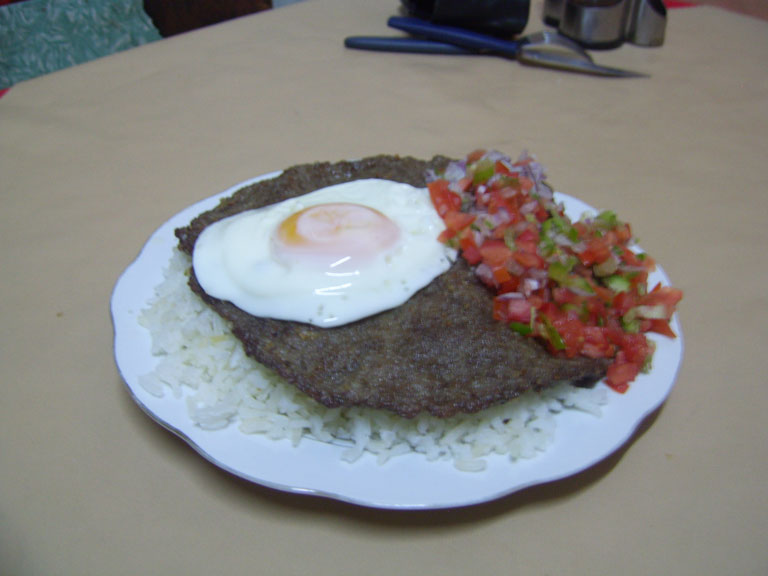 SilpanchoMeatSillp'anchu
🇧🇴 BoliviaLayered Bolivian meal with rice, potatoes, breaded meat, and fried eggs
Main dish, Lunch, Dinner
SilpanchoMeatSillp'anchu
🇧🇴 BoliviaLayered Bolivian meal with rice, potatoes, breaded meat, and fried eggs
Main dish, Lunch, Dinner
 Khinkaliხინკალი
🇬🇪 GeorgiaGeorgian dumplings with spiced meat or vegetable filling and a juicy broth inside
Dumpling, Lunch, Dinner
Khinkaliხინკალი
🇬🇪 GeorgiaGeorgian dumplings with spiced meat or vegetable filling and a juicy broth inside
Dumpling, Lunch, Dinner