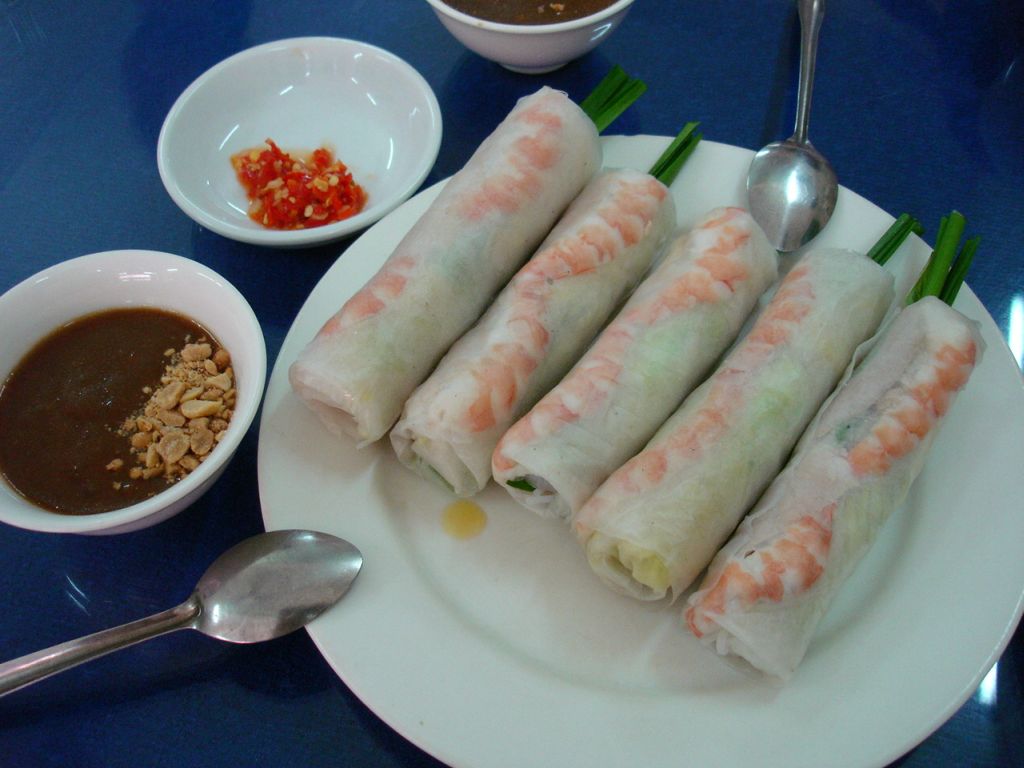
Gỏi cuốn
Vietnamese rolls of pork, shrimp, noodles and herbs wrapped in rice paper
Gỏi cuốn are fresh Vietnamese rolls made by wrapping pork, shrimp, rice vermicelli, and herbs in rice paper. Served at room temperature and not fried, they are a popular dish across Vietnam, often enjoyed with hoisin-peanut or fish sauce-based dips, especially in social gatherings.
- Gỏi cuốn are served fresh, not fried, unlike chả giò.
- Main ingredients include pork, shrimp, rice vermicelli, and rice paper.
- Dipping sauces like hoisin-peanut or fish sauce are typical accompaniments.
- Known by many names: nem cuốn, summer roll, salad roll, cold roll.
- Popular as a shared dish at Vietnamese gatherings.
What is Gỏi cuốn?
Gỏi cuốn are Vietnamese rolls made by wrapping slices of pork, shrimp, rice vermicelli noodles, lettuce, and herbs like Thai basil in thin rice paper sheets. The rolls are served fresh, not fried, so the rice paper is soft and slightly translucent, showing the colorful fillings inside. The taste is light and fresh, with a mix of savory pork, sweet shrimp, and aromatic herbs. They are usually served with a flavorful dipping sauce, such as a hoisin-peanut blend or a tangy fish sauce mix.
Where does Gỏi cuốn come from?
Gỏi cuốn comes from Vietnam, where it is enjoyed throughout the country under different names. In the south, it is called gỏi cuốn, while in the north it goes by nem cuốn and in central regions simply as rice paper rolls. The dish is closely tied to Vietnamese home cooking and group meals, where people gather to roll and eat together. The practice of hand-making rice paper is a common sight in Vietnamese villages, reflecting the dish’s roots in everyday life.
How is Gỏi cuốn made?
To make gỏi cuốn, rice paper is briefly dipped in water to soften it, then laid flat. Pork, shrimp, rice vermicelli, lettuce, and herbs are arranged on top. The paper is rolled up tightly to enclose the fillings. The rolls are not cooked further and are served as is. They are typically accompanied by dipping sauces, such as hoisin sauce mixed with coconut water, garlic, sugar, chili, and ground peanuts, or a fish sauce-based nước chấm.


How and when is Gỏi cuốn eaten?
Gỏi cuốn is eaten at room temperature, often as a light meal or snack. It is common to serve them at home with family or friends, where everyone assembles their own rolls. The rolls are dipped into sauces before eating. They can be part of a larger meal or served as an appetizer. In Vietnam and abroad, they are also found in restaurants and street stalls, enjoyed for their freshness and versatility.
Kinds of Gỏi cuốn
The fillings for gỏi cuốn can vary widely. Besides the classic pork and shrimp, some versions use Vietnamese sausage, beef poached in lemongrass, grilled sausage, braised pork, fish, pan-fried seafood, or egg. Vegan options might include tofu, mushrooms, or avocado. In Cambodia, a similar roll called nime chao is made with a different technique, and in Japan, shrimp-filled versions are known as nama harumaki.
What Gỏi cuốn means
Gỏi cuốn is a familiar part of Vietnamese daily life, valued for its freshness and the way it brings people together. Its many names reflect regional differences and its spread to other countries. In the West, it is often called salad roll, summer roll, or Vietnamese spring roll. Making and eating gỏi cuốn is often a communal activity, especially at home, highlighting its role in social gatherings.
Questions people ask about Gỏi cuốn
What is gỏi cuốn made of?
Gỏi cuốn is made by wrapping pork, shrimp, rice vermicelli noodles, lettuce, and herbs like Thai basil in softened rice paper. Some versions may use other proteins or vegetables.
Where does gỏi cuốn come from?
Gỏi cuốn originates from Vietnam and is enjoyed throughout the country, with different names in each region. It is also popular in places like Cambodia, Australia, and the United States.
How is gỏi cuốn different from fried spring rolls?
Unlike fried spring rolls (chả giò), gỏi cuốn is served fresh and not cooked after assembly. The rice paper remains soft, and the fillings are not fried.
What sauces are served with gỏi cuốn?
Gỏi cuốn is commonly served with hoisin-peanut sauce or nước chấm, a dipping sauce based on fish sauce, garlic, and chili.
Are there vegetarian or vegan versions of gỏi cuốn?
Yes, vegetarian and vegan versions use fillings like tofu, mushrooms, or avocado instead of meat or seafood.
Good reading and sources
- The Find: Dat Thanh in WestminsterLos Angeles Times, Article
- Strawberry, avocado and spinach summer rollsBBC, Recipe
The facts on this page come from the Wikipedia article "Gỏi cuốn", written by its contributors and used under the CC BY-SA 4.0 licence, and from its Wikidata record (CC0). Thali rewrote the text in its own words, with AI assistance, and compares every page with the article to make sure no passage is copied. It may be reused under the same CC BY-SA 4.0 licence with a link back.
It may contain mistakes, and it is not dietary or allergy advice: recipes differ from cook to cook. If something is wrong, tell us. Last refreshed 2026-10-03.
More from Vietnam
All the food of Vietnam Mu kropMeat
🇹🇭 Thailand and 4 moreThai-style fried pork belly with a crunchy golden skin
Main dish, Lunch, Dinner
Mu kropMeat
🇹🇭 Thailand and 4 moreThai-style fried pork belly with a crunchy golden skin
Main dish, Lunch, Dinner
 Phophở
🇻🇳 Vietnam and 5 moreVietnamese rice noodle soup with beef or chicken in aromatic broth
Soup, Breakfast, Lunch
Phophở
🇻🇳 Vietnam and 5 moreVietnamese rice noodle soup with beef or chicken in aromatic broth
Soup, Breakfast, Lunch
 Pâté
🇫🇷 France and 5 moreA smooth or coarse spread made from minced meat, liver, or vegetables
Sauce, pickle or ferment
Pâté
🇫🇷 France and 5 moreA smooth or coarse spread made from minced meat, liver, or vegetables
Sauce, pickle or ferment
Its cousins elsewhere
All main dishes AspicMeat
🇫🇷 France and 5 moreMeat or fish set in savoury gelatin, served cold as an appetizer or festive dish
Main dish, Lunch, Dinner
AspicMeat
🇫🇷 France and 5 moreMeat or fish set in savoury gelatin, served cold as an appetizer or festive dish
Main dish, Lunch, Dinner
 Tamaletamal
🇲🇽 Mexico and 5 moreCorn dough filled and steamed in a leaf wrapper, with many regional fillings
Main dish, Breakfast, Lunch
Tamaletamal
🇲🇽 Mexico and 5 moreCorn dough filled and steamed in a leaf wrapper, with many regional fillings
Main dish, Breakfast, Lunch
 FeijoadaMeat
🇵🇹 Portugal and 4 moreBean stew with pork or beef, common in Portugal and Brazil
Stew or curry, Lunch, Dinner
FeijoadaMeat
🇵🇹 Portugal and 4 moreBean stew with pork or beef, common in Portugal and Brazil
Stew or curry, Lunch, Dinner
 Sunday roast
🇬🇧 United Kingdom and 5 moreA meal of roasted meat, potatoes and vegetables, served on Sundays in Britain and beyond
Main dish, Lunch, Dinner
Sunday roast
🇬🇧 United Kingdom and 5 moreA meal of roasted meat, potatoes and vegetables, served on Sundays in Britain and beyond
Main dish, Lunch, Dinner