🇭🇰 The food of Hong Kong
24 dishes from Hong Kong, best known first, across 1 city or region.
Hong Kong cooking blends Cantonese roots with a wide mix of outside influences, from British to Japanese and Southeast Asian. Its food stands out for creative combinations, constant adaptation, and a strong culture of eating out, shaped by the city’s dense population and history as a trading hub.
- Rice is the main staple in Hong Kong homes.
- Cha Chaan Teng cafes serve local takes on Western food.
- Seafood became a specialty from the 1960s onward.
- Egg tarts and milk tea are local favorites.
- Many Hong Kong chefs trained in pre-1949 Guangzhou.
The cooking of Hong Kong
Hong Kong’s food is shaped by its Cantonese majority but draws from many sources: British colonial rule, waves of migrants from other parts of China, and its role as an international port. The city’s cooking is known for variety and innovation, with chefs adapting foreign dishes and ingredients into local styles. Eating out is a big part of life, partly because homes are small and people work long hours. The restaurant scene is highly competitive, and food is often chosen for its look and aroma as much as taste. Over time, Hong Kong has become a place where traditional Chinese techniques meet global trends, creating a cuisine that is both rooted and ever-changing.
Staple foods in Hong Kong
Rice is the main staple at home, with fresh produce, meat, and seafood bought in small amounts from local shops or supermarkets. Cantonese dishes dominate, but Hakka, Teochew, and Shanghainese foods also appear. The city’s small kitchens and busy schedules mean people often eat out or get takeaway. Seafood and game have become more popular since the 1960s, and foreign ingredients like asparagus and crayfish are now common.
From region to region in Hong Kong
Hong Kong’s food scene reflects its compact geography and diverse population. While Cantonese cooking is the base, neighborhoods with Hakka, Teochew, or Shanghainese communities offer their own specialties. Over time, Japanese, Thai, and other Asian cuisines have become popular, especially among younger people. Fine-dining Cantonese restaurants and specialist ethnic eateries now exist side by side, showing both tradition and openness to new tastes.
At the table in Hong Kong
Meals are often eaten out due to small homes and busy work lives. Shopping for ingredients happens frequently and in small amounts to ensure freshness. Dining has shifted from a simple necessity to an experience focused on presentation and flavor. Celebratory meals are usually held in restaurants rather than at home, and takeaway is common.
Festival and religious food in Hong Kong
In the past, meat was reserved for festivals and special occasions. Birthday celebrations were often catered at home, but now are more likely to be held in restaurants. Traditional banquets, sometimes featuring elaborate dishes, remain important for weddings and major events.
The facts in this overview come from the Wikipedia article "Hong Kong cuisine", written by its contributors and used under the CC BY-SA 4.0 licence. Thali rewrote the text in its own words, with AI assistance, and compares every page with the article to make sure no passage is copied. It may be reused under the same CC BY-SA 4.0 licence with a link back.
Cities and regions of Hong Kong
 French toast
🇫🇷 France and 5 moreBread soaked in egg and milk, pan-fried and served sweet or savoury
Main dish, Breakfast, Snacks
French toast
🇫🇷 France and 5 moreBread soaked in egg and milk, pan-fried and served sweet or savoury
Main dish, Breakfast, Snacks
 Bubble tea珍珠奶茶
🇹🇼 Taiwan and 5 moreSweet tea with chewy tapioca pearls, served hot or cold
Drink
Bubble tea珍珠奶茶
🇹🇼 Taiwan and 5 moreSweet tea with chewy tapioca pearls, served hot or cold
Drink
 Soy milkVegan豆奶
🇨🇳 China and 5 moreA plant-based drink made by soaking, grinding, and boiling soybeans
Drink, Breakfast, Snacks
Soy milkVegan豆奶
🇨🇳 China and 5 moreA plant-based drink made by soaking, grinding, and boiling soybeans
Drink, Breakfast, Snacks
 Mooncake月饼 / 月餅
🇨🇳 China and 5 moreA round Chinese pastry with sweet or nutty filling, eaten at the Mid-Autumn Festival
Pie or savoury pastry, Tea time, Snacks
Mooncake月饼 / 月餅
🇨🇳 China and 5 moreA round Chinese pastry with sweet or nutty filling, eaten at the Mid-Autumn Festival
Pie or savoury pastry, Tea time, Snacks
 Bento弁当
🇯🇵 Japan and 4 moreA Japanese meal packed in a box, often with rice, meat or fish, and vegetables
Main dish, Lunch
Dim sum点心
🇨🇳 China and 5 moreA variety of small Chinese dishes served with tea, often for brunch
Main dish, Breakfast, Lunch
Bento弁当
🇯🇵 Japan and 4 moreA Japanese meal packed in a box, often with rice, meat or fish, and vegetables
Main dish, Lunch
Dim sum点心
🇨🇳 China and 5 moreA variety of small Chinese dishes served with tea, often for brunch
Main dish, Breakfast, Lunch
 Bánh mì
🇻🇳 Vietnam and 5 moreA Vietnamese baguette sandwich with savory fillings and pickled vegetables
Sandwich or wrap, Breakfast, Snacks
Bánh mì
🇻🇳 Vietnam and 5 moreA Vietnamese baguette sandwich with savory fillings and pickled vegetables
Sandwich or wrap, Breakfast, Snacks
 Pu'erVegan普洱茶
🇨🇳 China and 1 moreAged and fermented tea from Yunnan, shaped into cakes or bricks
Drink
Pu'erVegan普洱茶
🇨🇳 China and 1 moreAged and fermented tea from Yunnan, shaped into cakes or bricks
Drink
 Fish ball魚丸
🇨🇳 China and 5 moreSoft balls of minced fish, boiled or fried, eaten across Asia and Northern Europe
Main dish, Lunch, Dinner
Fish ball魚丸
🇨🇳 China and 5 moreSoft balls of minced fish, boiled or fried, eaten across Asia and Northern Europe
Main dish, Lunch, Dinner
 Egg tartVegetarian蛋撻
🇨🇳 China and 5 moreA small pastry tart with a sweet egg custard filling, found in Cantonese cuisine
Pie or savoury pastry, Snacks, Tea time
Egg tartVegetarian蛋撻
🇨🇳 China and 5 moreA small pastry tart with a sweet egg custard filling, found in Cantonese cuisine
Pie or savoury pastry, Snacks, Tea time
 Stinky tofuVegetarian臭豆腐
🇨🇳 China and 3 moreFermented tofu with a strong aroma, sold as a snack in China and Taiwan
Street food, Snacks
Stinky tofuVegetarian臭豆腐
🇨🇳 China and 3 moreFermented tofu with a strong aroma, sold as a snack in China and Taiwan
Street food, Snacks
 Xiaolongbao小笼包
🇨🇳 China and 1 moreSmall steamed buns with a savoury filling and hot soup inside
Dumpling, Breakfast, Snacks
Xiaolongbao小笼包
🇨🇳 China and 1 moreSmall steamed buns with a savoury filling and hot soup inside
Dumpling, Breakfast, Snacks
 Tamago kake gohan卵かけご飯
🇯🇵 Japan and 2 moreCooked rice mixed with raw egg and soy sauce, a classic Japanese breakfast
Main dish, Breakfast
Tamago kake gohan卵かけご飯
🇯🇵 Japan and 2 moreCooked rice mixed with raw egg and soy sauce, a classic Japanese breakfast
Main dish, Breakfast
 Char siuMeat叉燒
🇨🇳 China and 5 moreCantonese-style pork, marinated and roasted until glazed and red
Main dish, Lunch, Dinner
Char siuMeat叉燒
🇨🇳 China and 5 moreCantonese-style pork, marinated and roasted until glazed and red
Main dish, Lunch, Dinner
 Buddha's delightVegan羅漢齋
🇨🇳 China and 2 moreA Chinese vegetarian medley of vegetables, fungi and tofu simmered in soy sauce
Main dish, Lunch, Dinner
Buddha's delightVegan羅漢齋
🇨🇳 China and 2 moreA Chinese vegetarian medley of vegetables, fungi and tofu simmered in soy sauce
Main dish, Lunch, Dinner
 DouhuaVegan豆花
🇨🇳 China and 5 moreSoft tofu served as a sweet or savoury snack across East and Southeast Asia
Sweet or dessert, Breakfast, Snacks
DouhuaVegan豆花
🇨🇳 China and 5 moreSoft tofu served as a sweet or savoury snack across East and Southeast Asia
Sweet or dessert, Breakfast, Snacks
 Dandan noodlesMeat担担面 / 擔擔麵
🇨🇳 China and 2 moreSichuan wheat noodles with spicy sauce, pickled vegetables, and minced pork
Noodle or pasta dish, Lunch, Dinner
Dandan noodlesMeat担担面 / 擔擔麵
🇨🇳 China and 2 moreSichuan wheat noodles with spicy sauce, pickled vegetables, and minced pork
Noodle or pasta dish, Lunch, Dinner
 Tong sui糖水
🇨🇳 China and 5 moreChinese sweet soups served as dessert at the end of a meal
Sweet or dessert
Tong sui糖水
🇨🇳 China and 5 moreChinese sweet soups served as dessert at the end of a meal
Sweet or dessert
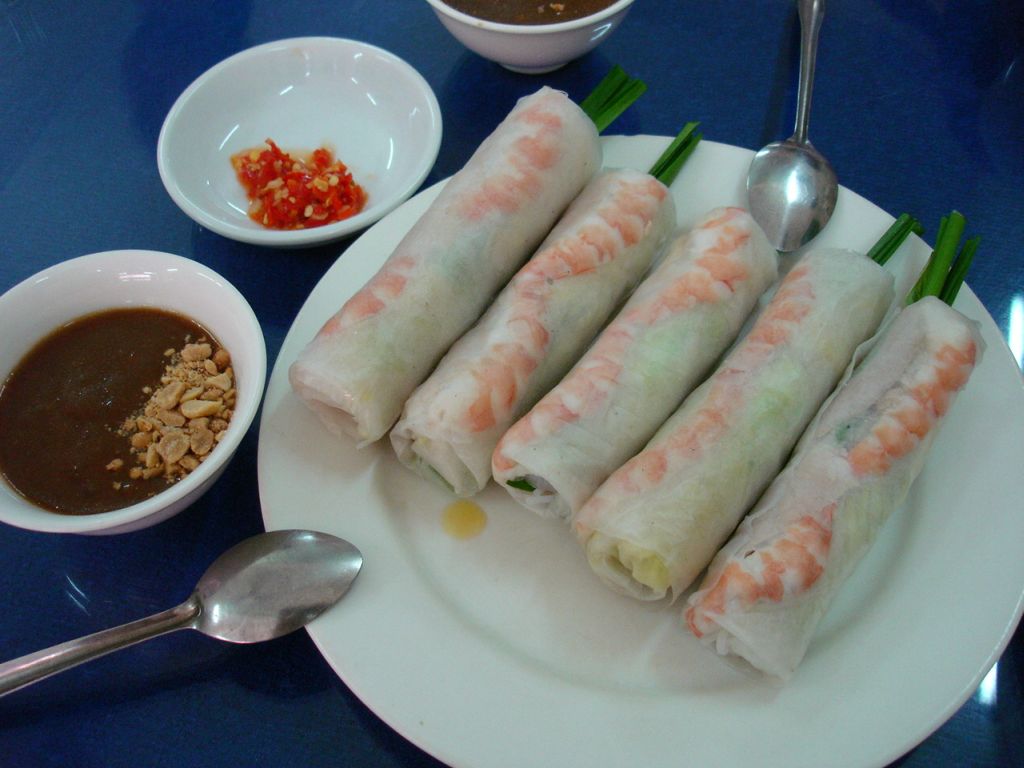 Gỏi cuốn
🇻🇳 Vietnam and 5 moreVietnamese rolls of pork, shrimp, noodles and herbs wrapped in rice paper
Main dish, Lunch, Dinner
Gỏi cuốn
🇻🇳 Vietnam and 5 moreVietnamese rolls of pork, shrimp, noodles and herbs wrapped in rice paper
Main dish, Lunch, Dinner
 Wonton noodlesMeat雲吞麵
🇨🇳 China and 5 moreEgg noodles in broth with wonton dumplings, from Cantonese cooking
Noodle or pasta dish, Lunch, Dinner
Wonton noodlesMeat雲吞麵
🇨🇳 China and 5 moreEgg noodles in broth with wonton dumplings, from Cantonese cooking
Noodle or pasta dish, Lunch, Dinner
 Hong Kong-style milk teaVegetarian港式奶茶
🇭🇰 Hong Kong and 1 moreStrong black tea with evaporated milk, served hot or cold in Hong Kong cafés
Drink, Breakfast, Lunch
Hong Kong-style milk teaVegetarian港式奶茶
🇭🇰 Hong Kong and 1 moreStrong black tea with evaporated milk, served hot or cold in Hong Kong cafés
Drink, Breakfast, Lunch
 Egg waffleVegetarian雞蛋仔
🇭🇰 Hong Kong and 1 moreCrispy, bubble-shaped waffles made from egg-rich batter, a Hong Kong street snack
Street food, Snacks
Egg waffleVegetarian雞蛋仔
🇭🇰 Hong Kong and 1 moreCrispy, bubble-shaped waffles made from egg-rich batter, a Hong Kong street snack
Street food, Snacks
 Pineapple bunVegetarian菠蘿包
🇭🇰 Hong Kong and 3 moreA sweet bun with a crunchy, golden cookie crust, popular in Hong Kong
Sweet or dessert, Breakfast, Tea time
Pineapple bunVegetarian菠蘿包
🇭🇰 Hong Kong and 3 moreA sweet bun with a crunchy, golden cookie crust, popular in Hong Kong
Sweet or dessert, Breakfast, Tea time
 Siu yukMeat燒肉
🇨🇳 China and 1 moreCantonese roast pork with crisp skin and tender meat
Main dish
Siu yukMeat燒肉
🇨🇳 China and 1 moreCantonese roast pork with crisp skin and tender meat
Main dish
Photo credits on this page
The small pictures above come from Wikimedia Commons under free licences. Some are cropped to fit.
- French toast: Jonathunder, CC BY-SA 3.0, source
- Siu yuk: avlxyz of Flickr, CC BY-SA 2.0, source
- Tamago kake gohan: Unknown author, CC BY-SA 3.0, source
- Egg tart: Homkinsming, CC BY-SA 3.0, source
- Bento: Blue Lotus, CC BY 2.0, source
- Hong Kong-style milk tea: WiNG, CC BY-SA 3.0, source
- Stinky tofu: The original uploader was Richy at Chinese Wikipedia ., CC BY-SA 3.0, source
- Soy milk: Kjokkenutstyr, CC BY-SA 2.0, source
- Bubble tea: Battlesnake1, CC0, source
- Pu'er: soultea.de /André Helbig, CC BY 3.0, source
- Xiaolongbao: Eason Lai, CC BY-SA 2.0, source
- Char siu: Edsel Little, CC BY-SA 2.0, source
- Buddha's delight: FotoosVanRobin, CC BY-SA 2.0, source
- Douhua: 阿道, CC BY-SA 4.0, source
- Mooncake: Lybil BER, CC BY-SA 3.0, source
- Bánh mì: Andrea Nguyen, CC BY 2.0, source
- Dandan noodles: Steven G. Johnson, CC BY-SA 3.0, source
- Fish ball: Wing11803, CC BY-SA 4.0, source
- Tong sui: Peachyeung316, CC BY-SA 4.0, source
- Gỏi cuốn: Unknown author, CC BY 2.0, source
- Wonton noodles: avlxyz, CC BY-SA 2.0, source
- Egg waffle: Hwo15OOFA, CC BY-SA 4.0, source
- Pineapple bun: Party Lin, CC BY 2.0, source