
Guyanese pepperpot
A rich, spiced meat stew from Guyana, cooked with cassareep and hot peppers
Guyanese pepperpot is a slow-cooked meat stew from Guyana, made with beef, pork or mutton, cassareep (a sauce from cassava), cinnamon, and hot peppers. It is mostly eaten at Christmas and special occasions, and is one of Guyana’s national dishes. The stew is cooked for hours and can be reheated and enjoyed over several days.
- Traditionally eaten at Christmas in Guyana
- Made with beef, pork or mutton, cassareep, cinnamon, and hot peppers
- Cassareep preserves the stew so it can be eaten over several days
- Wiri wiri chilli is traditional, but Scotch bonnet or habanero are common substitutes
What is Guyanese pepperpot?
Guyanese pepperpot is a dark, fragrant stew made with chunks of meat such as beef, pork, or mutton. The dish is seasoned with cinnamon and fiery chilli peppers, and its distinctive taste comes from cassareep, a thick sauce made from cassava root. Pepperpot is usually cooked slowly for hours, resulting in tender meat and a deep, spicy-sweet broth. The stew is hearty and aromatic, with a glossy, almost black appearance from the cassareep.
Where does Guyanese pepperpot come from?
Pepperpot in Guyana is a local version of a stew found in the Caribbean and the mainland Americas. Its roots trace back to Amerindian cooking, where cassareep was used both for flavour and to help preserve meat. Over time, the dish became a central part of Guyanese festive meals, especially at Christmas. Today, it stands alongside chicken curry and cook-up rice as a symbol of Guyanese food culture.
How is Guyanese pepperpot made?
To make Guyanese pepperpot, large pieces of meat are simmered in a pot with cassareep, cinnamon, and hot peppers. The traditional chilli is wiri wiri, a small, round pepper native to Guyana, but Scotch bonnet or habanero can be used if wiri wiri is not available. The stew is cooked for several hours, allowing the flavours to develop and the cassareep to act as a preservative, so the dish can be reheated and eaten over several days.
How and when is Guyanese pepperpot eaten?
Pepperpot is most often served during the Christmas holidays, sometimes for breakfast or dinner, and occasionally on Boxing Day. Because it keeps well, families often prepare a large batch and enjoy it over several days. It is a festive dish, reserved for special occasions rather than everyday meals. The stew is typically eaten with bread or rice, and shared among family and friends.
Kinds of Guyanese pepperpot
While the classic version uses wiri wiri peppers, cooks outside Guyana often use Scotch bonnet or habanero for a similar heat and fruitiness. The main meats are beef, pork, or mutton, but the exact combination can vary by household. The core ingredients of cassareep, cinnamon, and hot pepper remain the same, keeping the dish’s signature taste and preserving quality.
What Guyanese pepperpot means
Pepperpot is a key part of Guyanese Christmas celebrations and is considered a national dish. Its preparation and sharing mark the holiday season for many families. The use of cassareep links the dish to Amerindian heritage, and its ability to last several days makes it practical for festive gatherings. Pepperpot represents both tradition and togetherness in Guyana.
When Guyanese pepperpot is on the table
Questions people ask about Guyanese pepperpot
What is Guyanese pepperpot made of?
It is made with beef, pork or mutton, cassareep (a cassava-based sauce), cinnamon, and hot peppers such as wiri wiri, Scotch bonnet, or habanero.
Where does Guyanese pepperpot come from?
Guyanese pepperpot comes from Guyana and is a local version of a stew found in the Caribbean and mainland Americas, with roots in Amerindian cooking.
When is Guyanese pepperpot usually eaten?
It is mostly eaten during the Christmas holiday season, especially on Christmas Day and sometimes on Boxing Day, and is reserved for special occasions.
What gives pepperpot its unique flavor?
The unique flavor comes from cassareep, a thick sauce made from cassava root, combined with cinnamon and hot peppers.
Can pepperpot be kept and eaten over several days?
Yes, the cassareep acts as a preservative, allowing the stew to be reheated and enjoyed over several days.
Good reading and sources
The facts on this page come from the Wikipedia article "Guyanese pepperpot", written by its contributors and used under the CC BY-SA 4.0 licence, and from its Wikidata record (CC0). Thali rewrote the text in its own words, with AI assistance, and compares every page with the article to make sure no passage is copied. It may be reused under the same CC BY-SA 4.0 licence with a link back.
It may contain mistakes, and it is not dietary or allergy advice: recipes differ from cook to cook. If something is wrong, tell us. Last refreshed 2026-10-03.
More from Guyana
All the food of Guyana DalVeganदाल
🇮🇳 India and 5 moreSoupy dish made from split lentils, peas or beans, a staple across South Asia
Main dish, Lunch, Dinner
DalVeganदाल
🇮🇳 India and 5 moreSoupy dish made from split lentils, peas or beans, a staple across South Asia
Main dish, Lunch, Dinner
 Roti
🇮🇳 India and 5 moreUnleavened flatbread made from whole-wheat flour, common across South Asia and beyond
Bread, Breakfast, Lunch
Roti
🇮🇳 India and 5 moreUnleavened flatbread made from whole-wheat flour, common across South Asia and beyond
Bread, Breakfast, Lunch
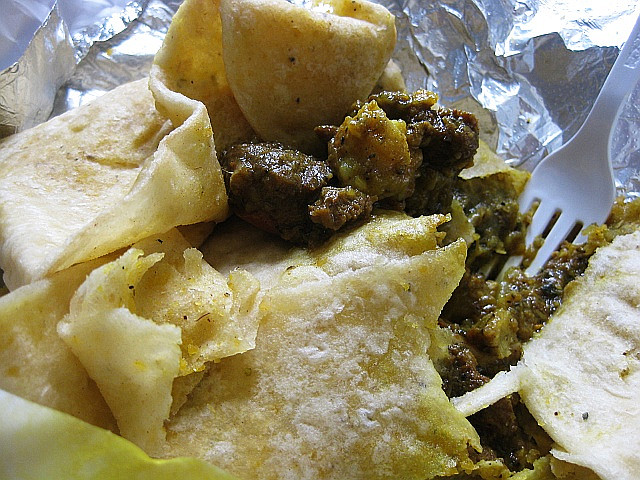 Roti
🇹🇹 Trinidad and Tobago and 4 moreCurried meat or vegetables wrapped in a Caribbean flatbread
Main dish, Lunch, Dinner
Roti
🇹🇹 Trinidad and Tobago and 4 moreCurried meat or vegetables wrapped in a Caribbean flatbread
Main dish, Lunch, Dinner
 Oil DownMeat
🇬🇩 Grenada and 3 moreGrenada’s national stew of breadfruit, salted meat, and coconut milk
Stew or curry, Lunch, Dinner
Oil DownMeat
🇬🇩 Grenada and 3 moreGrenada’s national stew of breadfruit, salted meat, and coconut milk
Stew or curry, Lunch, Dinner
Its cousins elsewhere
All stews and curries Kala bhunaMeat
🇧🇩 BangladeshA dark, richly spiced beef curry from Chittagong, Bangladesh
Main dish, Lunch, Dinner
Kala bhunaMeat
🇧🇩 BangladeshA dark, richly spiced beef curry from Chittagong, Bangladesh
Main dish, Lunch, Dinner
 Sukiyakiすき焼き
🇯🇵 JapanJapanese hot pot with beef, vegetables, and a sweet-salty broth
Main dish, Dinner
Sukiyakiすき焼き
🇯🇵 JapanJapanese hot pot with beef, vegetables, and a sweet-salty broth
Main dish, Dinner
 CassouletMeat
🇫🇷 FranceHearty bean and meat stew from southern France, slow-cooked in a deep earthenware pot
Stew or curry, Lunch, Dinner
CassouletMeat
🇫🇷 FranceHearty bean and meat stew from southern France, slow-cooked in a deep earthenware pot
Stew or curry, Lunch, Dinner
 FeijoadaMeat
🇵🇹 Portugal and 4 moreBean stew with pork or beef, common in Portugal and Brazil
Stew or curry, Lunch, Dinner
FeijoadaMeat
🇵🇹 Portugal and 4 moreBean stew with pork or beef, common in Portugal and Brazil
Stew or curry, Lunch, Dinner