
Jiaozi
In its own language: 餃子
Chinese dumplings with meat or vegetable filling, served boiled, steamed or fried
Jiaozi are Chinese dumplings made by wrapping ground meat or vegetables in thin dough and sealing the edges. They are cooked in several ways—boiled, steamed, pan-fried, deep-fried, or baked—and are often served with a dipping sauce of soy and vinegar. Eaten year-round in China, jiaozi are especially important during Chinese New Year, symbolizing wealth and good fortune.
- Jiaozi are a key dish for Chinese New Year celebrations
- They can be boiled, steamed, pan-fried, deep-fried, or baked
- Fillings range from pork and beef to vegetables and shrimp
- Their shape resembles ancient Chinese gold or silver ingots
- Japanese gyōza are a direct adaptation of jiaozi
What is Jiaozi?
Jiaozi are dumplings from China, made by wrapping a filling of ground meat or vegetables in a thin sheet of dough and sealing the edges. The filling can include pork, chicken, beef, or shrimp, often mixed with chopped vegetables like cabbage, scallion, or garlic chives. Jiaozi can be boiled, steamed, pan-fried, deep-fried, or even baked. Their shape is usually crescent or half-moon, and they are commonly served with a dipping sauce made from soy sauce and black vinegar. The taste and texture vary with the cooking method, from soft and juicy when boiled to crisp and golden when pan-fried.
Where does Jiaozi come from?
Jiaozi have a long history in China, with folk stories tracing their invention to the Eastern Han dynasty. One legend credits Zhang Zhongjing, a physician, who made dumplings filled with lamb and warming herbs to help people with frostbitten ears. Archaeological finds show dumplings in tombs from the Tang dynasty. The name jiaozi may come from their horn-like shape or from the word for 'horn' in Chinese. Over time, the dumpling became linked to wealth and prosperity, as its shape resembles ancient gold or silver ingots.
How is Jiaozi made?
To make jiaozi, a thin round of dough is filled with a spoonful of meat or vegetable mixture. The wrapper is folded over the filling and the edges are pinched or pleated to seal. There are many folding styles, but the crescent shape is most common. Jiaozi can be cooked by boiling in water, steaming in a basket, pan-frying in oil, deep-frying, or baking. Sometimes, they are cooked in soup. The dipping sauce often includes soy sauce, vinegar, and sometimes garlic, ginger, or sesame oil.


How and when is Jiaozi eaten?
Jiaozi are eaten throughout the day in China, from breakfast to dinner, and are popular as a snack or main dish. They are especially important during Chinese New Year, when families gather to make and eat them together, believing they bring good luck. Jiaozi are served with dipping sauces and sometimes with soup. In restaurants, they may be served as an appetizer, side, or last course. At roadside stalls, they are kept hot in steamers and sold in small portions.
Kinds of Jiaozi
There are many regional and international versions of jiaozi. In Cantonese cuisine, smaller steamed dumplings called gaau ji are served at dim sum. Pan-fried jiaozi, known as guotie or potstickers, are popular as street food. Japanese gyōza, introduced after World War II, have thinner wrappers and a stronger garlic flavor. Fillings and folding techniques vary widely, and some versions use egg wrappers or creative ingredients.
What Jiaozi means
Jiaozi hold deep cultural meaning in China, especially during the New Year, when their shape and name are associated with wealth. Some families hide a coin in one dumpling for luck. The dumpling is also a symbol of family unity, as making jiaozi is often a group activity. Jiaozi have inspired similar foods in other countries and are featured in emoji and popular culture.
When Jiaozi is on the table
Questions people ask about Jiaozi
What are jiaozi made of?
Jiaozi are made by wrapping a filling of ground meat or vegetables in a thin dough wrapper, then sealing the edges. Common fillings include pork, chicken, beef, shrimp, and a variety of chopped vegetables such as cabbage and scallion.
Where do jiaozi come from?
Jiaozi originate from China and have a history dating back to at least the Han dynasty. They are now eaten across China and have inspired similar dumplings in other countries, such as Japanese gyōza.
How are jiaozi cooked?
Jiaozi can be boiled, steamed, pan-fried, deep-fried, or baked. The cooking method affects their texture, with boiled jiaozi being soft and juicy, and pan-fried versions having a crisp bottom.
When are jiaozi usually eaten?
Jiaozi are eaten year-round in China, at any meal, but are especially important during Chinese New Year, when they are believed to bring luck and prosperity.
What sauces are served with jiaozi?
Jiaozi are traditionally served with a dipping sauce made from soy sauce and black vinegar. Other ingredients like garlic, ginger, sesame oil, or hot sauce may also be added.
Good reading and sources
The facts on this page come from the Wikipedia article "Jiaozi", written by its contributors and used under the CC BY-SA 4.0 licence, and from its Wikidata record (CC0). Thali rewrote the text in its own words, with AI assistance, and compares every page with the article to make sure no passage is copied. It may be reused under the same CC BY-SA 4.0 licence with a link back.
It may contain mistakes, and it is not dietary or allergy advice: recipes differ from cook to cook. If something is wrong, tell us. Last refreshed 2026-10-03.
More from China
All the food of China Pasta
🇮🇹 Italy and 1 moreUnleavened dough shaped and cooked, a staple of Italian cuisine
Main dish, Lunch, Dinner
TofuVegan豆腐
🇨🇳 China and 5 moreSoft white blocks made by curdling soy milk and pressing the curds
Main dish
Pasta
🇮🇹 Italy and 1 moreUnleavened dough shaped and cooked, a staple of Italian cuisine
Main dish, Lunch, Dinner
TofuVegan豆腐
🇨🇳 China and 5 moreSoft white blocks made by curdling soy milk and pressing the curds
Main dish
 Chuanr串
🇨🇳 ChinaGrilled skewers of meat, seafood or vegetables from northern China
Grill or roast, Dinner, Snacks
Chuanr串
🇨🇳 ChinaGrilled skewers of meat, seafood or vegetables from northern China
Grill or roast, Dinner, Snacks
 Tofu skin roll
🇨🇳 ChinaTofu skin wrapped around a savoury filling, served steamed or fried as dim sum
Main dish, Lunch, Dinner
Tofu skin roll
🇨🇳 ChinaTofu skin wrapped around a savoury filling, served steamed or fried as dim sum
Main dish, Lunch, Dinner
Its cousins elsewhere
All dumplings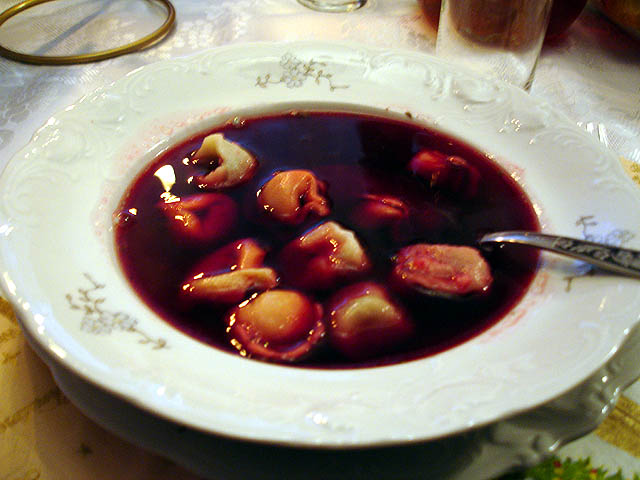 Uszka
🇵🇱 Poland and 2 moreSmall twisted dumplings filled with mushrooms or meat, often served in borscht
Dumpling, Dinner
Uszka
🇵🇱 Poland and 2 moreSmall twisted dumplings filled with mushrooms or meat, often served in borscht
Dumpling, Dinner
 MaultaschenMeat
🇩🇪 GermanyStuffed pasta squares from Swabia with a savory meat and vegetable filling
Main dish, Lunch, Dinner
MaultaschenMeat
🇩🇪 GermanyStuffed pasta squares from Swabia with a savory meat and vegetable filling
Main dish, Lunch, Dinner
 RavioliRavioliai
🇮🇹 Italy and 4 moreStuffed pasta parcels, usually square, with varied fillings and sauces
Main dish, Lunch, Dinner
RavioliRavioliai
🇮🇹 Italy and 4 moreStuffed pasta parcels, usually square, with varied fillings and sauces
Main dish, Lunch, Dinner
 Gnocchi
🇮🇹 Italy and 5 moreSoft dumplings of dough, often made with potato, flour and egg
Dumpling, Lunch, Dinner
Gnocchi
🇮🇹 Italy and 5 moreSoft dumplings of dough, often made with potato, flour and egg
Dumpling, Lunch, Dinner